
“We’re vigilant to live the heritage of our past and faithfully preserve our tradition, and through this process develop virtues of patience, perseverance, humility, and silence.”
—Mother Prioress
There’s a fabric that’s most rare and precious. Its motifs are spun from gold and linen thread as thin as angels’ hair. For centuries, the women who hold the secret of this precious lacemaking stitch have said that to gaze at its beauty is to see a reflection of God.
A quest for historical sites preserving France’s finest handmade needle lace led me to Abbaye Notre-Dame d’Argentan, a Benedictine monastery in the village of Argentan, about 250 kilometres west of Paris.
History books date its legacy of survival to the 6th century. The monastery was raided by Vikings, dispersed by the French Revolution, and bombed during the Second World War. After each adversity, the devout Benedictine sisters humbly rebuilt their community and continued their contemplative life of prayer and lacemaking.

At the monastery, Mother Colette’s profile is obscured by the wall between us. It’s not a solid wall but rather a grid of metal bars. On one side is a life of solitude, prayer and purity; on the other is the secular world.
As an act of penance and genuine appreciation for hearing her story, I offer a box of homemade cookies through the grille. Mother Colette receives it with delight—the warmth in her voice is reassuring to me.
As our eyes meet for the first time, joy seems to radiate from behind her golden spectacles, suggesting that this isn’t a woman who has wasted time looking for the meaning of life; she has found it already. That’s when I notice the ring—a gold band on the fourth finger of her right hand.
“Yes, we’re married to the Lord,” says Mother Colette, who entered the monastery in 1967 at the age of 23. When I met her in 2015, she had been there for 48 years.
History came alive as Mother Colette provided a narrative of the origins of needlepoint lacemaking in France.
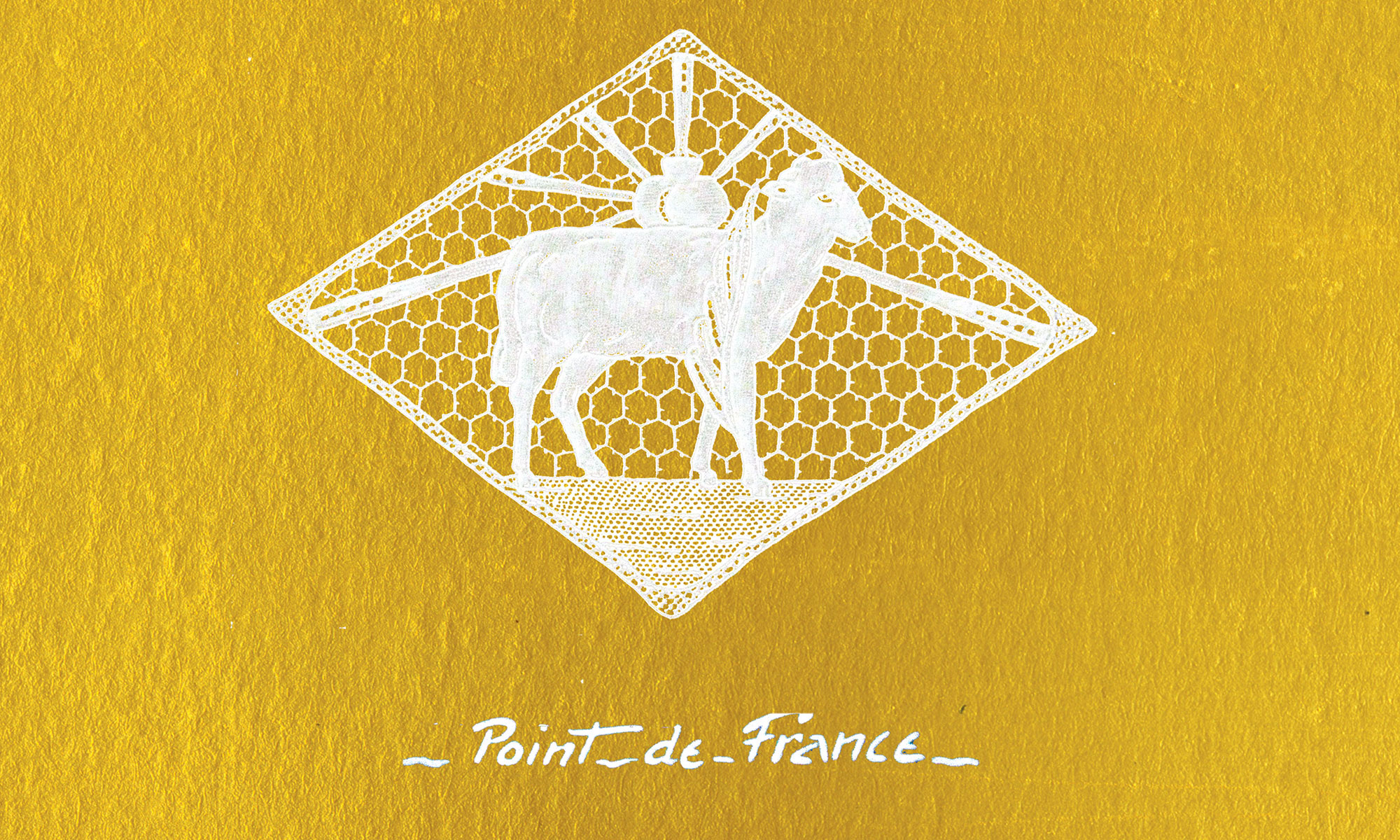
In 17th century France, during the reign of King Louis XIV, many aristocratic families imported luxurious needlepoint lace from Italy. Concerned with the outflow of money, the king’s finance minister Jean-Baptiste Colbert banned its import and brought skilled teachers from Venice to Normandy to instruct locals on creating the handmade lace known as Point de France. Cottage industries were set up in several French towns, including Alençon and Argentan.

France rose to fame as the producer of the world’s finest handmade lace, often referred to as “the lace of queens.” Moreover, the skill and labour required in its production gave the ornamental fabric immense value—only kings and nobles could afford it.
Today, the craft has been preserved at the lacemaking school of this Benedictine monastery in the village of Argentan. Although this type of lace is distinctly French, Mother Collette says that its production is actually a precious union of multiple cultures.
“The lace of Argentan originates in Venice; we’re creating it with a thread that comes from Belgium and needles that come from England. With those, we produce a very refined French product.”
As lace fell out of fashion in the 18th century, the culture of handmade lace became, for the most part, “nuns’ work.” Today, while a small five-centimetre piece of finished Argentan lace is sold for 730 euros, Mother Colette says it barely “puts butter on our broccoli.” Purely a luxury item, one piece takes months to complete.
Running a needle lace atelier isn’t profitable, and the primary work of the contemplative order is prayer—at least six hours per day—still, the sisters are determined to preserve this tradition. They continue to fulfill orders from a discerning clientele who use the decorative fabric as embellishment for wedding veils and baptism bonnets, and as valuable art collectibles.
A knock at the door, a rustle of robes, and another sister, Mother Prioress, appears, excited to share a sampling of the precious textiles. She is among the five remaining sisters skilled in needle lace.
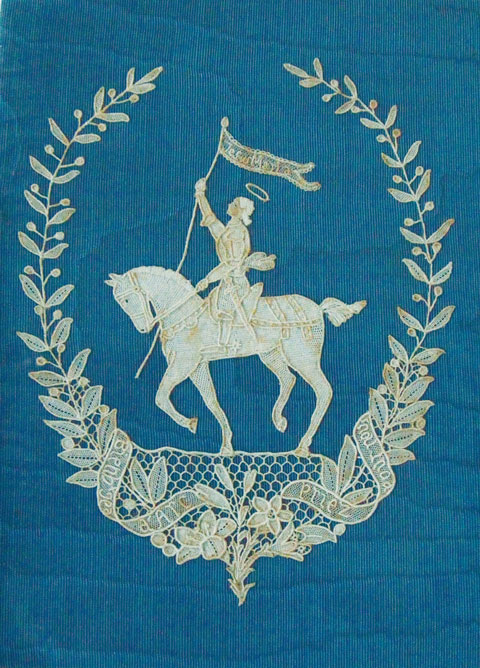
The process begins with a drawing. Then, with silent hands, the sisters work with a needle and thread “as thin as angel’s hair” to create a delicate mesh of woven threads in small motifs. The motifs are then arranged around a vertical axis held together by invisible stitching and linked by buttonholed bars. The next step is to decorate it with small loops of twisted thread called picots, add a scalloped edge, and then polish it with a lobster claw.
People often get confused between embroidery and lace. “With lace, you start with nothing, whereas with embroidery you have a base fabric as support,” Mother Colette says.
The women at the monastery seem intrigued by the news that lace is enjoying a fashion revival, appearing on the ready-to-wear and couture collections of the likes of Gucci, Alexander McQueen, and Valentino, spreading the beauty of the fabric to a wider audience.
“Perhaps it’s a return to the French court,” Mother Colette says, speaking with the authority of one who recognizes the true worth and beauty of lace. “But today they use industrial lace. It’s not handmade needle lace, that’s not possible.”
“There are no more people able to make laces produced with needles,” she says. “The future queen of England, Kate Middleton, got married wearing a veil made from mechanical lace. It was kilometres long and made with lace from the French city of Caudry. It [likely] cost an enormous amount of money, but it wasn’t real lace.”
Mother Colette and Mother Prioress are among the 32 sisters who live at the monastery. Among them, only a few of the sisters are skilled at the craft of lacemaking. “If there were a need for more, we would figure things out,” Mother Colette says.
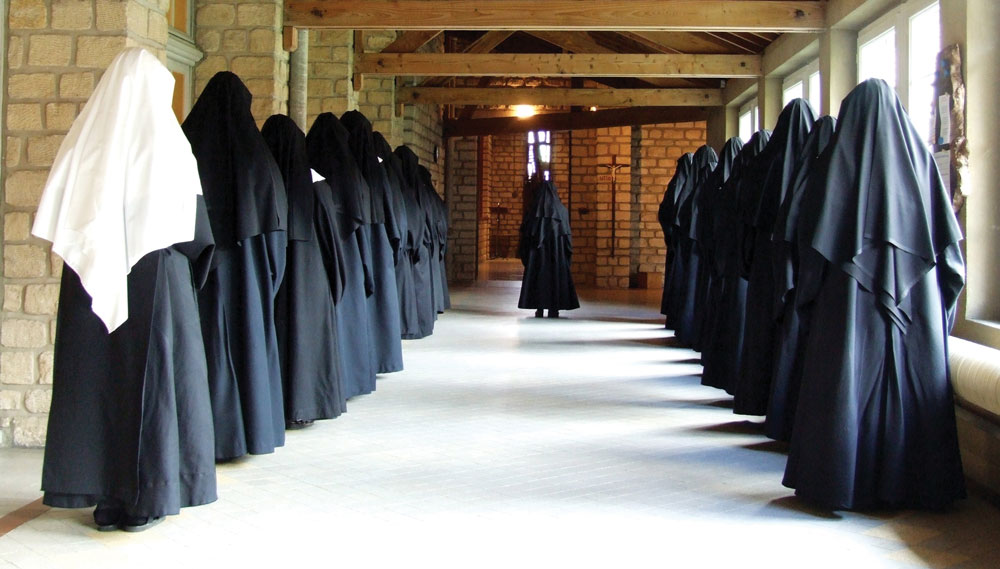
Prayer for the world and the wish to bring beauty to people permeate the work of the sisters from dawn to dusk as they turn tangled threads into finished art pieces.
“We’re vigilant to live the heritage of our past and faithfully preserve our tradition, and through this process develop the virtues of patience, perseverance, humility, and silence,” Mother Prioress says.
While these skilled women are few in number, they’re one in spirit, and with extraordinary beauty and strength they carry on the traditions of those who walked before them.
“This is really a craft, this heritage is a craft, and we shouldn’t lose it,” Mother Colette says. “What we can do with our hands is wonderful. If we can show to the world something beautiful—as I hear what’s on television is horrible—then for that reason alone we should carry on with this beautiful tradition [of lacemaking].”





Haute Jewellery Refined by a Zen Spirit
Taiwanese artist Aka Chen instills lost aesthetic traditions into his museum-collectable designs

David Finckel and Wu Han: Love at the Lincoln Center
New York’s celebrated music duo shares how music has transformed their lives


Revival of a Lost Art
Lee Young-Hee, Seoul’s go-to designer for presidents and international dignitaries

