


Asia is famous for giving the world its rich tradition of fine, elaborately crafted silk textiles. It’s these colourful fabrics and intricate needlework techniques that inspired the craft of Jacqueline Simcox—an expert in antique textile arts—who specializes in Chinese and Central Asian traditions.
Having extensively studied the history of Eastern textiles, Simcox—who is also a published author and lecturer on the subject—brings the beauty of antique Chinese garments to contemporary audiences.
The pieces in her traditional Chinese clothing collections range from imperial court costumes to Buddhist and Daoist silks. Prominently profiled are the main textile techniques of the period, such as embroidery, brocade, and tapestry, spanning the 2nd to the 19th centuries.
In these pages, discover the fascinating world of Simcox’s textiles, from an exquisite ladies’ court robe to the festive nature-inspired dress of the Miao minority people.

The black silk gauze ladies’ surcoat from the Guangxu period (1875–1908) features red-capped cranes—Chinese symbols of wisdom and long life—holding lingzhi fungi, surrounded by flowers and leaves. A wave and water motif accents the surcoat’s border alongside other fauna and flora designs. Ideal for summer celebrations and weddings, the clothing’s pattern signifies longevity, wisdom, and immortality, the latter associated with the lingzhi fungus.
Provenance / Marcel and Zaira Mis Collection, Belgium
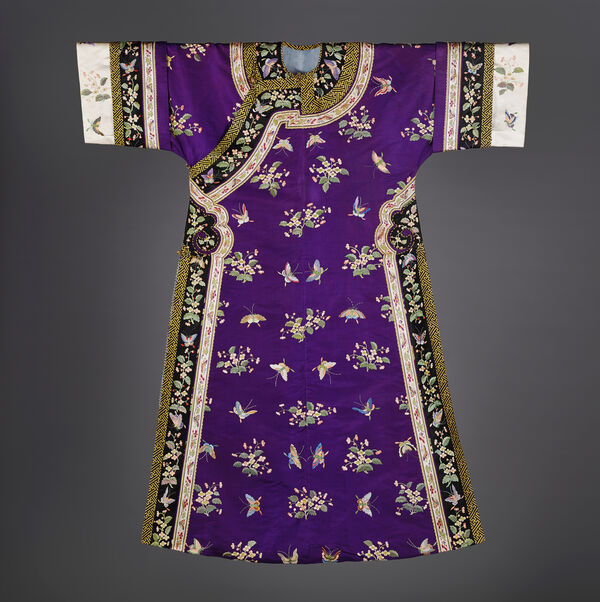
This purple silk “informal” robe from the Guangxu period (1875–1908), called changyi, was designed for young ladies of the Imperial court. Delicately embroidered butterflies and begonia sprays adorn the sleeves and border, with the long and short satin stitches becoming a testament to the artisan’s skill. Beyond its exquisite craftsmanship, the robe serves as a celebration of word puns, with the word for “butterfly” echoing the concept of “seventy to eighty years of age,” and the begonia symbolizing “calm,” making it a perfect choice for Empress Dowager Cixi’s 70th birthday festivities in 1904.
Provenance / Private collection, USA
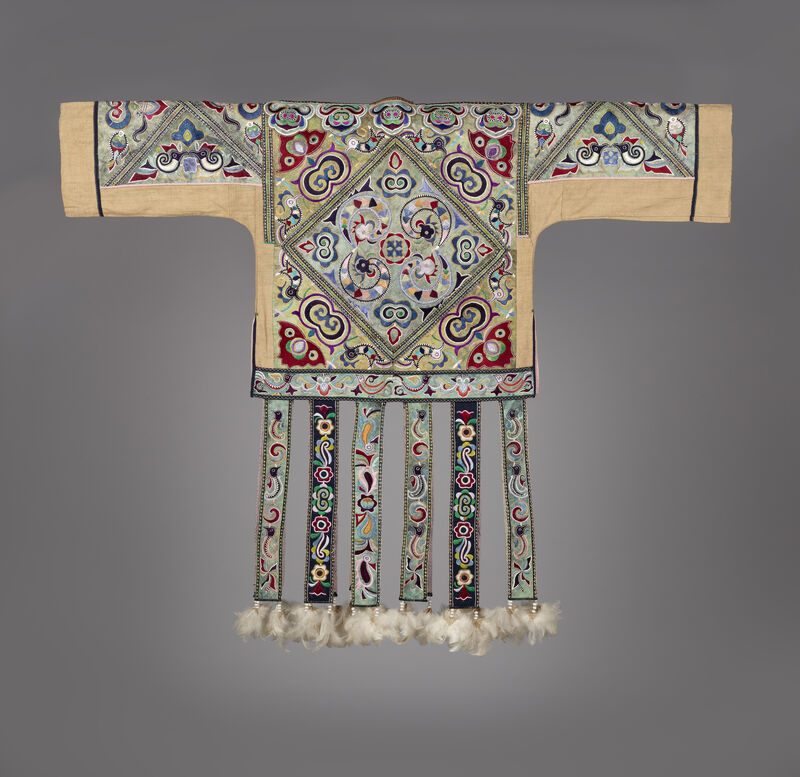
Originating from the Miao culture in Guizhou Province—specifically the Duliu river region—this late 19th or early 20th-century outfit was once worn by Miao village chiefs to worship ancestors during the Guzang festival. Known as the “hundred bird” costume, the piece later transitioned into festive attire. Crafted from silk cocoons, the outfit boasts intricate embroidery depicting birds, butterflies, and fish, complemented by mask designs along the shoulders. Pendant panels adorned with white beads and feathers line the skirt of this striking ceremonial ensemble—an exquisite example of traditional Chinese clothing.
Provenance / Marcel and Zaira Mis Collection, Belgium




Michael Kors on the Art of Gift-Giving
“The best gifts walk the line between glamorous and practical”

