


“When you listen to these looms playing, it’s like listening to a wonderful orchestra.”
—Filippo Ricci
When the world’s finest establishments, such as Villa Medici in Rome, the Royal Palace of Denmark, or the Royal Castle of Sweden, need restoration and special fabrics to decorate their regal interiors, they call one of the last remaining artisanal workshops for silk art in the world—Antico Setificio Fiorentino.
For anyone setting foot inside the workshop, a rhythmic clap and whirl gently ease the senses. “When you listen to these looms playing, it’s like listening to a wonderful orchestra,” says Filippo Ricci, creative director of Stefano Ricci, the fashion house that acquired the historical Florentine atelier in 2010. Even “the silk sings,” according to Ricci.

The special silks are testimony to the preservation of an ancient craft. “We weave the dreams of the past into the present,” he says.
The workshop’s weavers start with pure, undamaged thread that hasn’t undergone any chemical treatments. They then spin the thread into specially prepared yarns. Since these yarns can’t be used on modern looms, artisans hand-dye and weave them on hand-operated, semi-mechanical 18th- and 19th-century looms (such as the legendary warper designed by Leonardo da Vinci).
These weavers have mastered the virtue of patience to achieve perfection like all true artists. Producing only 40 centimetres of silk per day per loom, their weaving process is a discipline of endless repetition and skill that ensures its superior quality.

“To be a client of this edifice, you need to appreciate the luxury of time, the luxury of waiting,” Ricci says. Antico Setificio Fiorentino’s commitment to its meticulous methods is why it has remained the world’s most desired silk atelier.
Silk originated in China and journeyed across the Silk Road to Europe over several centuries. In Italy, it quickly wove its way into the fabric of Florentine culture in the 14th century. Often threaded with precious metals and adorned with family coats-of-arms, silk became the period’s quintessential luxury textile and was worn for both secular and religious dress. It also furnished the interiors of palaces and aristocratic homes.
As competition increased and demand for cheaper methods of silk production rose, so too emerged a clan of noble families in Florence—led by the city’s grand duke—to safeguard the quality and authenticity of this fabric and craft.
That’s because traditional silk-making didn’t simply involve the making of a product; the process embodied the spirit of Italian culture—cultivating a fabric through passion, toil, and time.
In 1789, the noble families brought their looms into one premier workshop, Antico Setificio Fiorentino, with the vision of continuing to produce silk fabrics using traditional manufacturing techniques.
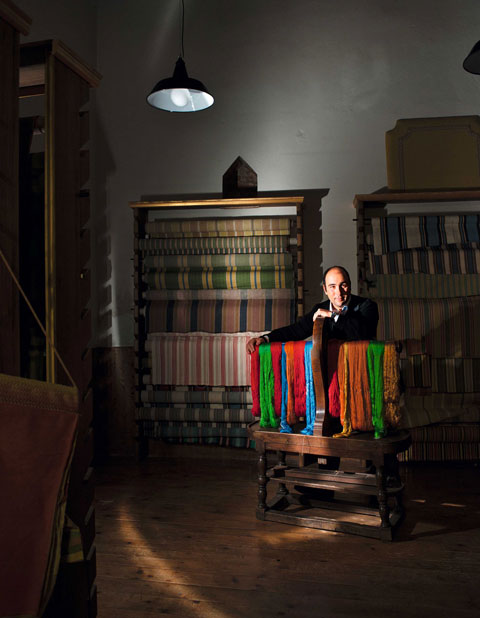
Today, the historical silk art atelier captivates the international elite with ventures like the Royal Suite Collection home line and bespoke requests for luxury interior designs around the world.
“Antico Setificio Fiorentino is the heir to a great tradition of Renaissance textile art and history, respecting the ancient echo of beauty that transcends the ages,” Ricci says.





Michael Kors on the Art of Gift-Giving
“The best gifts walk the line between glamorous and practical”

Discover the Sacred Lace of France
A secluded cloister of French nuns continues the beautiful tradition of French lacemaking

