

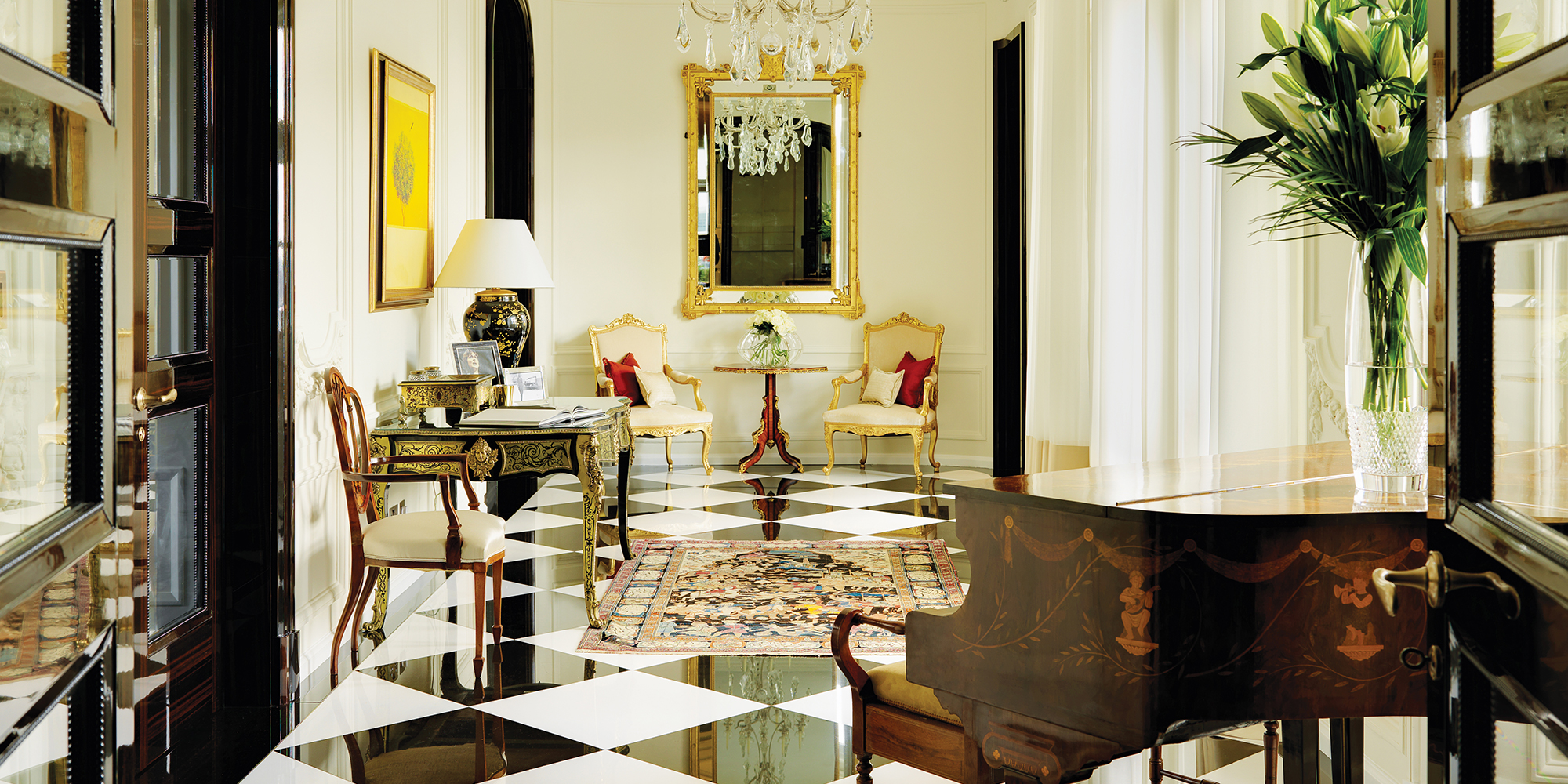
Seven stories above the Hard Rock Cafe in West London. That’s where Luigi Esposito found himself envisioning the potential of a 7,800-square-foot penthouse, set in a 1904-period building, a coveted cachet with an impressive view of the London skyline.
His initial design plans were inspired to go in a new direction when he discovered archaic details hidden behind the walls.
“We began uncovering fragments of classical architectural elements—ornate cornices, plaster moulding embellishments and columns,” says Esposito, the creative director of Oro Bianco Studio, an exclusive design house known for its bespoke approach. “There is a profound joy in finding such beauty in unexpected places.”
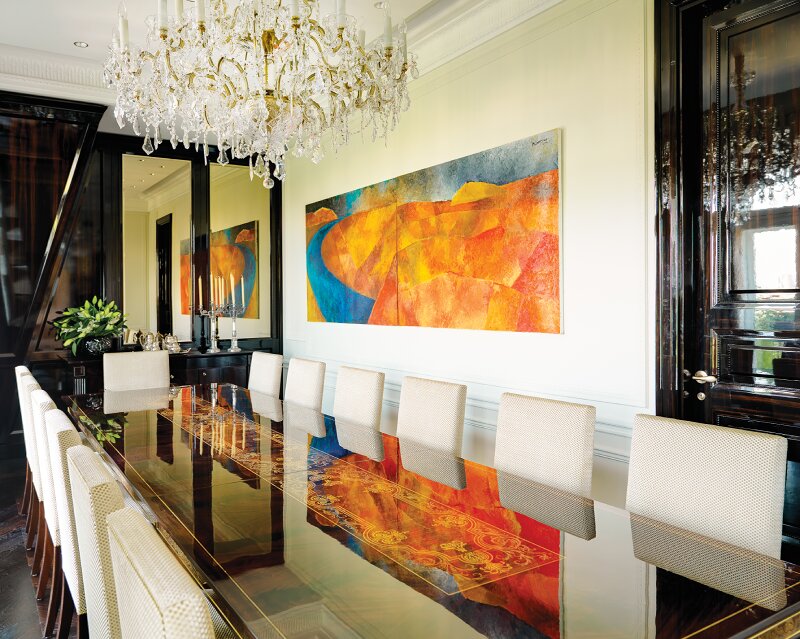
While the building’s stone exterior is a flamboyant example of Flemish Baroque architecture, its interiors were an incongruous anthology of design styles. Adapted to changing times and different owners, the flats had morphed from grand residences for American aristocrats and European nobility in the early 1900s to professional offices after the Second World War, and later to contemporary pied-à-terre homes for the nouveau riche drawn to Mayfair, Britain’s most expensive and exclusive postal district.
Protected under the conservation department, the integrity of the original architectural elements could not be removed, but they could be covered. As the floor plan was reconfigured and the plasterwork removed, the building’s true beauty was revealed. Moulds were taken of the original architectural details and the refurbished embellishments subtly integrated, framing custom-designed bedroom furniture and adding a sense of history to the expanded social spaces.
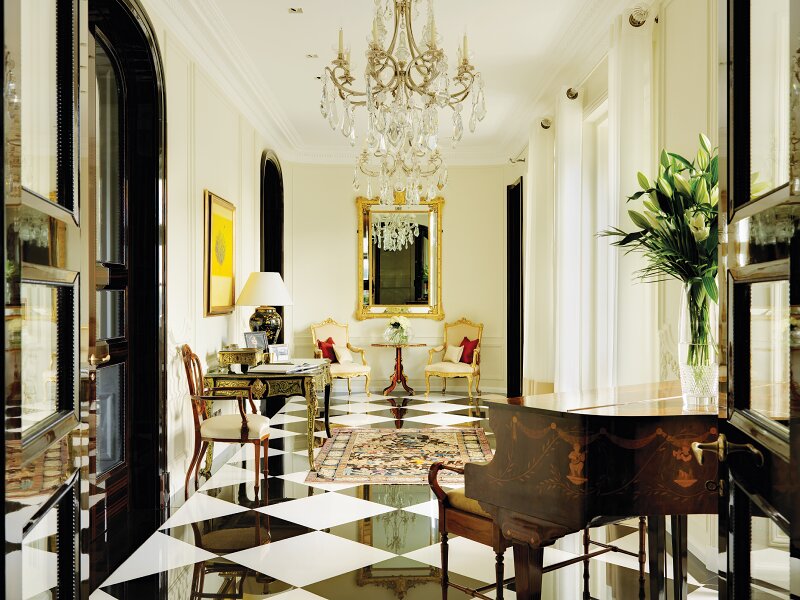
With elite property owners demanding furniture and finishes as bespoke as their homes, Esposito rose to the occasion by also highlighting traditional craft methods in this Mayfair penthouse. Exceptional artisans were appointed, each skilled in rare Old World techniques for building furniture, creating floor art, and embossing luxurious tapestries.
“There’s a renewed appreciation for true craftsmanship,” says Esposito, whose affinity for classic architectural proportions and opulent interior design sparked as a child.
“I grew up loving to explore Europe’s art galleries and museums, finding myself inside a magical and mysterious world,” says Esposito, who aspired to be an artist with a “passion for paint and sculpture.” His father steered him towards a more profitable career as an architect, a natural choice for a student who “had an eye for everything.”