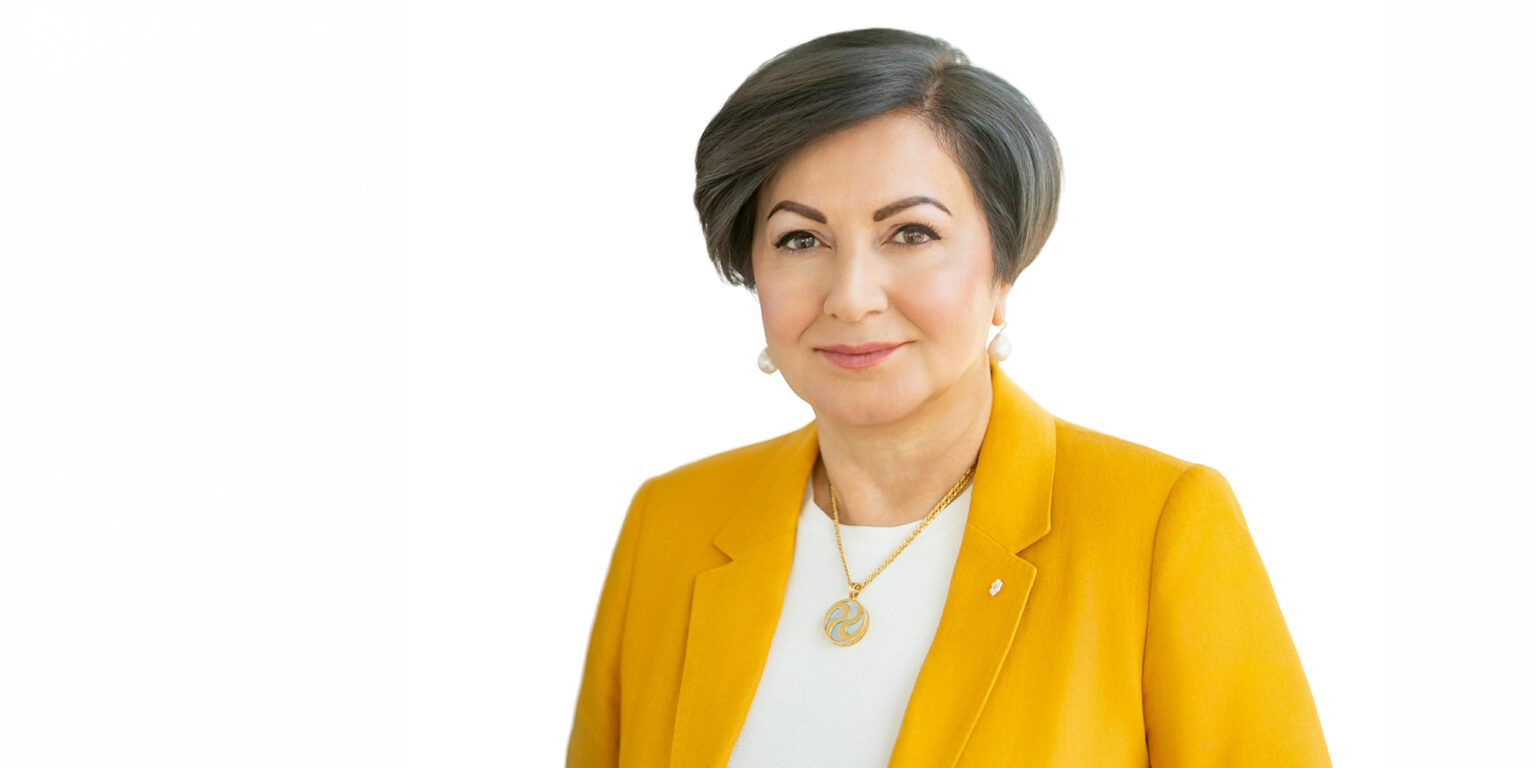

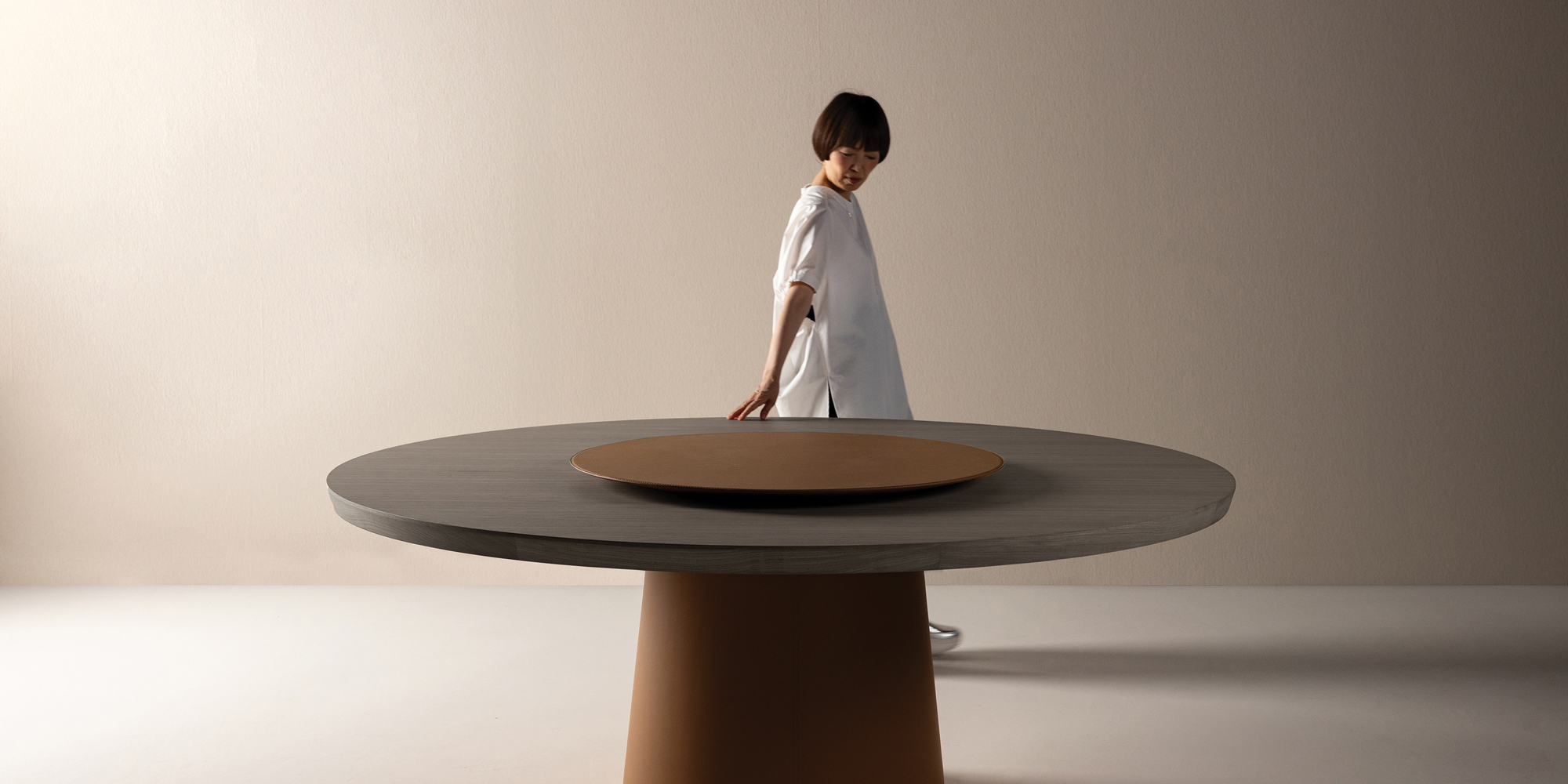
For Japanese designer Fumie Shibata, craftsmanship and simplicity are more than principles, they are a way of life rooted in spiritual balance. Her work emerges from this philosophy, where restraint and harmony shape every form, fostering an intimate connection between people and space.
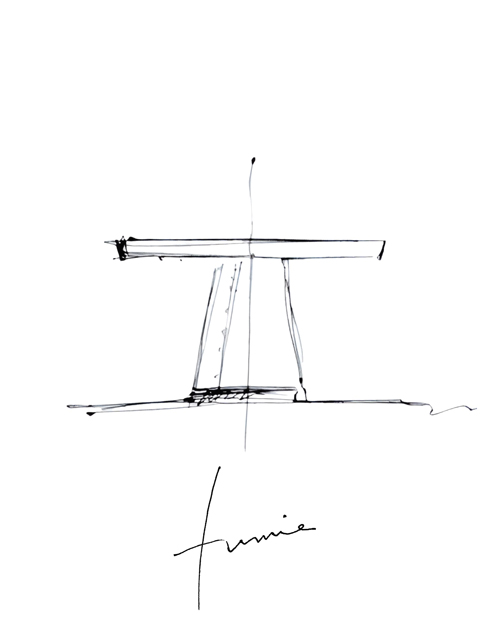
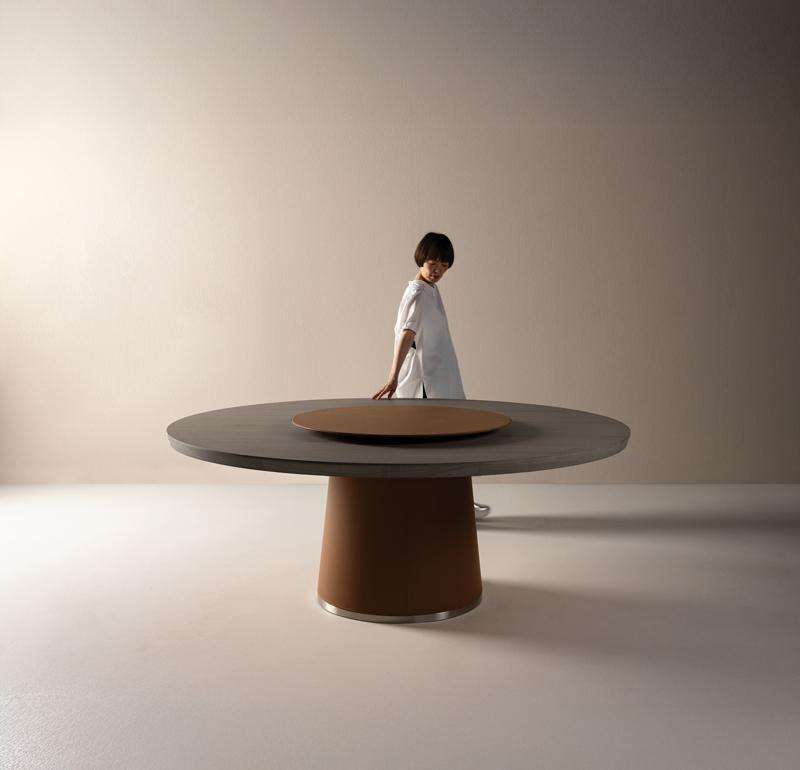
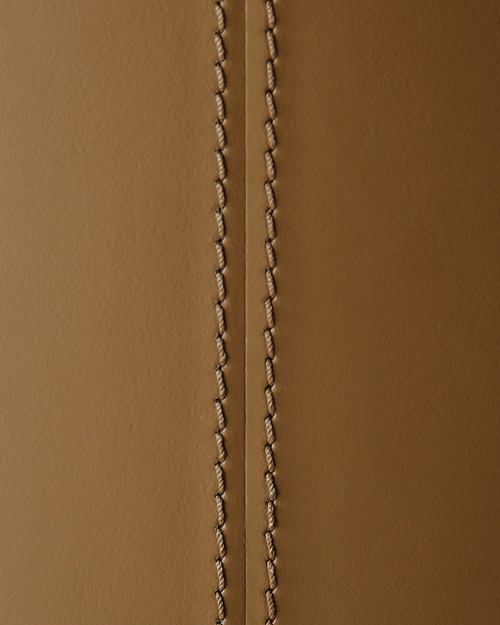
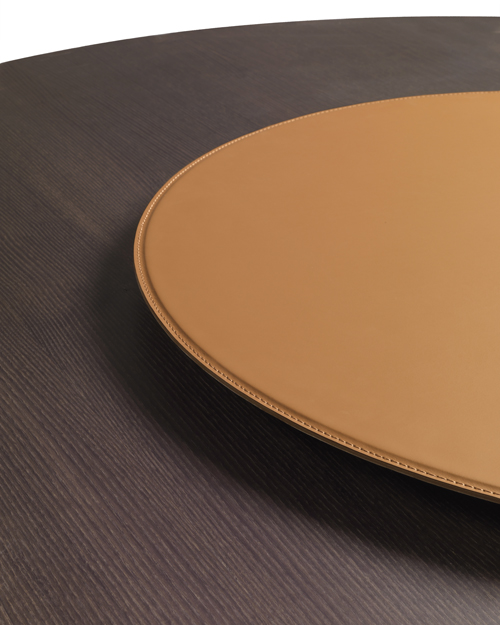
Nowhere is this ethos clearer than in Shibata’s Enn table for Flexform. A study in minimalist elegance, it features a circular wooden top, an emblem of unity, resting atop a truncated cone base wrapped in supple cowhide and grounded by slender metal feet. Here, Italian artisanal mastery meets Japanese sensibility, resulting in a piece that is both sculptural and serene, a dialogue between two cultures distilled into timeless form.
“With Enn, I wanted to create something more than a simple table: a safe harbor that encourages the interaction between form and feeling, tradition and innovation, Japan and Italy,” reflects Shibata. “The Japanese sensibility is expressed through restrained, simple forms, while Italian craftsmanship often carries material richness, ornamentation, and a strong sense of presence. In this way, the quiet subtlety of the East and the richness of the West overlap.”
Born into a family of weavers, Shibata’s childhood was steeped in craft. “During the holiday season, I spent time with many relatives and artisans in an environment where everything—from setting up the household altar to creating seasonal tools—was handmade,” she recalls, remembering long hours watching her grandfather work with his tools. “As a child, I was deeply fascinated by how many different forms and objects could emerge from human hands.”
Her upbringing at the foot of Mt. Fuji shaped her creative lens, where the peacefulness of nature converges with the vibrant pulse of Tokyo, both continually inspiring her work.
“The energy of the city itself is a source of creativity,” Shibata reflects, speaking of Tokyo, a city where she finds inspiration in the museums she visits, the vibrant hum of its streets, and in serene escapes like Moerenuma Park in Hokkaido, the contemplative Teshima Art Museum, and the art-filled island of Naoshima. “Both the city and nature enrich my sensibility, and together they form the source of my design.”
The Enn table was born from this dialogue—between landscape and art, stillness and activity, memory and material. Its name comes from the Japanese word en, meaning circle, celebration, or connection. At its core lies another Japanese concept: ma, meaning “the presence of emptiness” or “pause that gives space to meaning.”
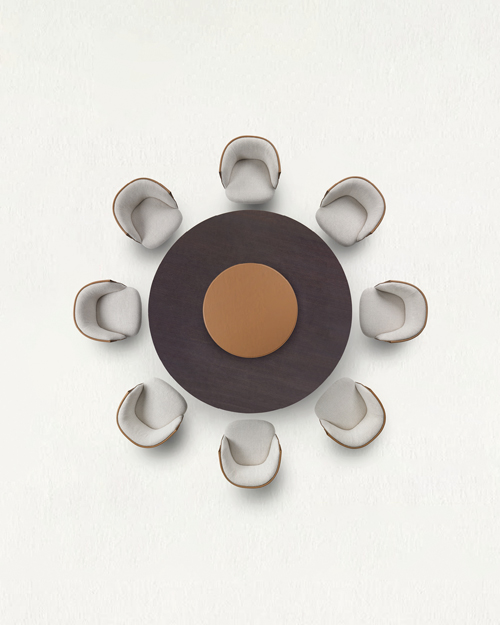
“For me, the idea of ma is not simply about emptiness or blank space, but rather about establishing a place,” Shibata explains. “I see the table as something that creates the very centre of everyday life. I wanted it to have form without being overly assertive, and at the same time to hold a quiet yet distinct presence within a space. And if this table can, even in a small way, enrich the relationship between people and the spaces they inhabit, I would be very glad.”