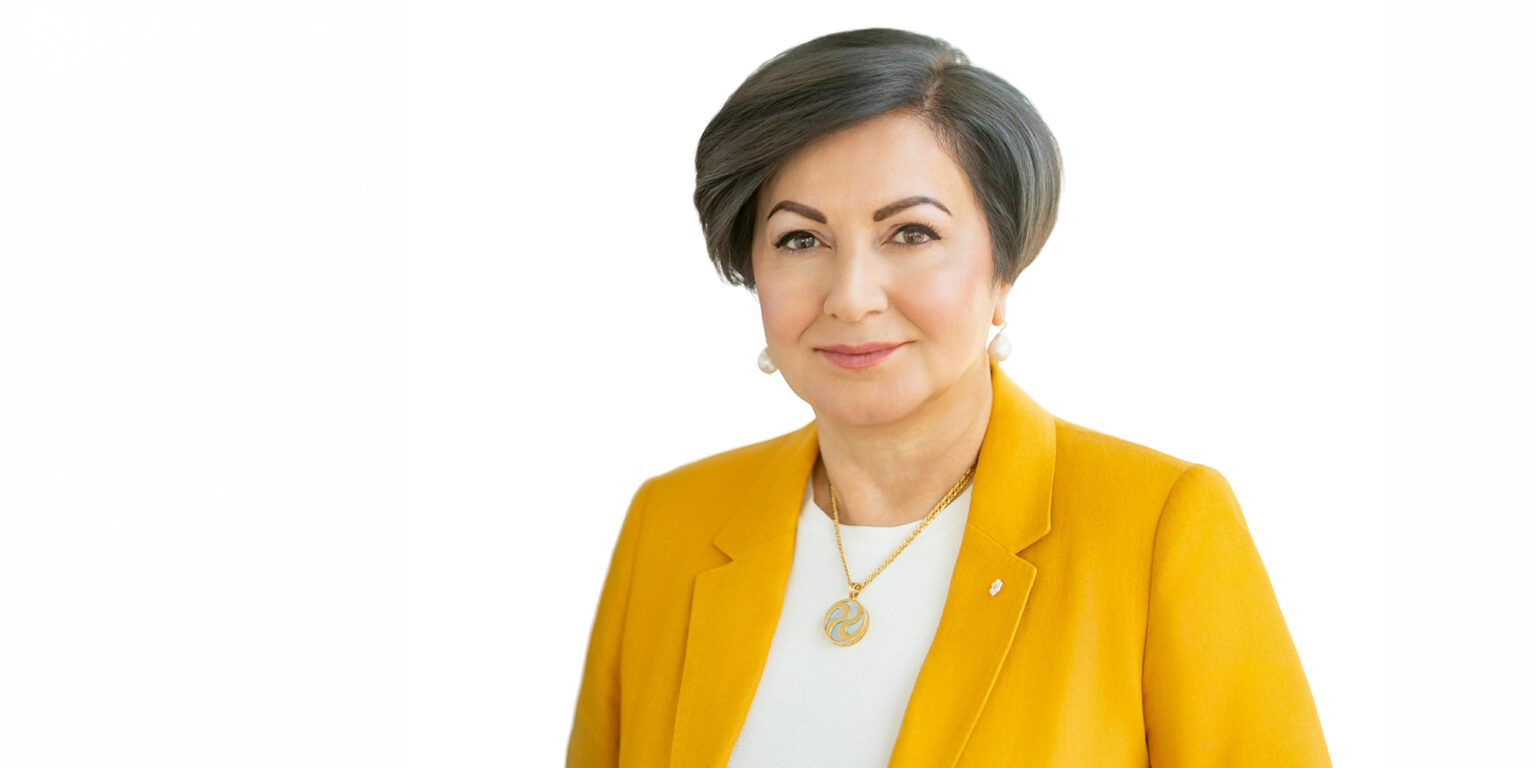
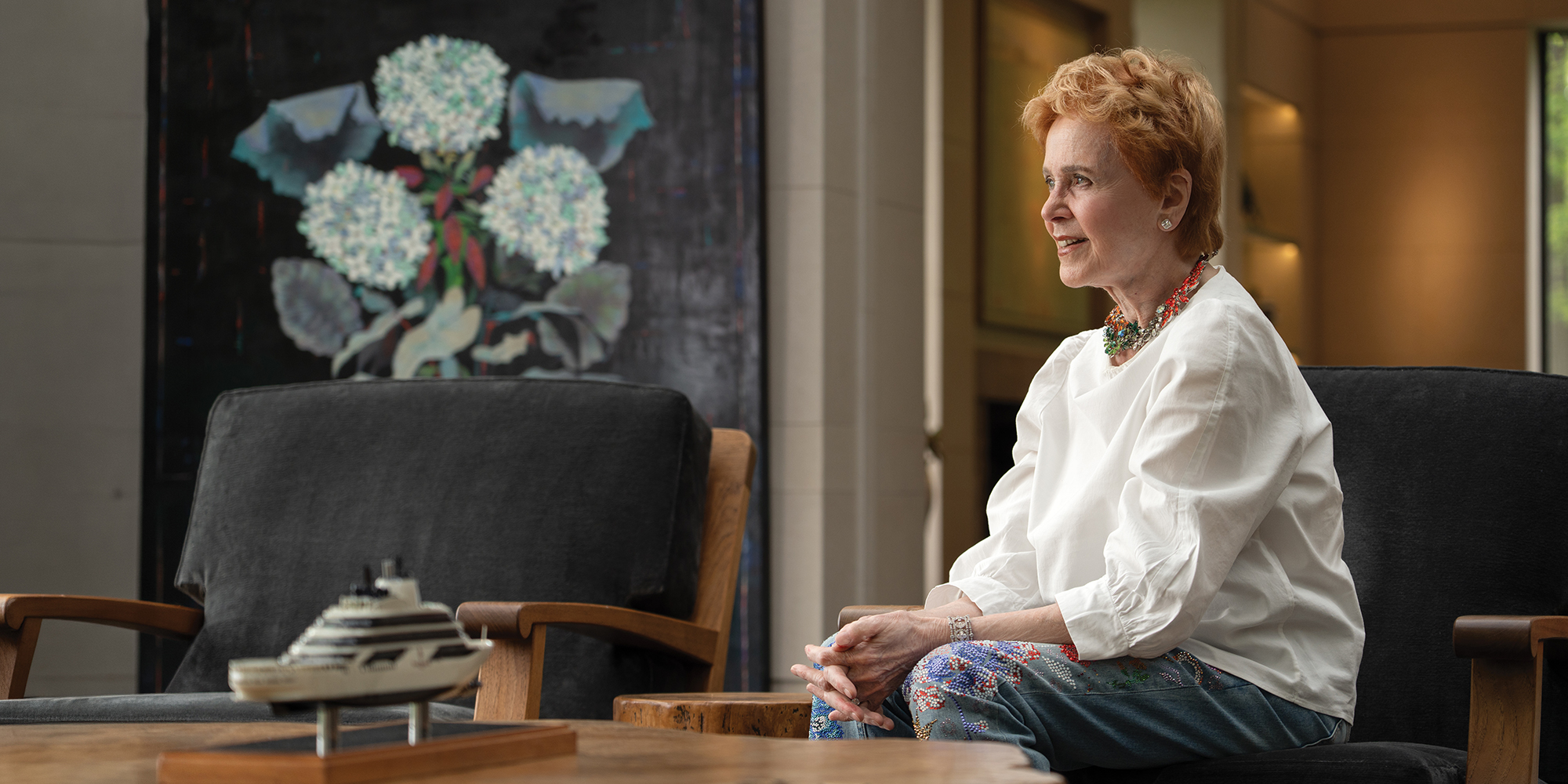
The first thing you notice when Rosalie Sharp opens the door is her colour.
On this sun-drenched summer morning, that colour is literal: Sharp’s necklace of delicate, leaf-shaped crystals adding a splash of brightness that complements the flowers embroidered on her jeans.
But to Sharp, colour is more than something she wears. Rather, it’s something she seems to generate: in her radiant smile, in the stories she tells, in the generosity that defines her life, and in the paintings that fill her home with her distinctive vision of colour.
“I love every colour,” Sharp says, unapologetically.
She’s spent a lifetime proving it. A celebrated artist, philanthropist, designer, and quiet force behind one of Canada’s most recognisable luxury brands, Sharp has inhabited many worlds. She helped forge the visual language of the Four Seasons hotel empire while her husband, Isadore “Issy” Sharp, built the business itself. She raised a family, started a renowned design studio, became a recognised champion of the arts, and helped establish one of Canada’s most enduring cancer charities. And in her later years, she’s become a prolific painter, filling canvas after canvas with flowers, landscapes, and great forms and fields of brilliant colour.
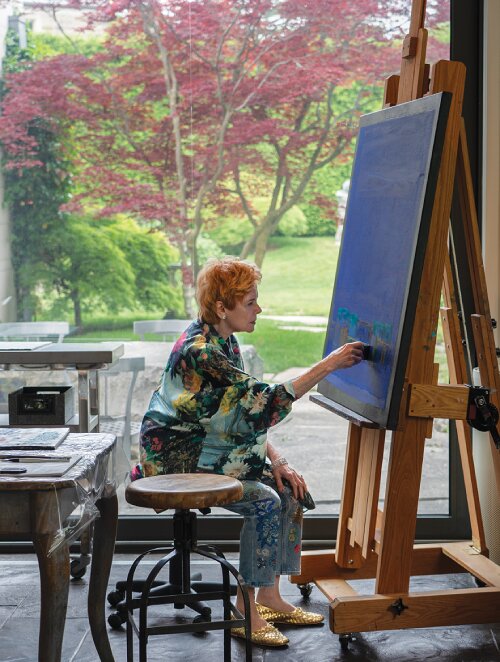
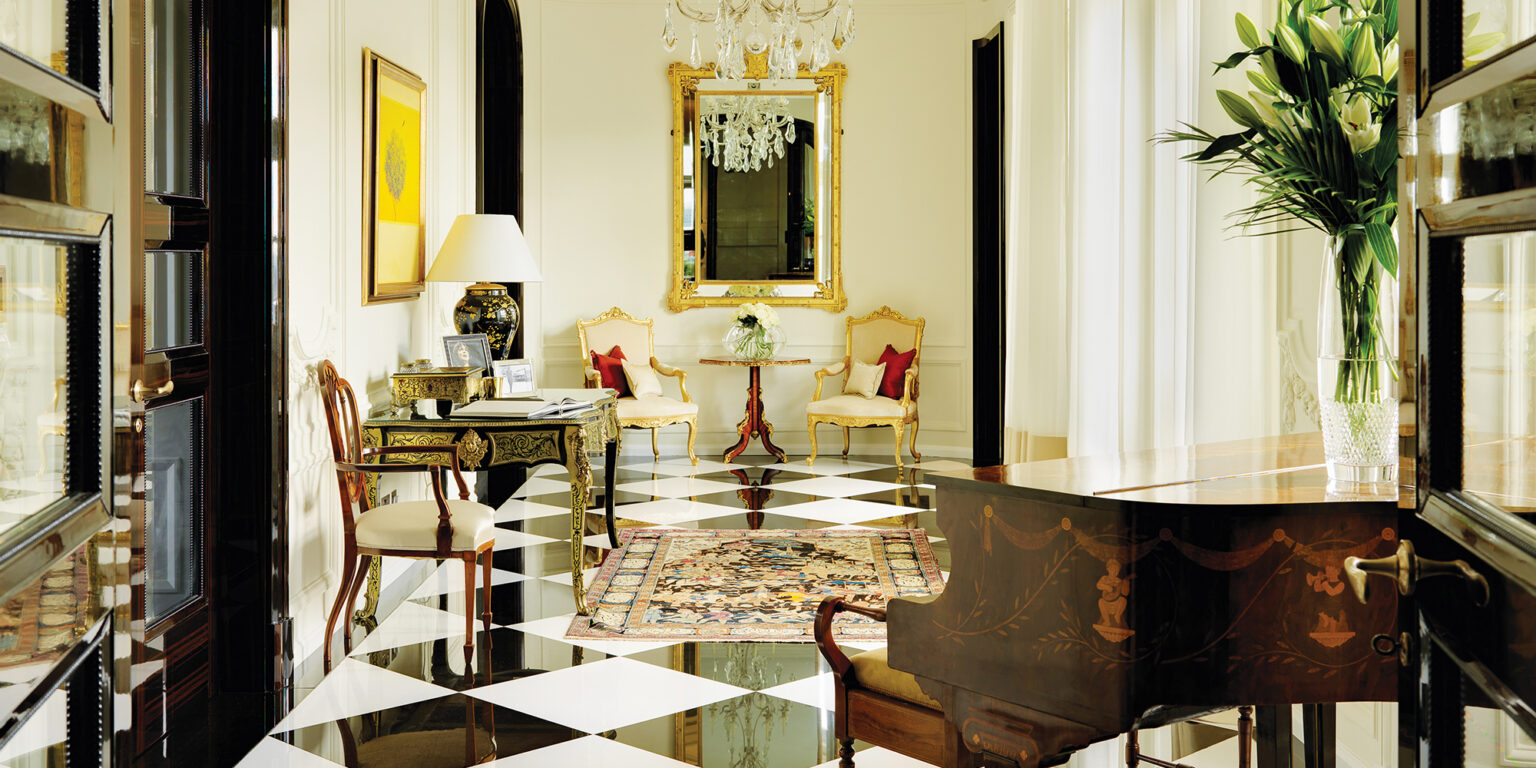
Inside her Midtown Toronto home, the effect is almost intoxicating. Cobalt, crimson, fuchsia, emerald, ochre: colours crash and join together in layers, spilling from paintings into rooms, and from rooms into memories.
“I’m fortunate to have endless energy and compulsive interests that give me no rest and no time for the doldrums,” she says with a smile. “I think it’s in the genes.”
A muted childhood
Tellingly, Sharp’s story begins not in rich hues, but in a wash of muted grey. The daughter of a hardworking Jewish immigrant family, Sharp grew up in the streetcar suburb of North Toronto, where her parents owned a dry goods store. Between the demands of school, family, and helping out in the family business, there was little time (and even fewer resources) for typical childhood pastimes.
“My garden was the concrete outside the shop,” she recalls. “Friends—there weren’t any because there were no children around. So I grew up very much by myself.”
At five years old, she discovered her first escape to a more colour-filled world. Each afternoon in her first-grade classroom, her teacher read a chapter of Kenneth Grahame’s The Wind in the Willows, unlocking a universe of lush riverbanks, speaking animals, and whimsical friendships that unlocked the doors of an energetic imagination.
“Without that book, I would be a different person,” Sharp admits, the wonder-filled memories of Mole, Ratty, and Mr. Toad still fresh in her mind after all these years. “I was enthralled. It was just a world I’d never imagined.”
Where the street outside offered only dull-coloured pavement, Grahame’s riverbank planted the seed of a lifelong obsession: the realization that one could construct a different world out of colour, words, and imagination. The little girl who once escaped into an idyllic English countryside grew into the artist who would spend her lifetime painting her own vibrant worlds into existence, filling canvases, luxury interiors, and grand rooms with all the hues and tints she could possibly imagine.
The first blush
The most transformative colour in Sharp’s life arrived on a late autumn evening. She remembers the exact moment with affection: “November 13, 1952, at eight o’clock.”
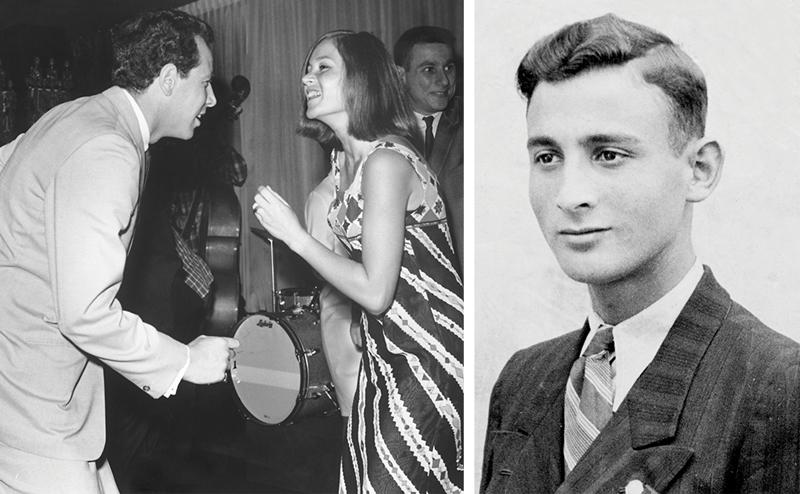
Sharp was 17 and wearing a bridesmaid’s dress at a friend’s wedding when she crossed paths with a young builder named Isadore Sharp. The connection was immediate. The next morning, she wrote in her diary to her closest friend, Merle: “I have met the love of my life.”
A prescient entry. Three years later, Rosalie and Issy married. In the more than seven decades since, their marriage has never lost the rosy tint of that first encounter, mellowing over the years into an enduring affection grounded in shared experiences and the resilience that has carried them through life’s ups and downs.
“We are ‘The Odd Couple’ in many ways,” Sharp says, laughing. “[But] we’ve been lucky—we’re enjoying each other immensely and share everything. When he sprained his wrist, mine hurt too. Our many differences make for lots of laughter, learning, and delight.”
She vividly recalls a moment from those early years, when Issy was managing a handful of hotels yet already envisioning a global collection of luxury properties with the prestige of Rolls-Royce. As he spoke of his ambitions, she listened quietly, admitting that she had her doubts. “I privately thought, well, hardly likely with eight hotels,” she laughs. “So really, my most valuable contribution to his success has been my silence!”
Painting the world
For the first decade of their marriage, Sharp’s energies were devoted to family, home, and the extraordinary expansion of her husband’s business. But she wanted to break her own ground in art and design—a pursuit Issy wholeheartedly supported.
“Issy is my anchor, my teacher, and my advisor,” Sharp admits. “He always gets it right and has always praised me, until finally, I believe him.”
And so she enrolled in a four-year, full-time programme at the Ontario College of Art and Design, completing assignments while her fellow classmates hung out in the cafeteria, then rushing home to care for her four sons. The hustle paid off: after four hectic, sleep-deprived years, Sharp graduated at the top of her class, earning the Lieutenant Governor’s Medal as the year’s most outstanding student.
She soon began translating her design sensibility into practice. As Four Seasons expanded into a global luxury brand, Sharp’s eponymous design studio helped define its aesthetic. She understood that a hotel could offer more than polished rooms and costly furnishings; it could evoke a feeling, a sense of belonging. Through the thoughtful interplay of art, local objects, textiles, furniture, and space, she created interiors that felt warm, lived-in, and rooted in their surroundings.
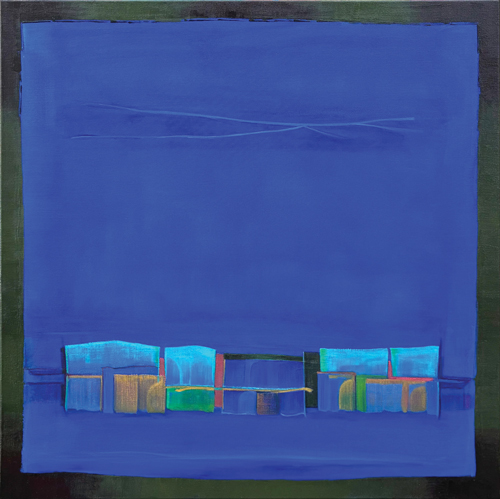
In 2010, Sharp stepped back from her corporate work and took up her paintbrushes full time. By her own count, she’s completed over 250 paintings since, the vast majority of them in oils.
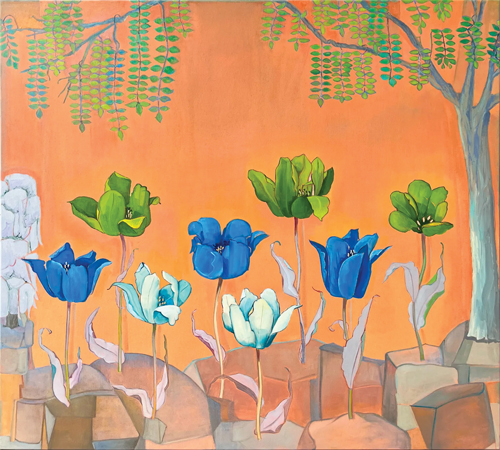
Her subjects reveal a restless eye. Flowers, leaves, and landscapes abound, each rendered with a keen sensitivity to the natural world’s forms, textures, and shifting colours.
Increasingly, however, her work has moved towards striking abstraction: interlocking squares, overlapping rectangles, and geometric fields of bright, bold pigment. “Every artist loses detail as she goes along, and becomes simpler,” Sharp observes.
Simpler, perhaps, but no less searching. The layers of her geometric compositions suggest narratives that extend beyond their rich palette of cobalt and crimson, fuchsia, and gold. As the colours are arranged and rearranged on the canvas, they begin to interact in unexpected ways, revealing an emotional tension, an expression of structure, and a way of making sense of the world through form and colour.
The golden rule
If colour is the language of Sharp’s art, generosity may well be the hue that has guided the painting of her life’s canvas. The Golden Rule is a principle her husband Issy built into the culture of the Four Seasons from its founding: Do unto others what you would have them do unto you.
The Sharps’ philanthropy reflects this simple, clear conviction to do good in the world, of which few examples are more poignant than the Terry Fox Run. Following the tragic loss of their son Christopher to cancer in 1978, the Sharps were moved to support the young runner whose 143-day, 5,373-kilometre Marathon of Hope became one of the most extraordinary acts of determination in Canadian history.
To the Sharps, the physical feat was almost beside the point. Terry represented something larger: hope, optimism, courage, and the belief that the determination and resilience of a single person can become a movement. And so it has been: since its inception in 1981, the annual Terry Fox Run has raised an estimated $1 billion for cancer research across the country.
The Sharps’ giving has extended far beyond medical research. In 2002, the couple pledged $20 million towards the construction of the Four Seasons Centre for the Performing Arts. They’ve also donated a total of almost $9 million to Rosalie’s alma mater OCAD University, becoming its largest benefactors to date.
Even Sharp’s personal collections have become public gifts. Recently, she donated her 500-piece collection of 17th- and 18th-century English blue-and-white porcelain to Toronto’s Gardiner Museum. Hand-selected and meticulously researched over 40 years, the collection functions as an invitation to the public to share in the joy and delight she’s found in these historical masterworks.
“In the Jewish tradition, there is something called tzedakah,” Sharp explains. “It’s like charity, but different: the word means that it’s both a privilege and a responsibility to give.”
For Sharp, that responsibility spans the entire spectrum of human connection: financial, social, educational, and artistic. The point is not simply to give; it is to illuminate.
The dark shade
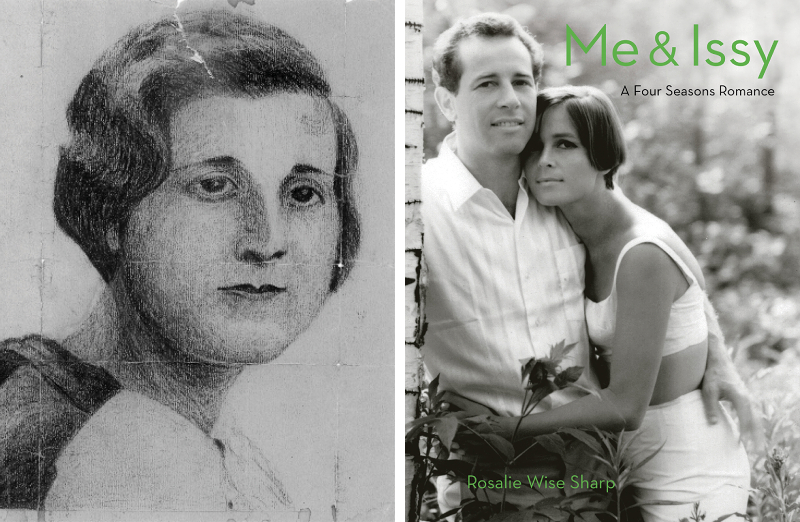
Yet every life, no matter how brightly lived, contains darker shades. For Sharp, one of them lay inside a small tin box in her mother’s closet. Inside were dozens of letters written in Yiddish, sent by relatives Sharp had never met, people whose lives had been swallowed by the Holocaust.
The letters preserved what history could not erase: voices, memories, fragments of ordinary lives lived in a difficult time. Among those relatives was her mother’s youngest brother, a gifted young painter. In one of his final letters sent from his native Poland, he mentioned finding work: “They need some signs, and that’s easy for me.” The signs were for Jewish shops, identifying them as Jewish-owned businesses at a time when non-Jewish citizens were forbidden from patronizing Jewish merchants. He earned a little money from the work.
It was the last the family heard from him. He and more than 50 of Sharp’s relatives perished in the Holocaust. “That tragedy still lurks in the fringes of my mind and colours my good life,” she admits.
The revelation alters how one sees the paintings around her. It would be easy to interpret Sharp’s devotion to colour as an antidote to darkness, a world of beauty constructed against an unbearable past.
Such an interpretation brushes over the complexity of the artist’s vision. Sharp does not paint as though darkness never existed. She paints as someone who knows what darkness is, what it means, what it can do—and yet chooses, despite it all, to make light.
A life in living colour
There is something almost irrepressible about the joy in Sharp’s paintings: the flowers are more than flowers; the forms are more than geometric lines; the layers of colour are more than an arrangement of hues and shades. Rather, each work feels like an acknowledgement that life can indeed be complicated, and history can indeed be cruel. Yet there can still be beauty. Generosity. Art.
This is probably why the connection between Sharp’s creativity and her philanthropy feels so natural. Both are concerned, ultimately, with what we choose to add to the world.
Your visit draws to a close, and she shepherds you back towards the front door, presenting you with the final opportunity to take in her art. You shake hands, the door closes, and you step back onto the street.
Outside is the city in its familiar shades: concrete grey, asphalt black, rusty brick red. Yet everything seems a little brighter now—and, it should be noted, a lot more colourful.