

In the surreal, sensational world of Beth Katleman, nothing is quite as it seems. A ceramic artist renowned for her intricate sculptures and towering vertical installations, Katleman conjures theatrical dreamscapes within her kiln, reconciling Rococo ornamentation and Americana kitsch with chinoiserie fantasies, all shot through with a bolt of dark wit.
The artist’s portfolio invites a subversive game of hide-and-seek: imagine enormous, Fabergé-style Easter eggs lavishly decorated with flea-market finds; a decorative mirror inspired by Nabokov’s Lolita that blends exquisite sculpting with cast souvenir pencil sharpeners; or a fantastical fairytale garden festooned with flowers, birds, and severed heads. Each piece rewards prolonged scrutiny, peeling back layers of a narrative.
“The surfaces, forms, and materials of my work are grounded in history, but the stories are contemporary and hard to pin down,” Katleman explains. “They are highly detailed, intricate, and handmade. There’s a sense of wonder that comes with that.”
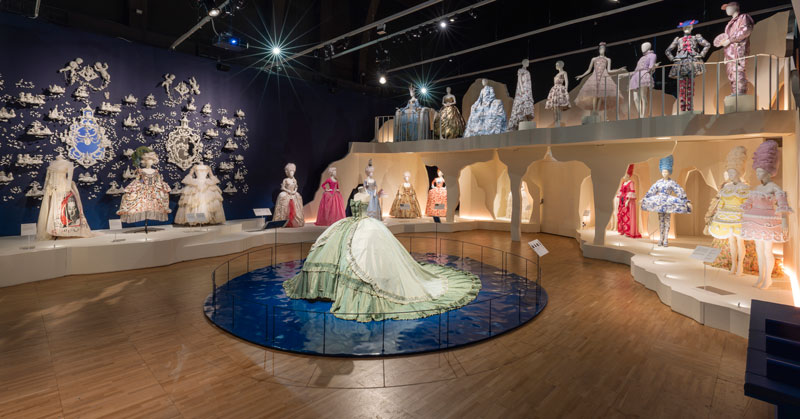
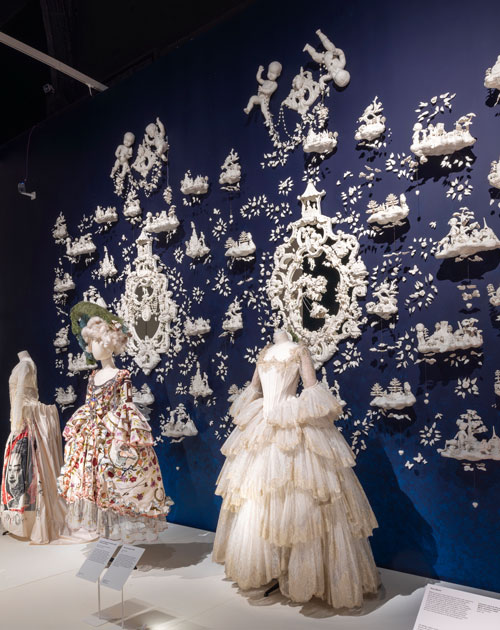
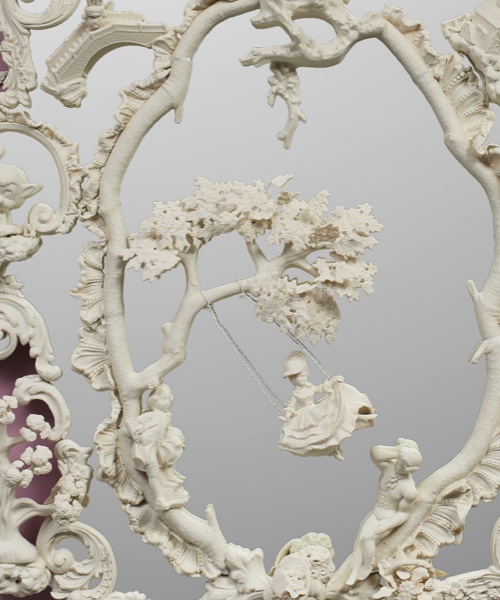
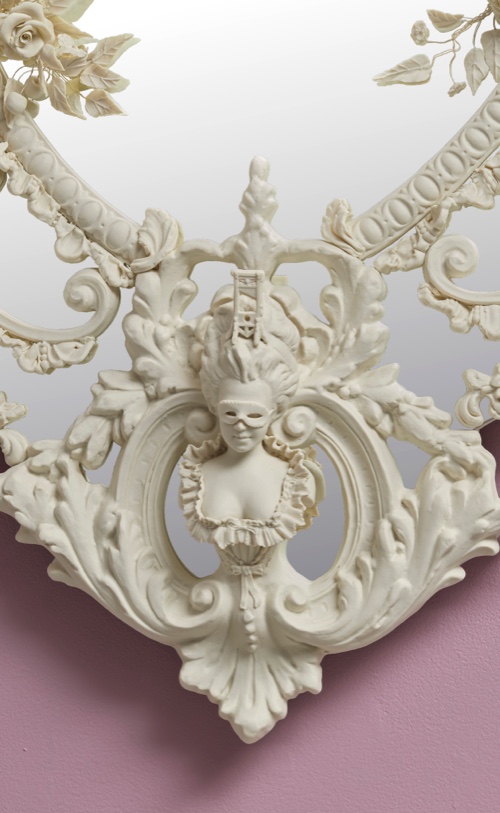
That wonder reached its most ambitious peak in Marie Antoinette’s Folly, a monumental installation commissioned by London’s Victoria and Albert Museum for its landmark exhibition, Marie Antoinette Style. Conceived as a contemporary reimagining of Toile de Jouy wallpaper, the work unfolds as a sprawling porcelain panorama composed of thousands of hand-cast miniatures. Across its surface, the queen’s life recurs in fragmentary vignettes—preparing for court, disguised for a masquerade, or wandering pastoral gardens—while the specter of execution quietly haunts the porcelain margins.
The Magic of Tiny Things
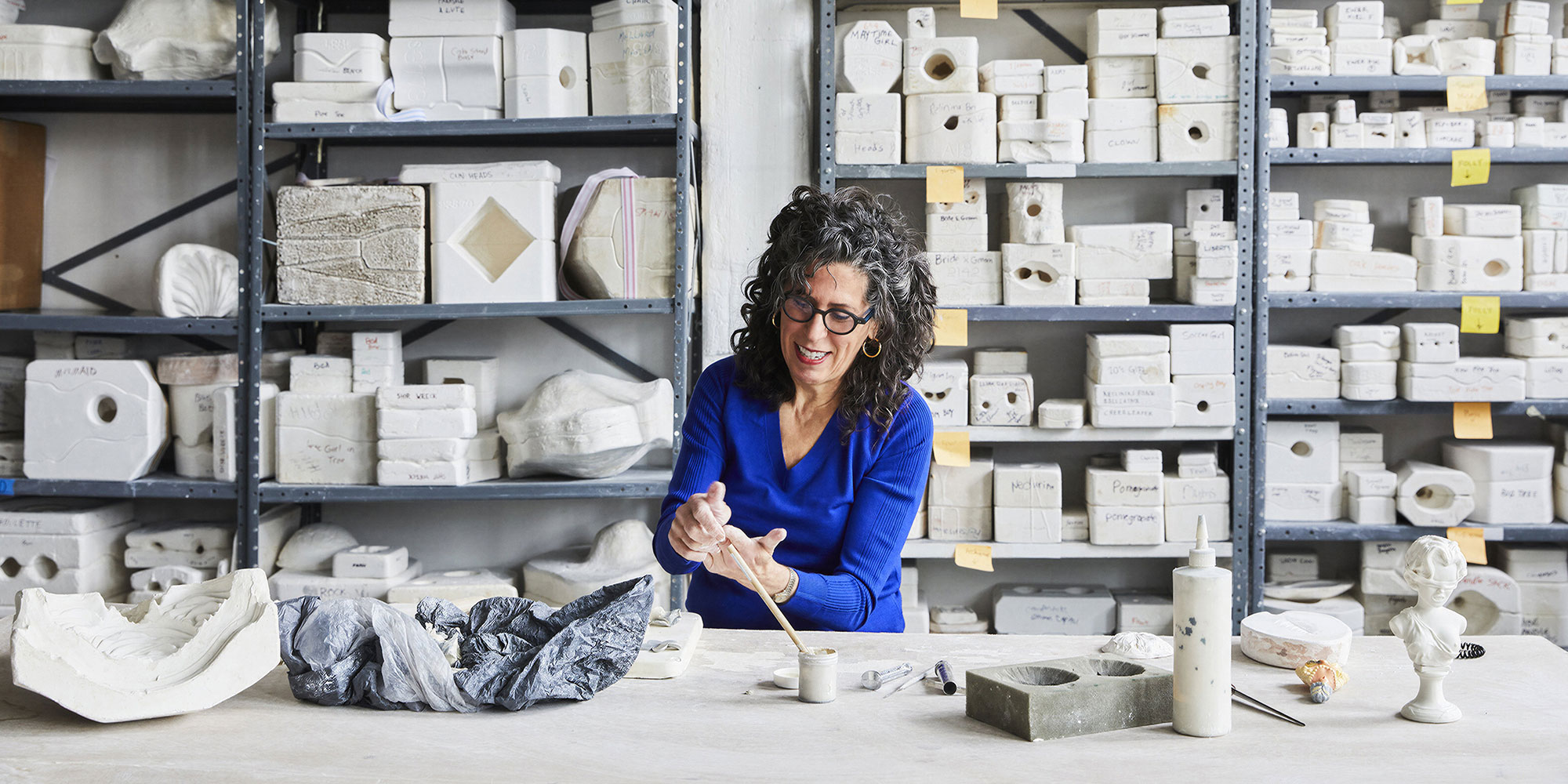
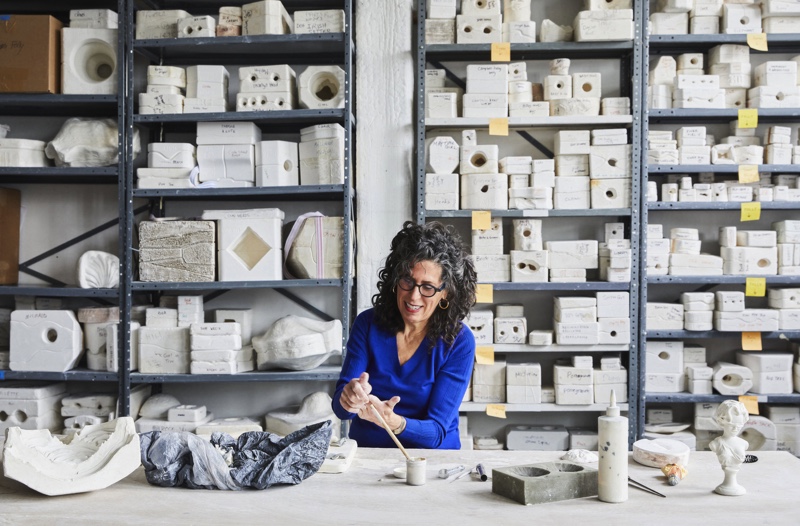
It is a chill winter’s day when Katleman calls from her Brooklyn studio. The walls behind her are stacked with shelves piled high with porcelain moulds, a colossal collection that has taken some 20 years to amass.
Katleman’s approach to scale is central to her work’s impact. Miniature objects—figurines, buildings, flowers, and ornaments—form the backbone of her practice. “Miniatures are so appealing; people feel comfortable with them,” she explains. “Then, when I introduce something subversive, it’s even more shocking.” Rendered in unglazed white porcelain, this innocence begins to curdle. “There’s something perverse about what happens when these objects are stripped of colour,” she notes. “They become otherworldly, sometimes creepy.”
Her landmark installation, Marie Antoinette’s Folly, serves as the pinnacle of this theatrical wit. Comprising roughly 4,500 hand-cast elements, the work took 5 days to install at the V&A. Flanked by mirrors that reflect both the queen’s idyllic rural fantasies and her violent end, the piece conjures a miniature Versailles complete with roses, butterflies, and hidden guillotines tucked into elaborate porcelain coiffures.
Katleman’s sympathy for her subject is clear. Long fascinated by the queen as a pop-cultural caricature, she sought to complicate the narrative. “She had so little agency,” Katleman notes, “and was subjected to so much criticism and cruelty.” Discovering the queen’s retreat into the pastoral serenity of the Petit Trianon reframed the story: “I realized she was trying to find happiness. I felt very compassionate toward her.”
Materially, the work is a love letter to biscuit porcelain, a matte, velvety ceramic notoriously unforgiving to work with. Having abandoned glaze two decades ago to embrace ambiguity, Katleman relishes the historical coincidence that this was the very medium favored by the Sèvres manufactory patronized by Marie Antoinette herself.
Yet, Katleman’s porcelain world is shaped as much by the flea market as the palace. Katleman’s visual vocabulary is built from “low, cheap castoffs,” discarded toys and mass-produced trinkets scavenged from sidewalks and pet stores. “I might buy something for three dollars and spend twelve hours casting it,” she grins. “Taking the time to care for them, reinventing them in beautiful porcelain to give them a second life.”
These reimagined objects define the Marie Antoinette Style installation. “At a friend’s house, I found a dish scrubber with a plastic handle of Marie Antoinette’s head,” she recalls. “I had to have it… now it’s a big part of the show! Of course, I also needed a guillotine. I didn’t want to make one, because something that had a life of its own before I find it is a piece of history. Especially mass-produced things. In the end, I found a 3D-printed guillotine on a Warcraft website.”
From Fish Tanks to Folly
For Katleman, Marie Antoinette Style was the kind of commission that feels almost predestined, a rare convergence of personal obsession and professional opportunity. Her sensibility is deeply shaped by a lifelong love of the decorative arts, particularly the lavish indulgence of the 18th century. Museums, she says, are her “happy place.” Rococo paneling, gilded mirrors, and period rooms are her recurring touchstones, the places where she feels most at home.
In an art world that often shies away from the overtly decorative or the classically feminine, Katleman leans in with the spirit of an iconoclast, the “sand in the Vaseline,” as she calls it. “If it’s something I’m not supposed to do, that’s exactly what I want to do.”
Her fascination extends to the dreamlike world of chinoiserie, a style defined by fantastical Western interpretations of East Asian aesthetics. “I absolutely love chinoiserie,” she enthuses. “The fantasy, the playfulness, the beauty, the exquisite craftsmanship. There’s something surreal about it.” While others might focus on the complexities of its hybrid origins, Katleman finds beauty in the fantasy. For her, chinoiserie’s dream logic, with its floating perspectives and defiance of gravity, offers a “vacation from the literal.”
“In art today, we’re not allowed to appreciate the hybrid, but beauty is about what’s unfamiliar to us,” she says. “In the decorative arts, chinoiserie is everywhere. If we don’t have cultural appropriation, then we don’t get Venice.” To illustrate the point, she rummages through her shelves and holds up a tiny pagoda. It is a palm-sized treasure destined for the kiln, discovered not in an antique shop, but in the fish tank aisle of a local pet store.
Inside the Forge
A self-avowed Brooklynite, Katleman begins her day with an intimate communion with the past: espresso served in a chinoiserie porcelain cup and toast on a scalloped majolica plate. These pieces, from her beloved collection of 19th-century ceramics, set the tone for her daily pilgrimage. From her home in Carroll Gardens, a neighbourhood where front yards are theatrically draped in “outrageous” lawn ornaments, she makes the 11-minute walk to her sanctuary through the gritty industrial landscape of the Gowanus Canal.
The studio is a library of the forgotten, housing two kilns and a vast archive of moulds amassed over twenty years. To achieve her signature “vanilla fondant” finish, Katleman subjects her porcelain to a searing 1,300°C baptism. At the height of this 24-hour alchemy, the clay becomes almost liquid, moving in the kiln with a buttery, glass-like fluidity. While 90 percent of her world is cast, she insists on hand-rolling every flower and leaf. “They’re not as special if they’re cast,” she explains. “They wouldn’t have that sense of movement or playfulness.”
Katleman’s process is a delicate dance between the heavy lifting of research and the spontaneous “experience of making.” For the V&A, she submerged herself in the life of Marie Antoinette, yet she always leaves a window open for the objects themselves to dictate the ending. “When I’m working with ceramics, they take on a life of their own,” she says. “Juxtaposing characters sparks ideas for new stories. I love letting the process take me somewhere unexpected. That’s the fun of it.”
As she turns her attention back to the workbench, catching up on commissions and hinting at a couple of exciting museum projects on the horizon, Marie Antoinette Style prepares for its own global voyage, a tour that will carry her porcelain secrets from Toronto to the far reaches of Japan and South Korea.
Reflecting on her evolution from painter to sculptural storyteller, Katleman feels a profound sense of arrival. “That desire to tell stories with found objects,” she reflects, “that’s where I am right now.”






The Maître Tea of Paris
Authentic Chinese tea culture has almost been lost to modern times, but the tea master at La Maison du Trois Thés in Paris continues the tradition.

Chanel Brings the Abbey of Aubazine to 2020 Show
Chanel’s S/S 2020 Haute Couture show lifts the veil on Gabrielle Chanel’s early years with a stroll through the Abbey of Aubazine

