
In the mid-century lexicon of Tiffany & Co., nature was never merely a backdrop; it was a protagonist. Since the 1950s, the house’s archives have been punctuated by the fantastical, taxonomical obsessions of Jean Schlumberger, a designer who viewed the natural world not as a landscape to be tamed, but as a cabinet of curiosities to be translated into gold and gemstone.
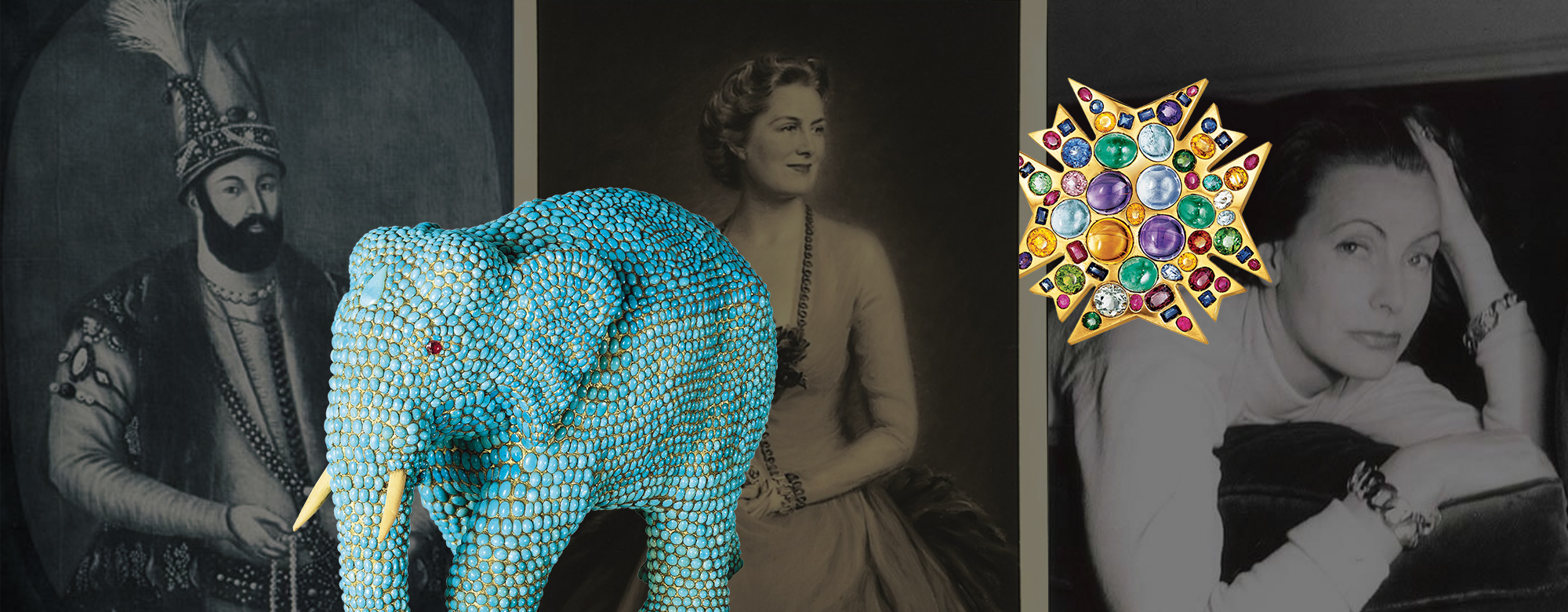
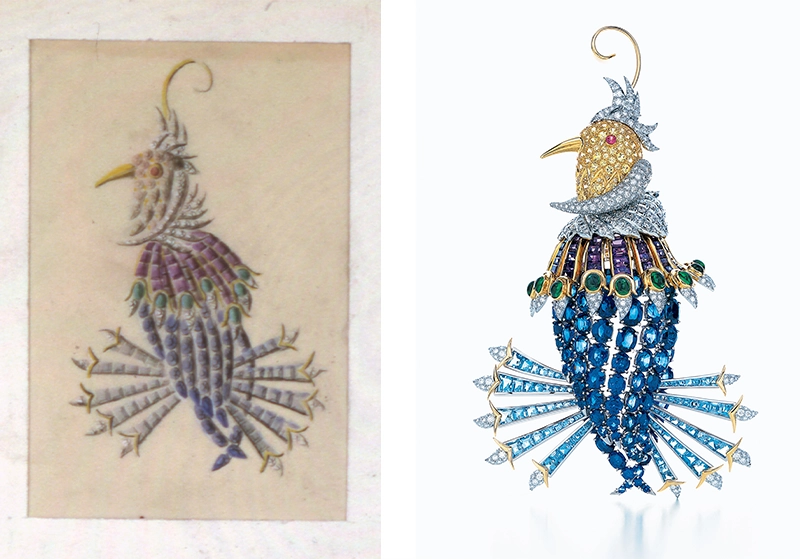
His most enduring contribution, the Bird on a Rock brooch, first appeared in 1965: a jaunty, diamond-encrusted creature perched atop a hulking, monochromatic boulder of a gem.
Decades later, the bird has decided to stop simply posing and start participating.
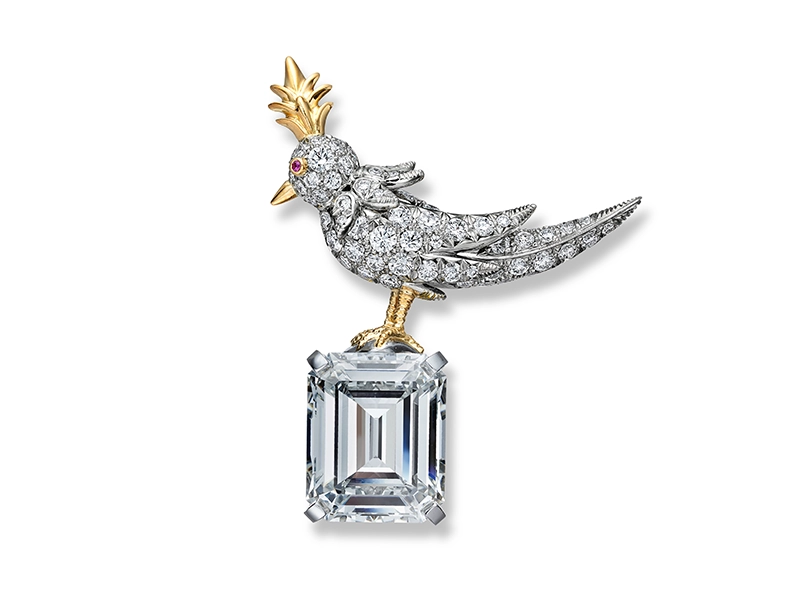
This month, Tiffany & Co. unveils two new “Time Objects” that pull the motif into the rigorous, gear-driven world of haute horlogerie.
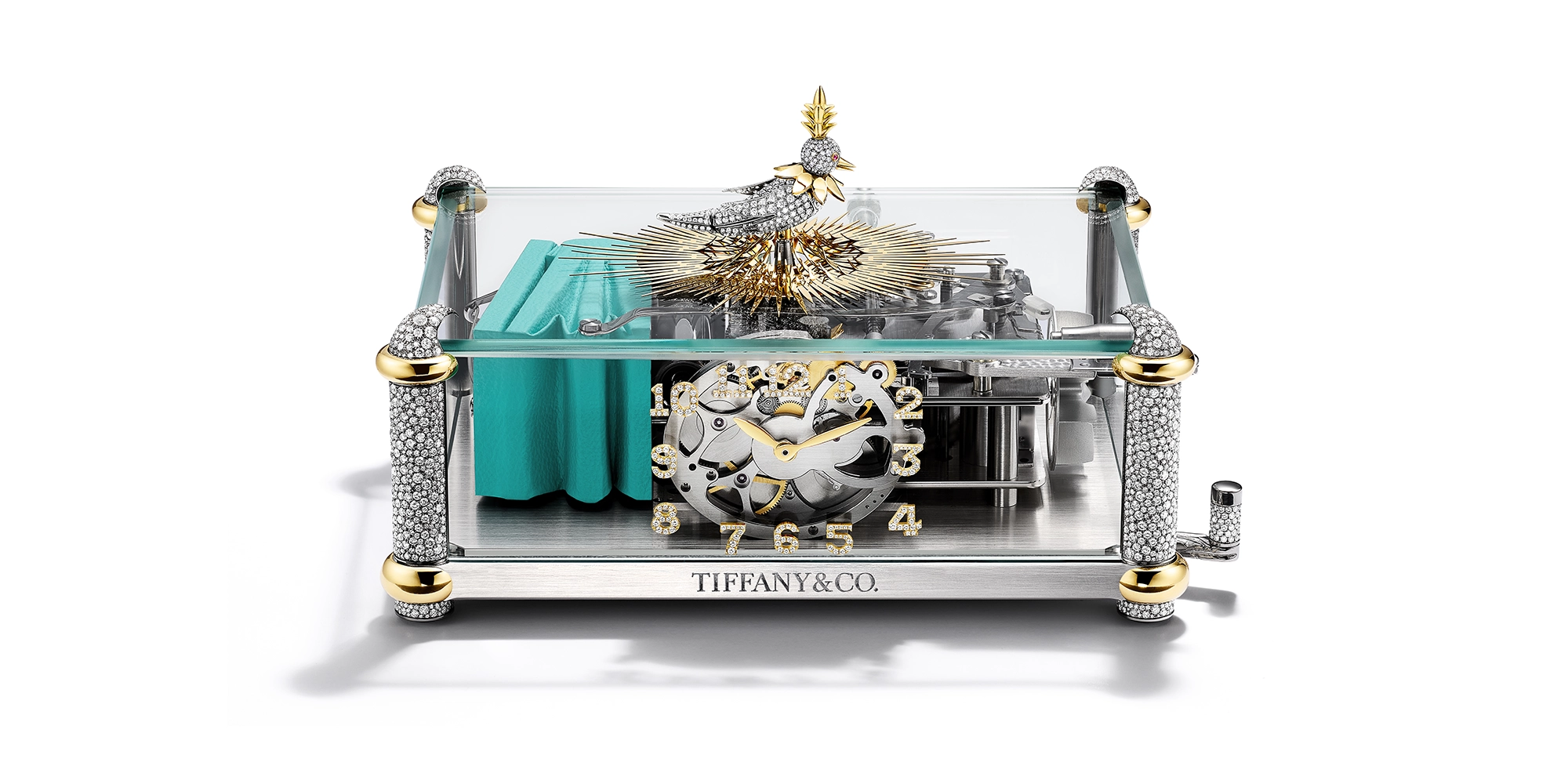
The more ambitious of the two, the Singing Bird on a Rock clock, is a limited edition of 25, suggesting the maison has been spending considerable time in the Swiss Jura. Developed over two years with the automaton specialists at Reuge, the clock revives a mechanical curiosity that, in the late 18th century, was the ultimate status symbol of the European aristocracy: the singing bird.
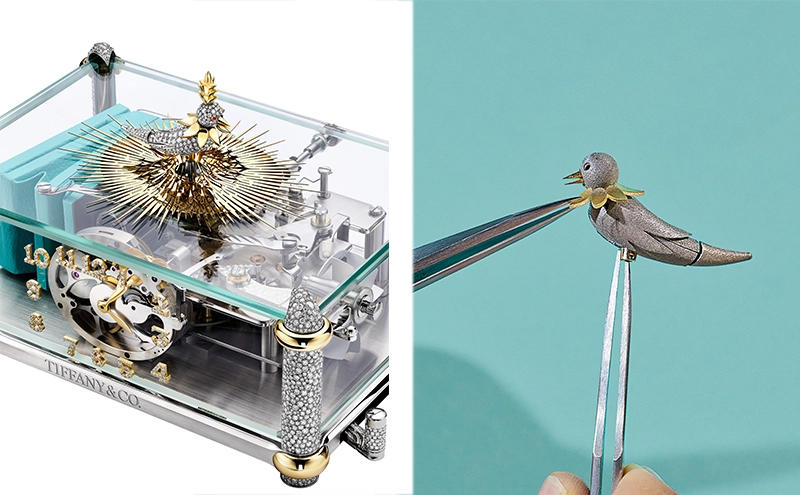
Housed in a glass vitrine supported by a titanium pillar, an industrial choice that provides a stark, modern foil to the opulence within, the clock becomes a theatre.
At the press of a button, the automaton erupts.
A diamond-encrusted bird, perched on a sculpted gold perch, shudders to life. Its wings lift, its beak snaps open and shut, and a melody, generated by a miniature organ of bellows and pipes, warbles from within the chassis.
It is a marvel of miniaturization, requiring 130 hours of gem-setting just to dress the bird’s plumage in 2,375 diamonds.

There is, perhaps, a touch of Fifth Avenue performance art in its programming: the clock is set to chime, with programmed whimsy, at exactly 5 o’clock, the closing hour of the house’s flagship store, and a nod to the rhythm of the city that Schlumberger once called his own.
If the clock is a theatrical set piece, the Paradise Bird Parrot watch is a miniature, wearable painting.
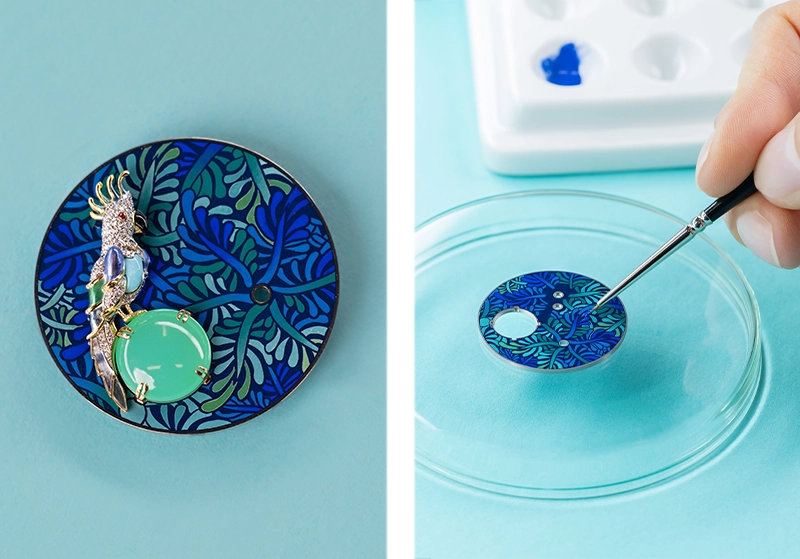
It is an exercise in the painterly potential of enamel, a medium that is as notoriously temperamental as it is exquisite. The dial unfolds in layers of depth, achieved through four coats of opaque blue enamel, upon which artisans have hand-painted three separate coats of foliage.
The work is painstaking, consuming 80 hours for a surface no larger than a silver dollar.
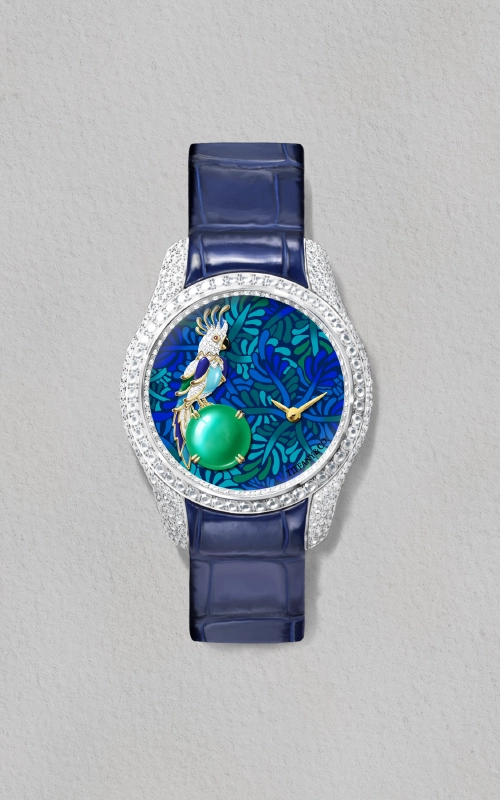
Perched on a verdant, two-and-a-half-carat chrysoprase cabochon is the parrot itself: a white-gold sculpture adorned with a turquoise body, an onyx beak, and eyes of pink sapphire.
Only 10 of these watches will exist, scarcity that feels entirely consistent with the Tiffany spirit.
They are, ultimately, objects that remind us how, in an age where time is measured by the digital pulse of an algorithm, there remains an undisturbed, mechanical pleasure to be found in the flutter of a golden wing, or the hand-painted depth of a blue dial that refuses to be rushed.