
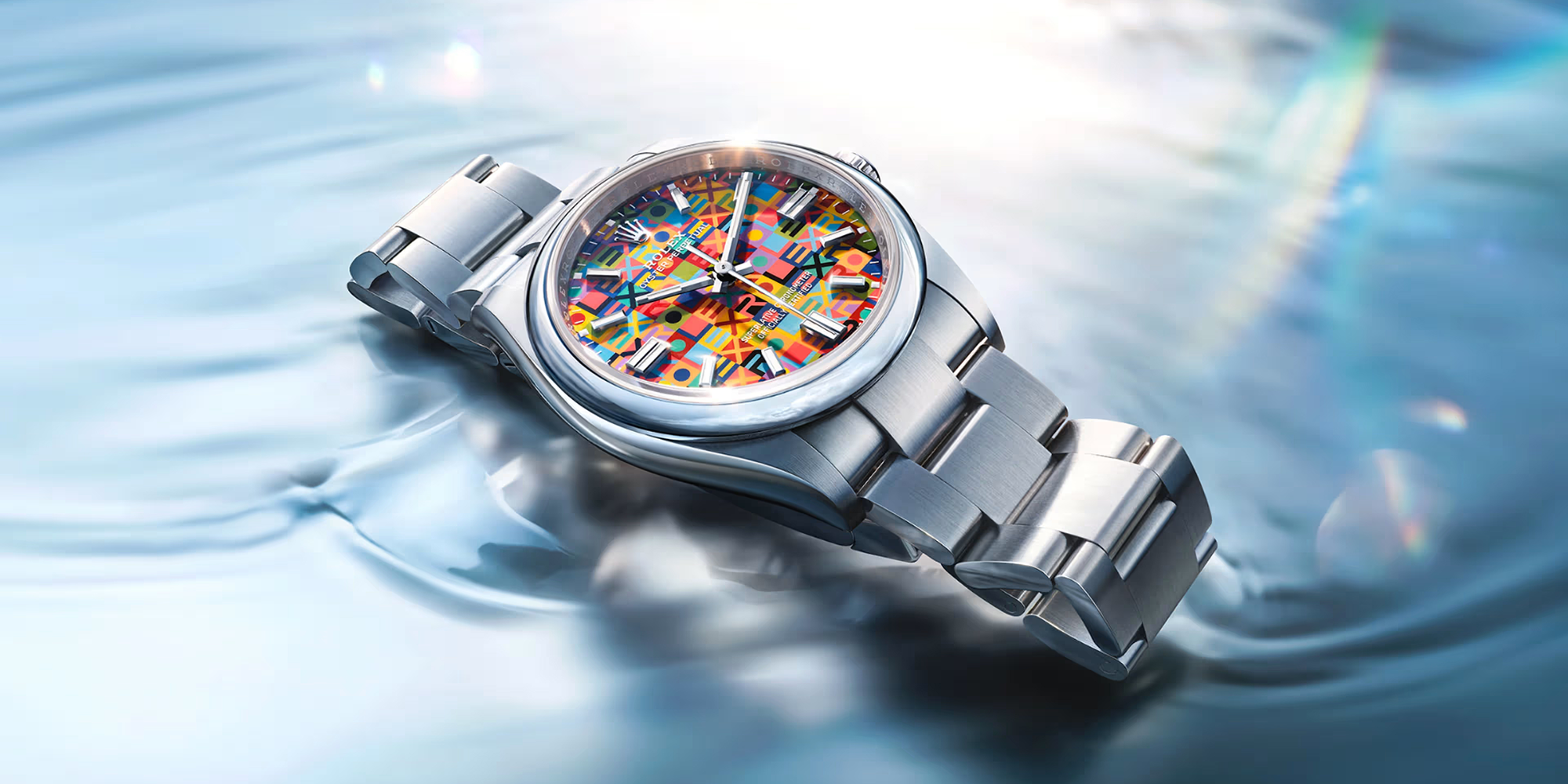
To hold a watch is to engage in a peculiar sort of negotiation with the finite. Most timepieces, particularly those of the classic persuasion, lean toward the austere—a composed ticking away of minutes, usually rendered in the measured tones of polished steel or tempered gold. It is, therefore, a slight, delightful shock to encounter the new Oyster Perpetual 36, a piece that suggests the Rolex atelier has decided that timekeeping need not always be a serious affair.
The Oyster Perpetual has, since its debut in 1931, been the lodestar of the Rolex identity. It is the watch-as-watch: simple, reliable, and essentially immutable. Yet, in this latest iteration, the house has reached back into its own history, reviving the Jubilee motif, a pattern that first appeared in the late 1970s, and imbuing it with a startling, graphic vitality.
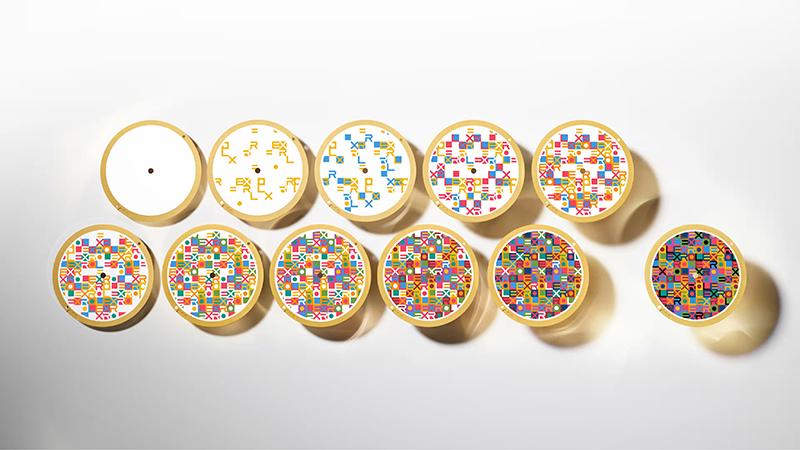
The dial is the collection’s undisputed protagonist. It is not merely a face but a study in layered complexity. The Rolex name is rendered not in simple enamel, but in a sequential, overlapping interplay of lacquer, a process that demands a level of precision nearing the monastic. Each colour is applied in turn, requiring an alignment so exact that the symbols seem to vibrate against the surface, creating a kinetic effect that feels remarkably modern. Ten distinct shades, a kaleidoscopic departure from the brand’s usual tonal discipline, animate the face, turning the act of checking the hour into a brief, vibrant immersion in colour.

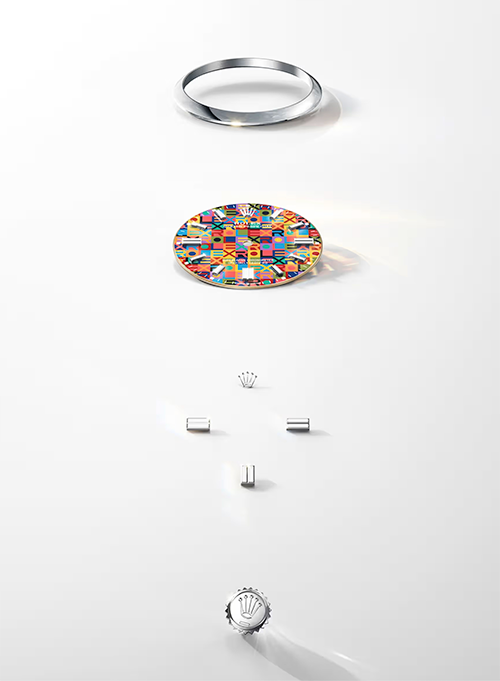
This graphic exuberance is, quite sensibly, tempered by the architecture of the Oyster case. Rendered in the house’s proprietary Oystersteel, the case remains a triumph of industrial engineering, a luminous, highly resistant alloy that retains its lustre even when subjected to the unrelenting pace of daily life. The aesthetic continuity flows seamlessly into the Oyster bracelet, a three-piece link design that has been a fixture of the wrist since the 1930s. It remains, as it has always been, a masterpiece of functional grace, anchored by the secure, utilitarian click of the Oysterclasp.
There is a distinct tension here, and it is a successful one: the collision of a nearly century-old legacy with a design language that feels entirely contemporary. By marrying the rigid, enduring architecture of the Oyster Perpetual with such a fluid, joyous canvas, Rolex has produced something rare: a tool watch that doubles as a mood piece. It is a reminder that while the mechanics of time are fixed, our relationship to it need not be.