
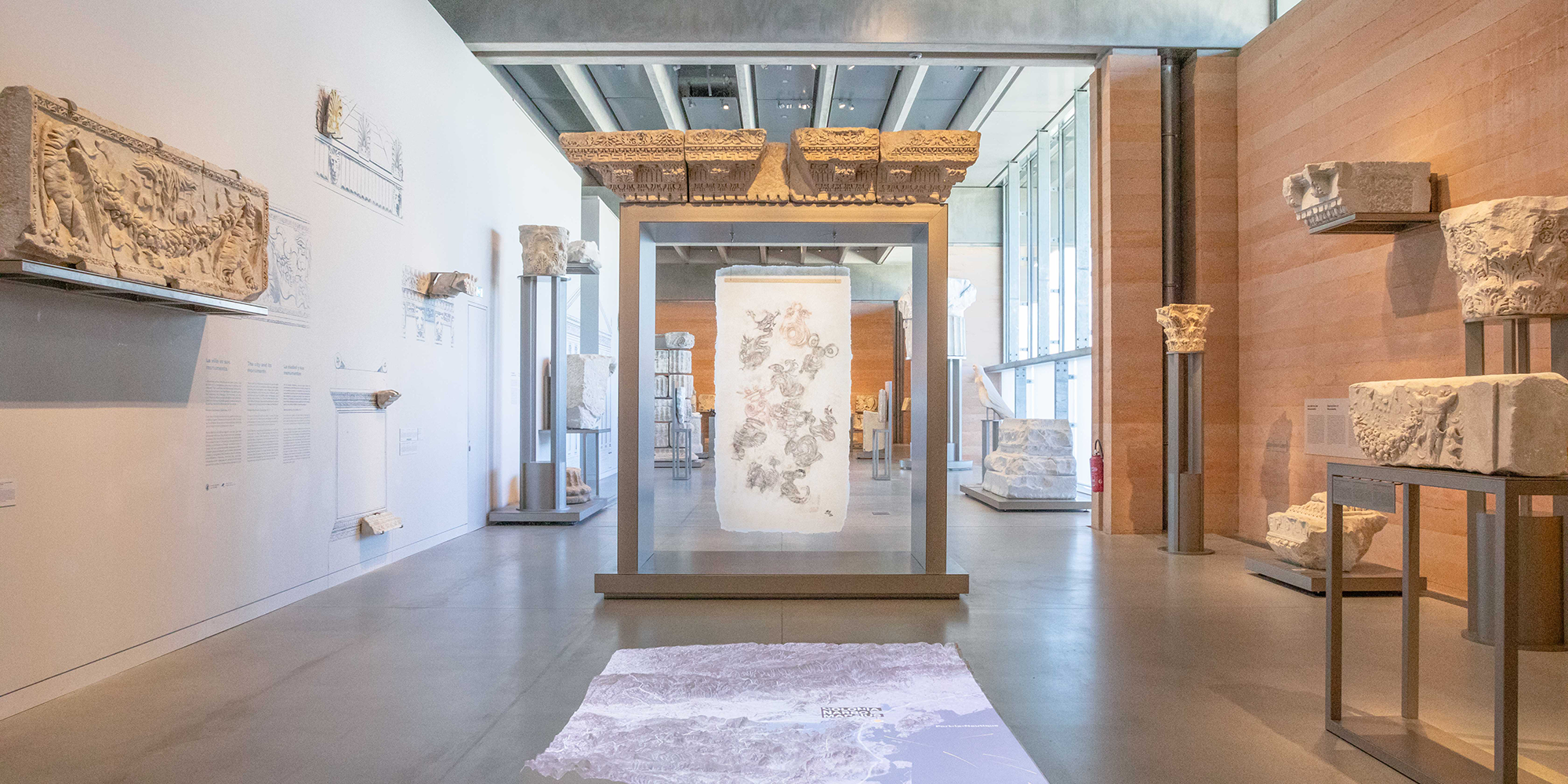
Just beyond the predictable glitz of the French Riviera, where the Mediterranean coast begins its curve toward Spain, sits Narbonne. Founded in 118 BCE as Narbo Martius, it was the capital of Roman Gaul and the first Roman colony established outside Italy, a crucial maritime hub whose history is still legible in the weathered stone and geometry of its streets. It is this perfect bedrock of classical antiquity that drew the globally acclaimed Franco-Chinese artist Jiang Qiong’er to stage her ambitious creations.
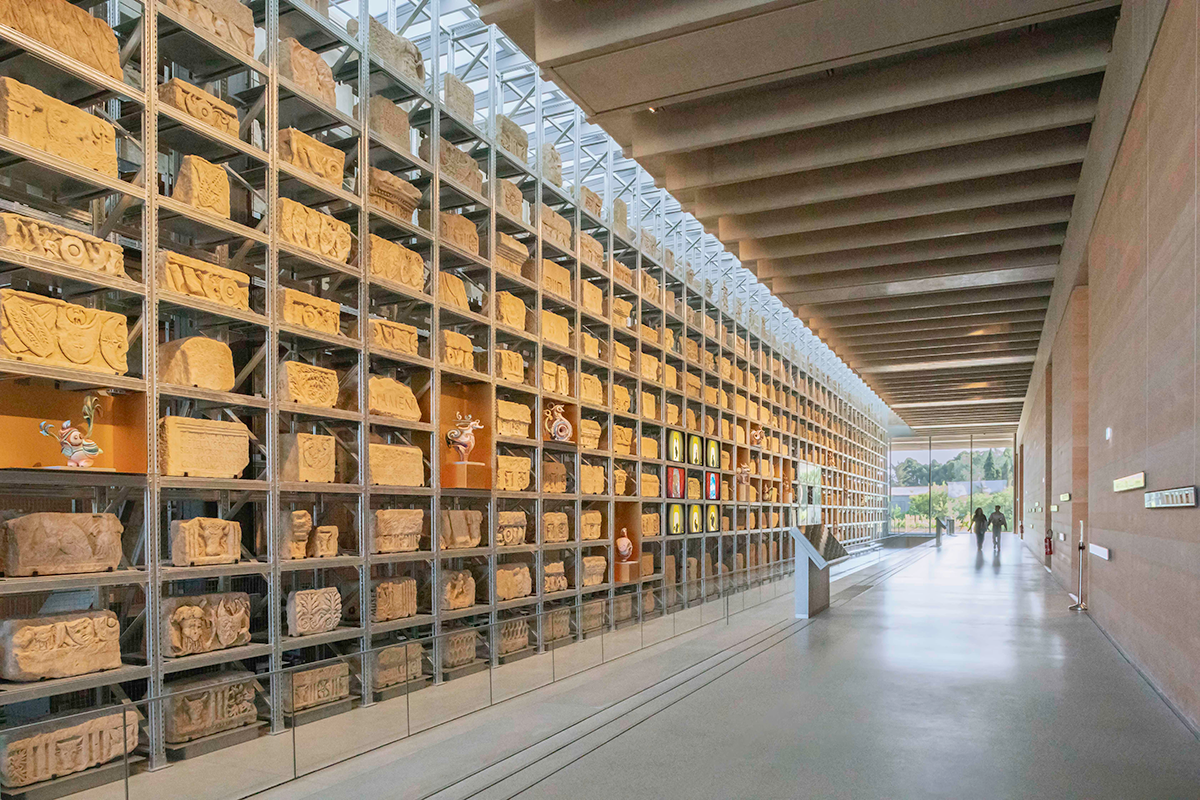
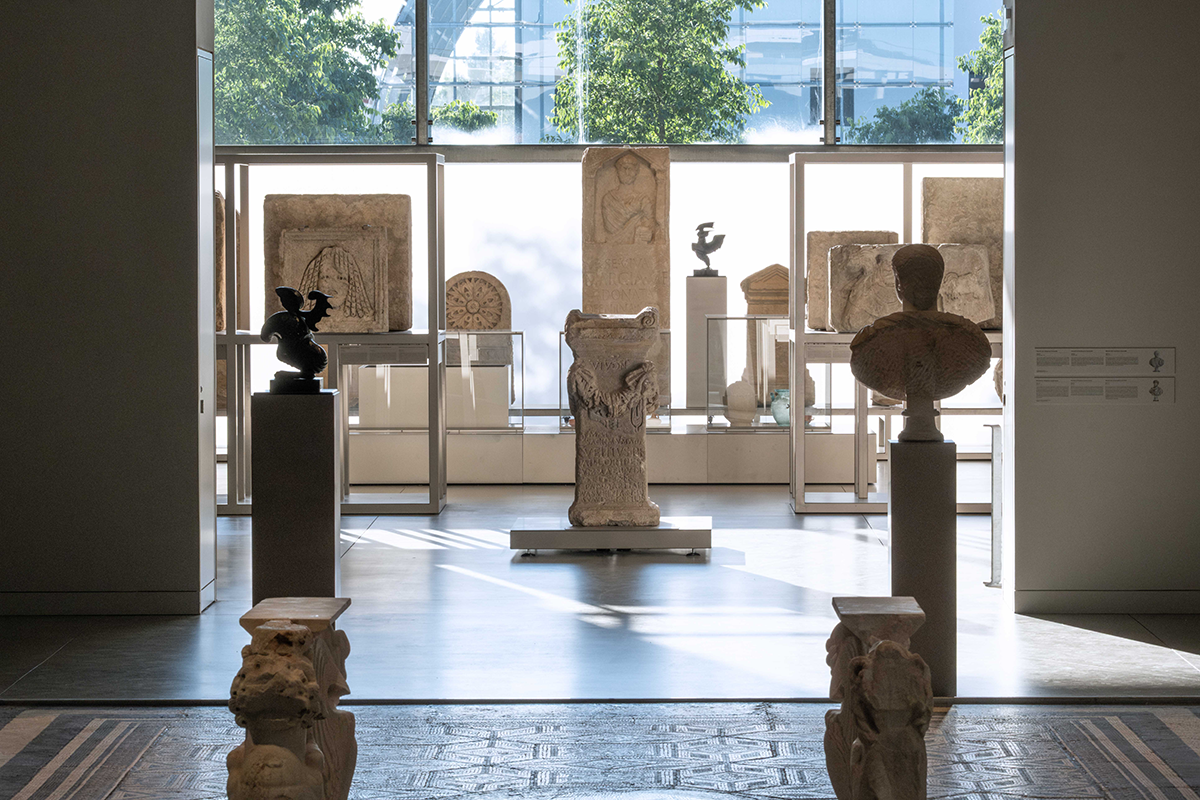
At the Narbo Via Museum, the sleek, Norman Foster-designed institution that houses one of France’s most significant collections of Roman antiquities, Jiang has mounted The Breath of Time, on view from May 19, 2026 to January 3, 2027. Celebrating the 5th anniversary of the museum, it is a sweeping dialogue across time, space, and civilizations.
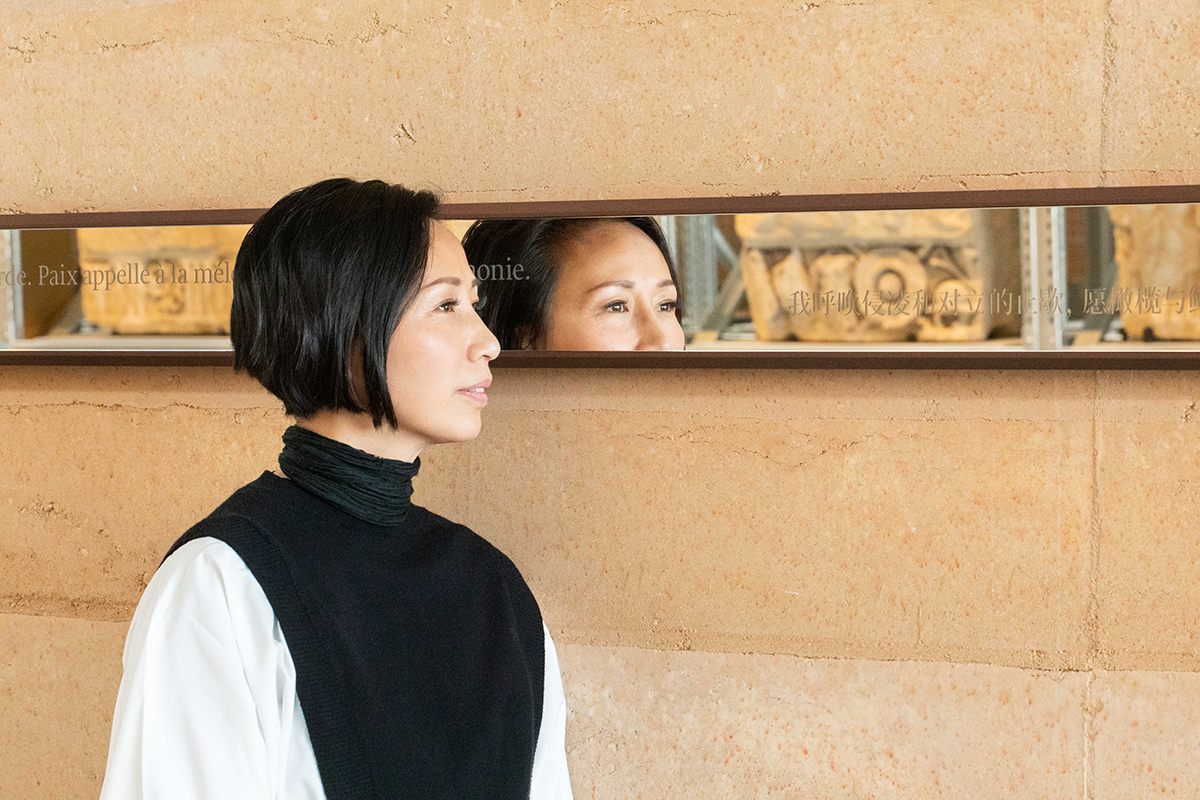
The result is neither collision nor simple juxtaposition, but a thought-provoking philosophical resonance. Wandering through the primal darkness of prehistoric caves to the marble halls of ancient empires of both East and West, Jiang walks alongside those guardians of ancient civilizations as living companions, initiating a creative dialogue that protects the treasured spark of humanity across the millennia.
Myth and Memory
The installation begins in the museum’s entrance hall with Heaven & Earth, an elemental intervention consisting of 76 bronze tiles arranged around a reflecting pool. While each piece offers a direct nod to the terracotta rooflines of classical Roman architecture, Jiang elevates the humble clay form into an enduring vessel for language and memory.
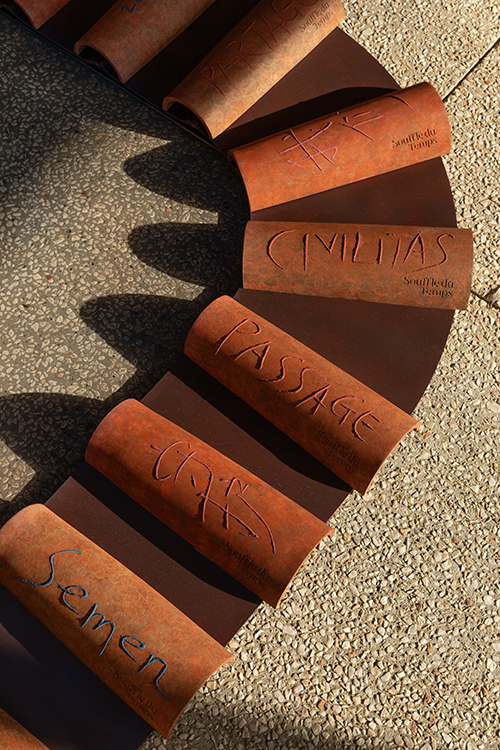
Each bronze plate is engraved with words relating to time, rendered in a trilingual knot of Latin, French, and Chinese. As the southern French sun moves across the atrium, light and shadow animate the metal surfaces, transforming the passage of hours from a linear march into a cyclical rhythm.
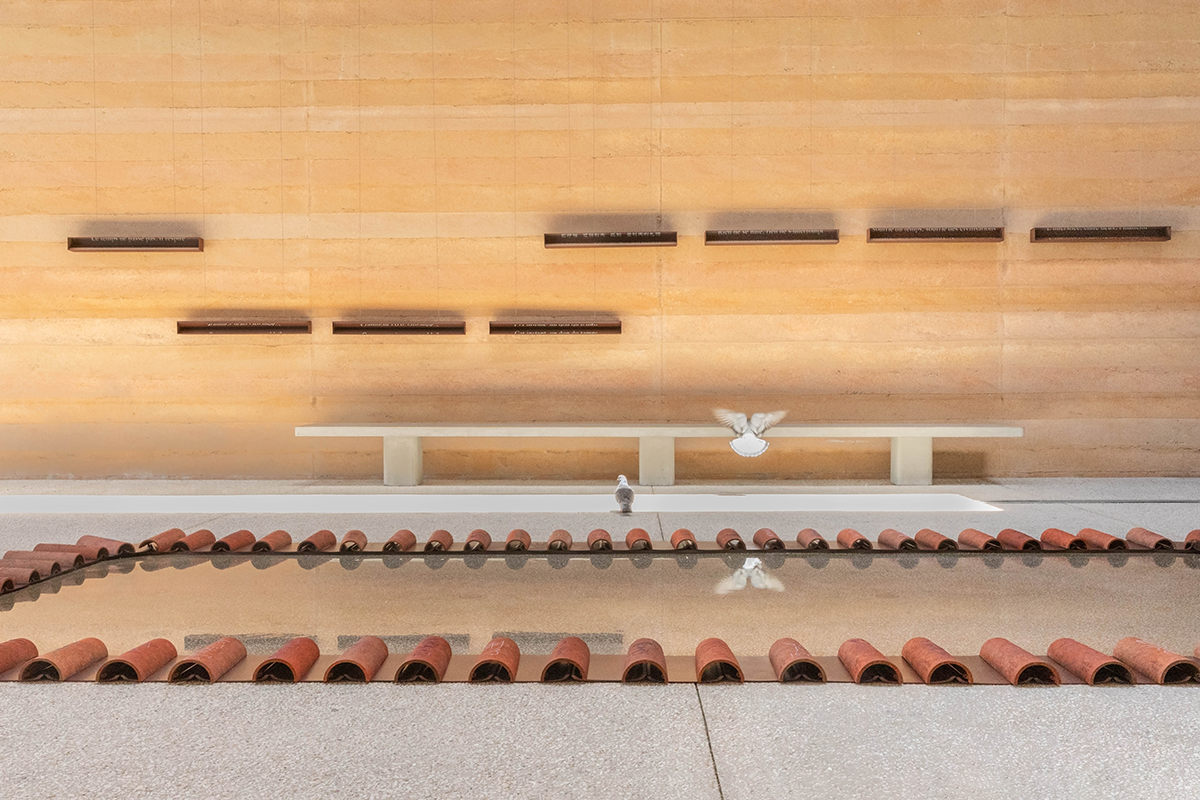
Placed at the edge of this water, the work becomes a site of individual and collective reflection: a mirroring pool where the viewer is invited to contemplate the transient nature of human empires against the recurring cycles of the cosmos.
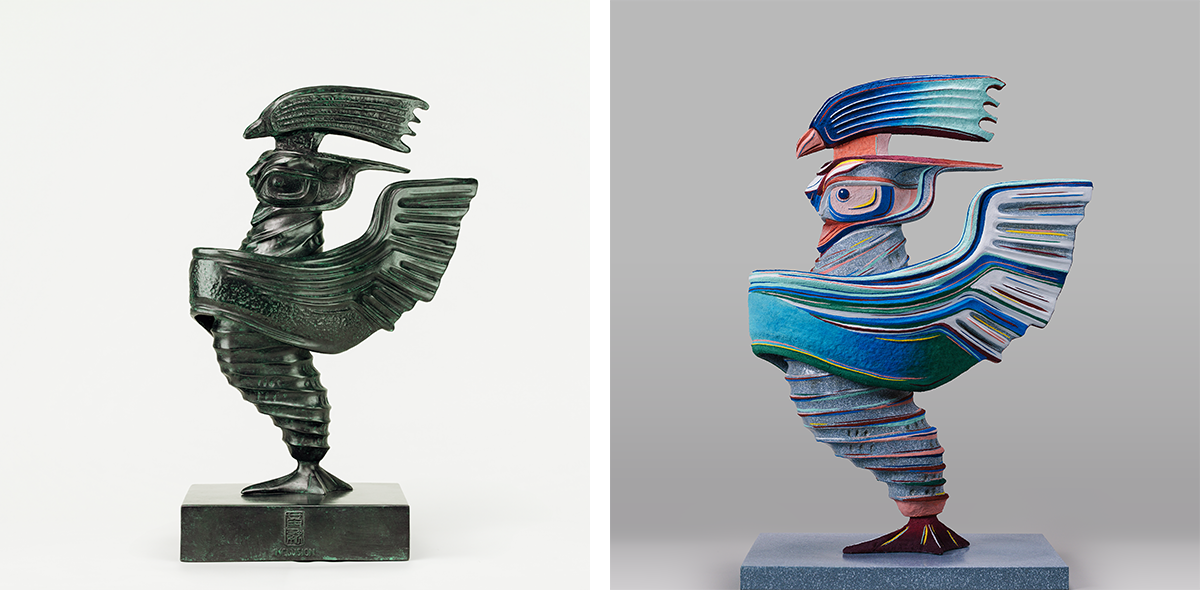
At the heart of the permanent collection lies XII Calls, a gathering of 12 mythical creatures shaped by the collective imagination of great ancient civilizations. Inspired by Chinese mythology alongside the foundational cultures of the Maya, Egypt, and India, these hybrid figures appear as bronze sculptures and painted forms integrated thoughtfully into the museum’s layout.
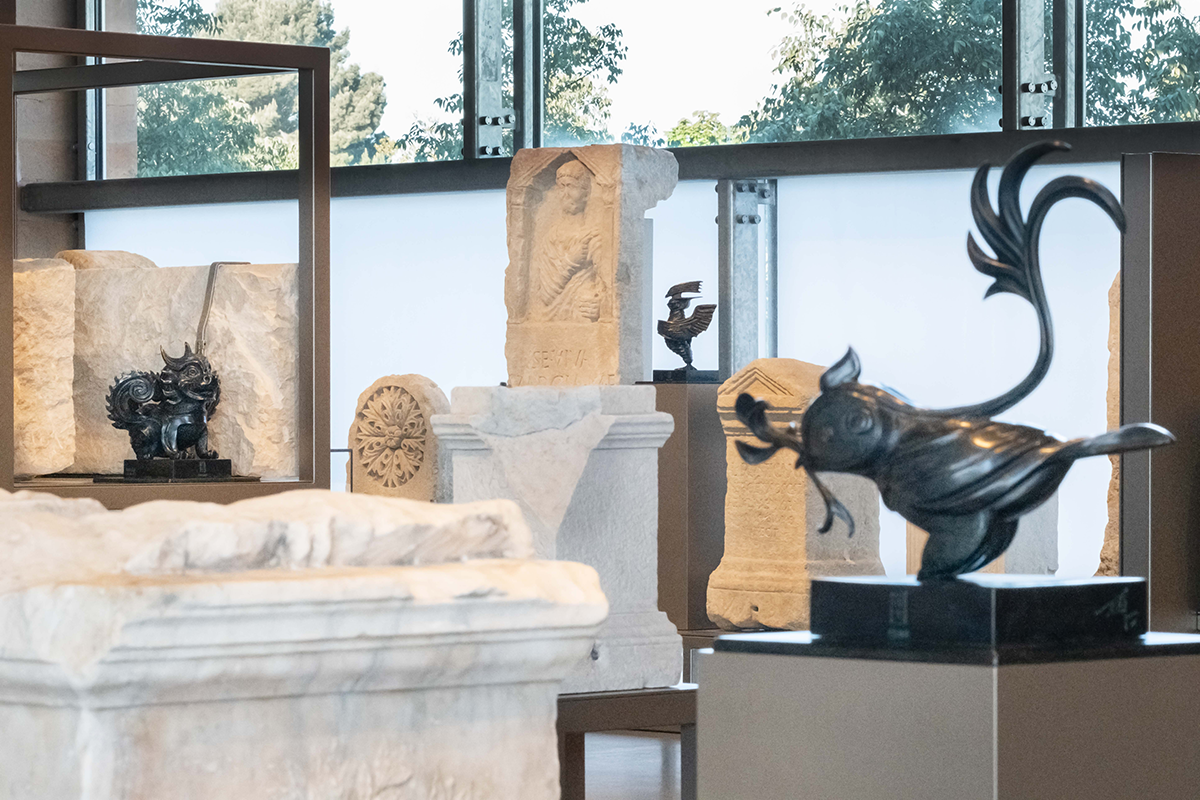
Embedded alongside Narbo Via’s permanent antiquities, they resonate creatively within the world of Roman mythology, provoking that most fundamental question of humankind: where do we come from, and where are we going?
Voices from Deep-Time Caves
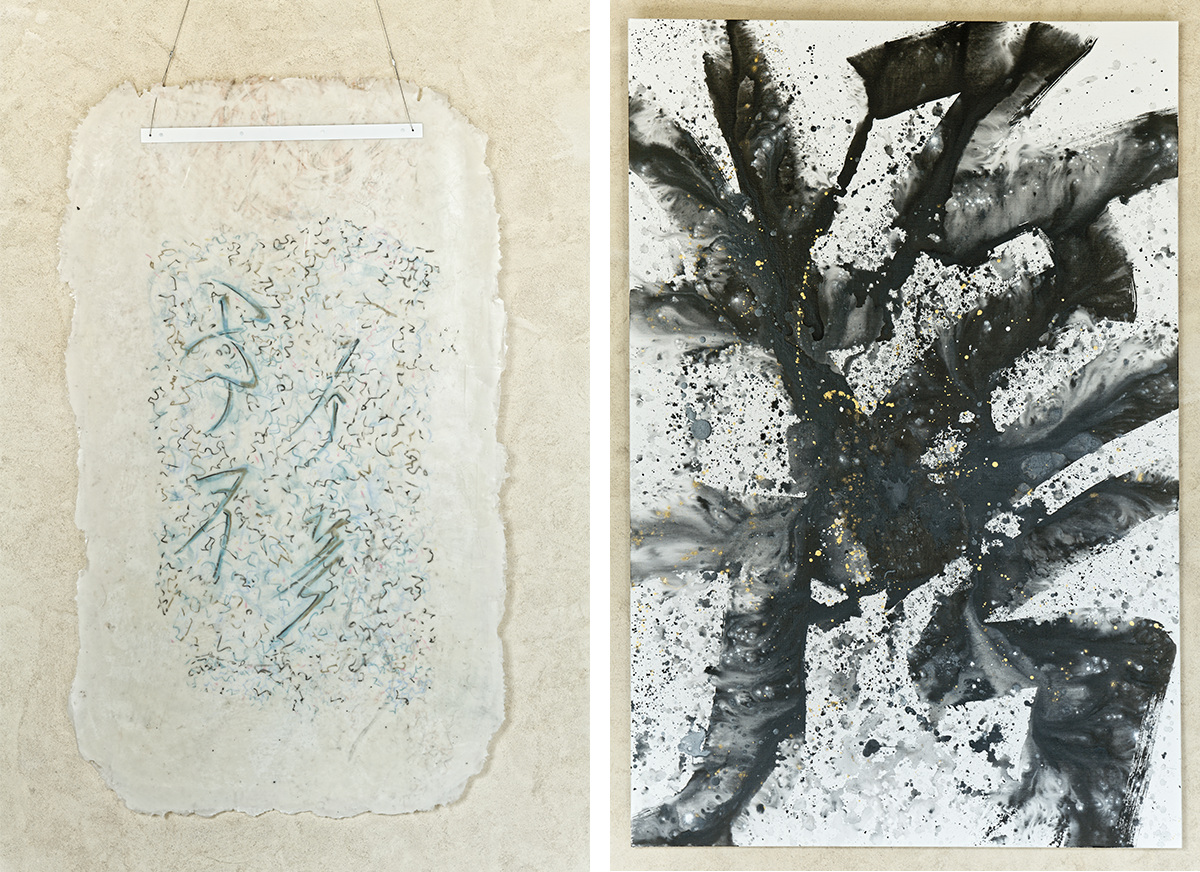
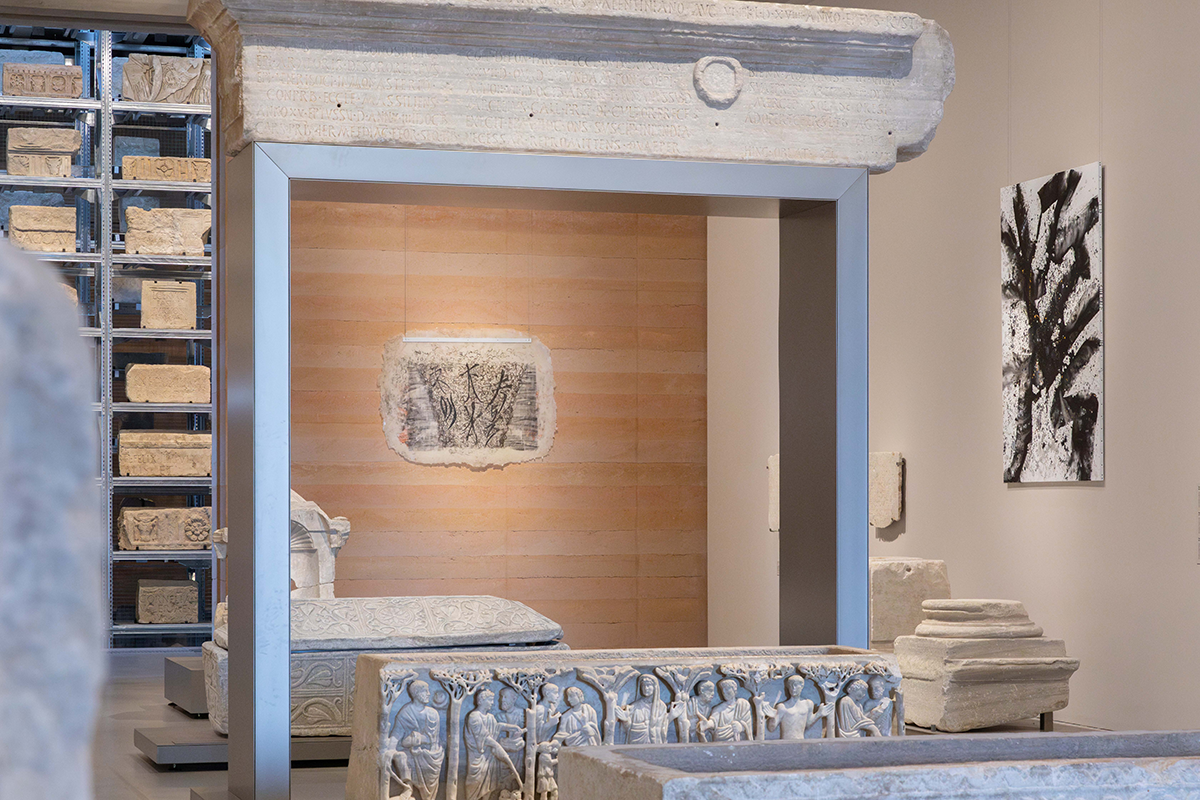
The exhibition grows more intimate as it turns toward the often-unrecorded histories of women. In Her Voice – Bravery, Jiang draws inspiration from Nüshu, the phonetic writing system developed exclusively by rural women in China’s Hunan province as a secret language. Jiang layers her own contemporary charcoal expressions beneath translucent sheets of raw wax. Installed directly alongside patriarchal Latin inscriptions, the wax surfaces naturally crack, reveal, and conceal. It creates a delicate palimpsest where the voices of women, long omitted from the historical narrative, reclaim their power.
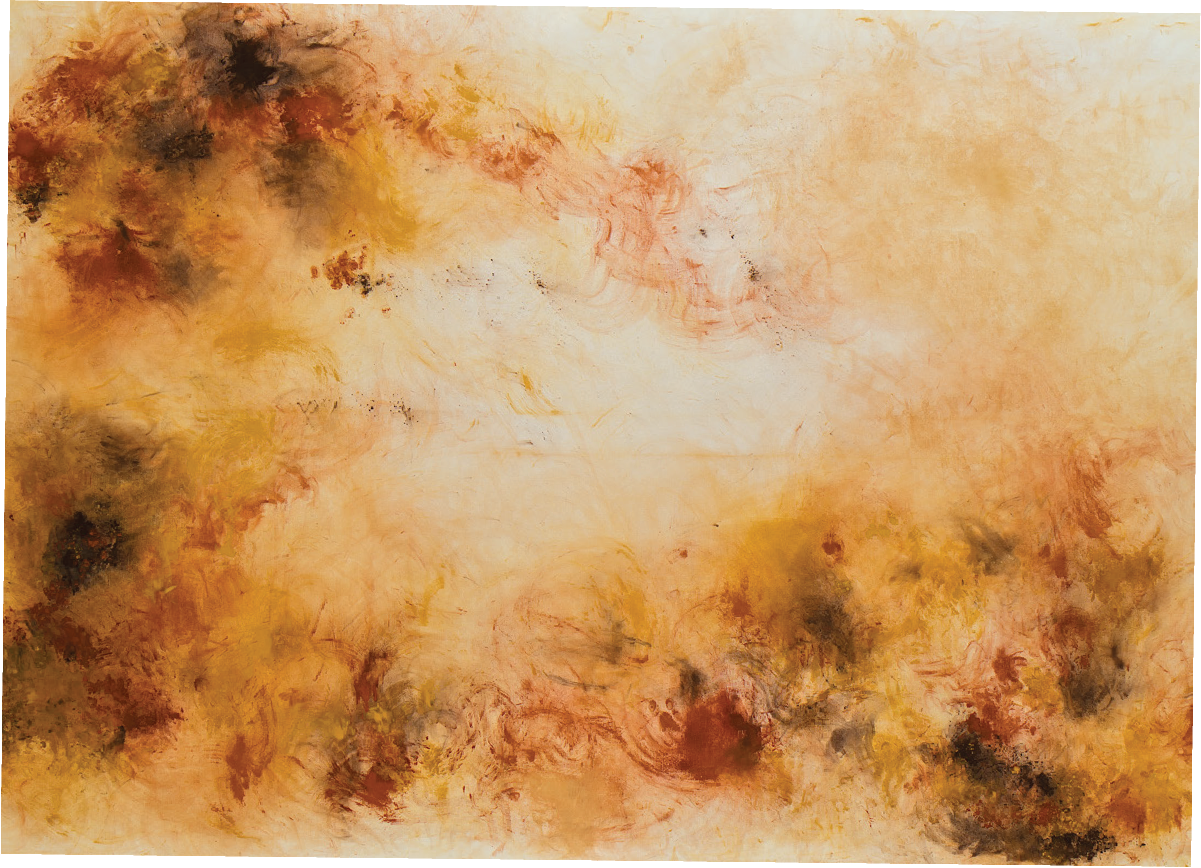
The dialogue deepens into pure materiality in The Angels of the Caves, a series that traces its lineage back to Jiang’s childhood, when she fell under the spell of the Dunhuang Mogao Caves. Decades later, on the opposite end of the Eurasian continent, she discovered an artistic kinship within the primeval caves of Lascaux.
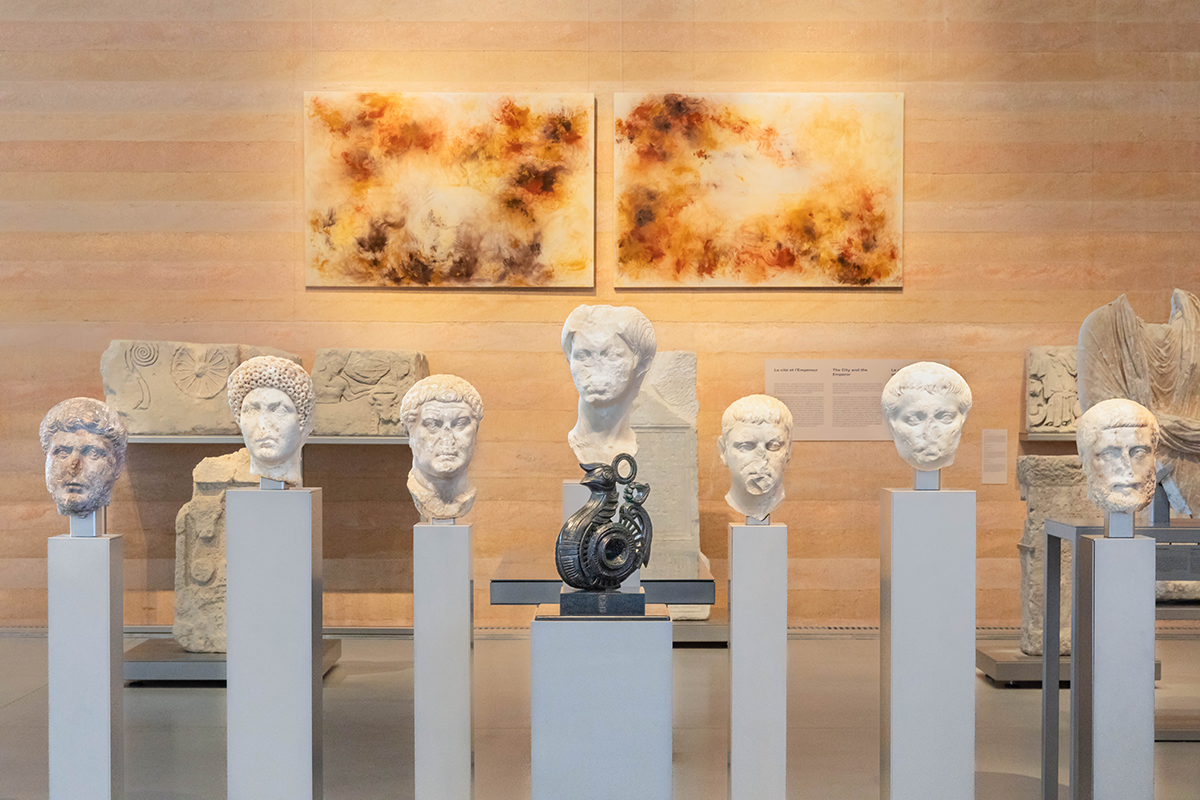
To connect these distant sites of human wonder, Jiang turns away from modern synthetic pigments and embraces raw geology itself. Working with mineral pigments drawn directly from these historic sites, she applies them with a tactile immediacy that revives the ancient instincts of fresco and cave painting.
Suspended within the gallery, these rich ochres and deep mineral powders hang in a raw, almost primal tension alongside Narbo Via’s ancient Roman wall paintings. The result is a visceral artistic dialogue, one that bypasses the intellect to connect millennia of human expression through the very dust of the earth.
The Floating Epilogue
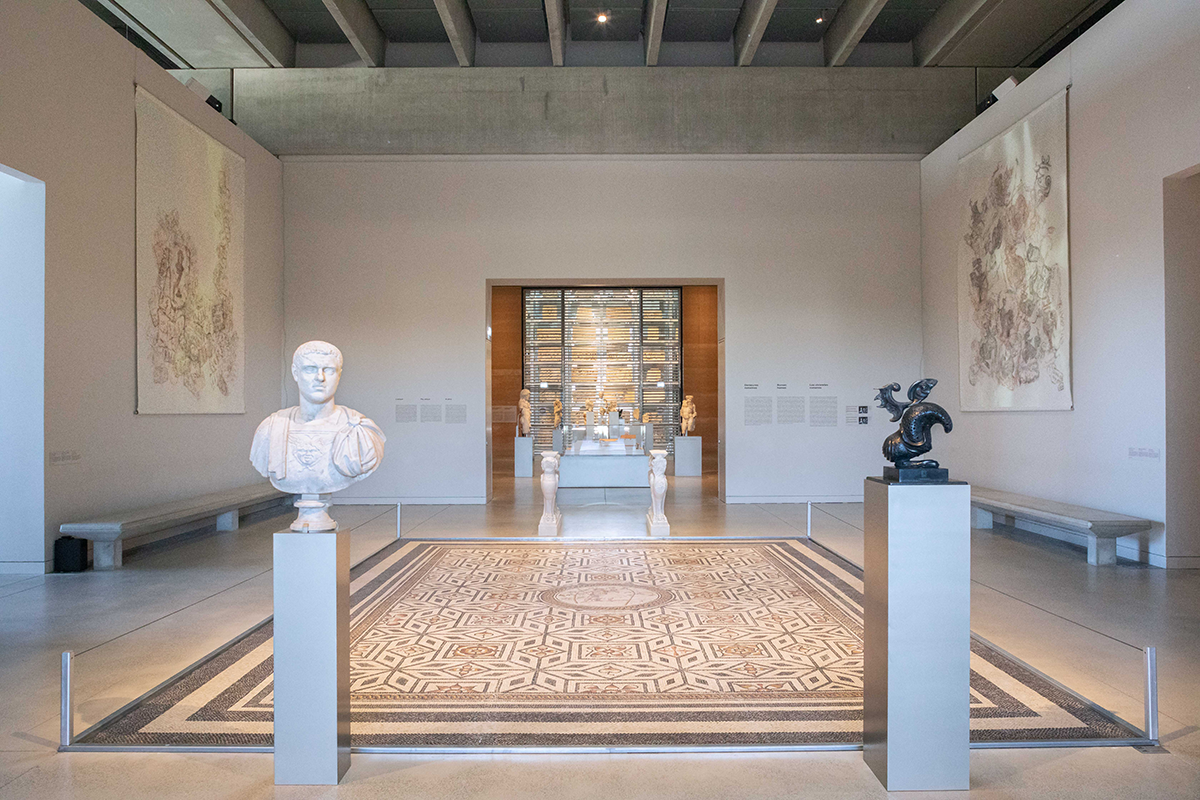
The exhibition ends in the museum’s airy atrium with Via Mundus, a composition inspired by architectural fragments from the Roman era. The series showcases two monumental pieces crafted entirely from wool felt, suspended in mid-air and floating over the hard stone floors like petrified clouds. To create them, Jiang utilized a process she terms “time rubbing”, capturing architectural textures on paper, then fragmenting, reassembling, and transferring the images onto the fabric. The result is an evocative inquiry into the transient nature of human endeavors. The felt absorbs the acoustic energy of the space, creating a pocket of absolute beneath the glass ceiling and reminding the viewer that even the most formidable empires eventually soften into memory.
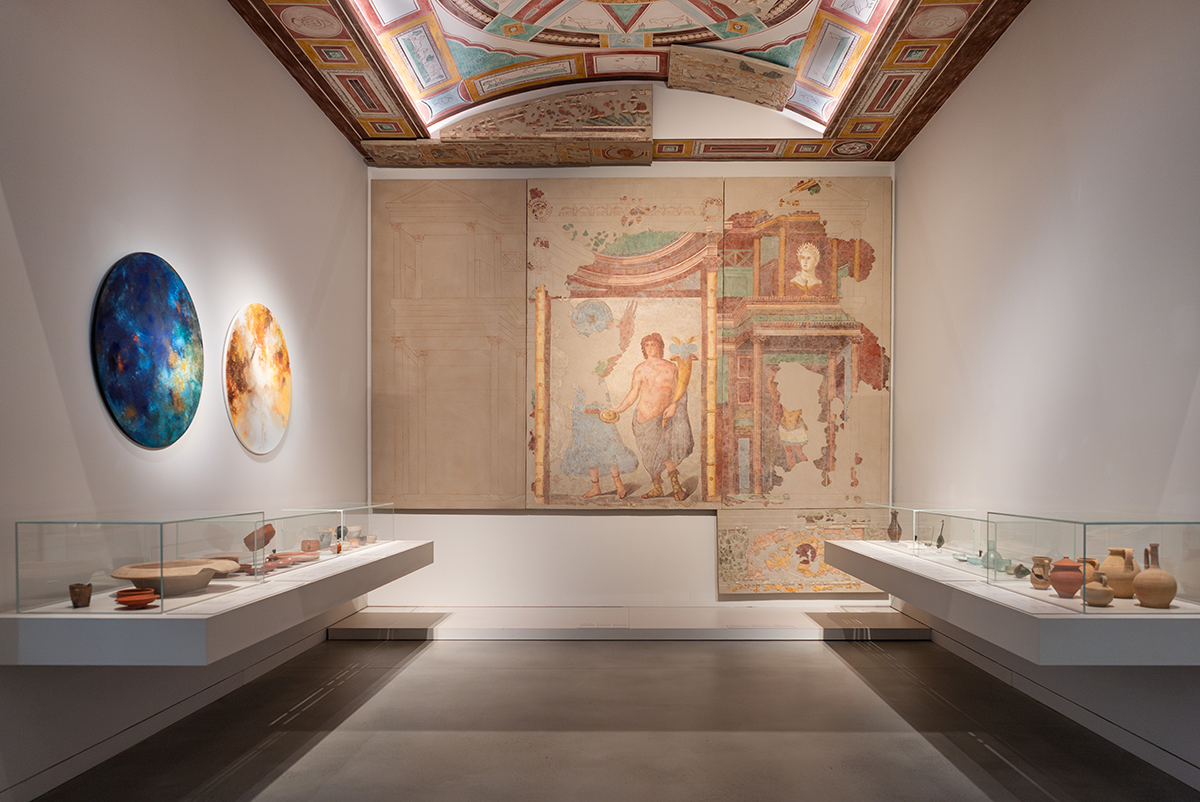
Like the slow inhale and exhale of a living landscape, The Breath of Time dissolves the boundaries between East and West, past and present, self and other. In Jiang’s hands, time is no longer a distance to be measured, but an unbroken thread, stitching together the scattered fragments of our shared human journey.
For a deeper exploration of the artist’s life and her creative philosophy, look for Magnifissance’s interview with Jiang Qiong’er in Magnifissance’s 2029 September/October edition.



A Deep Dive into East Asian Beauty and Philosophy
Discovering East Asian wisdom with Professor Chang Ko-chin
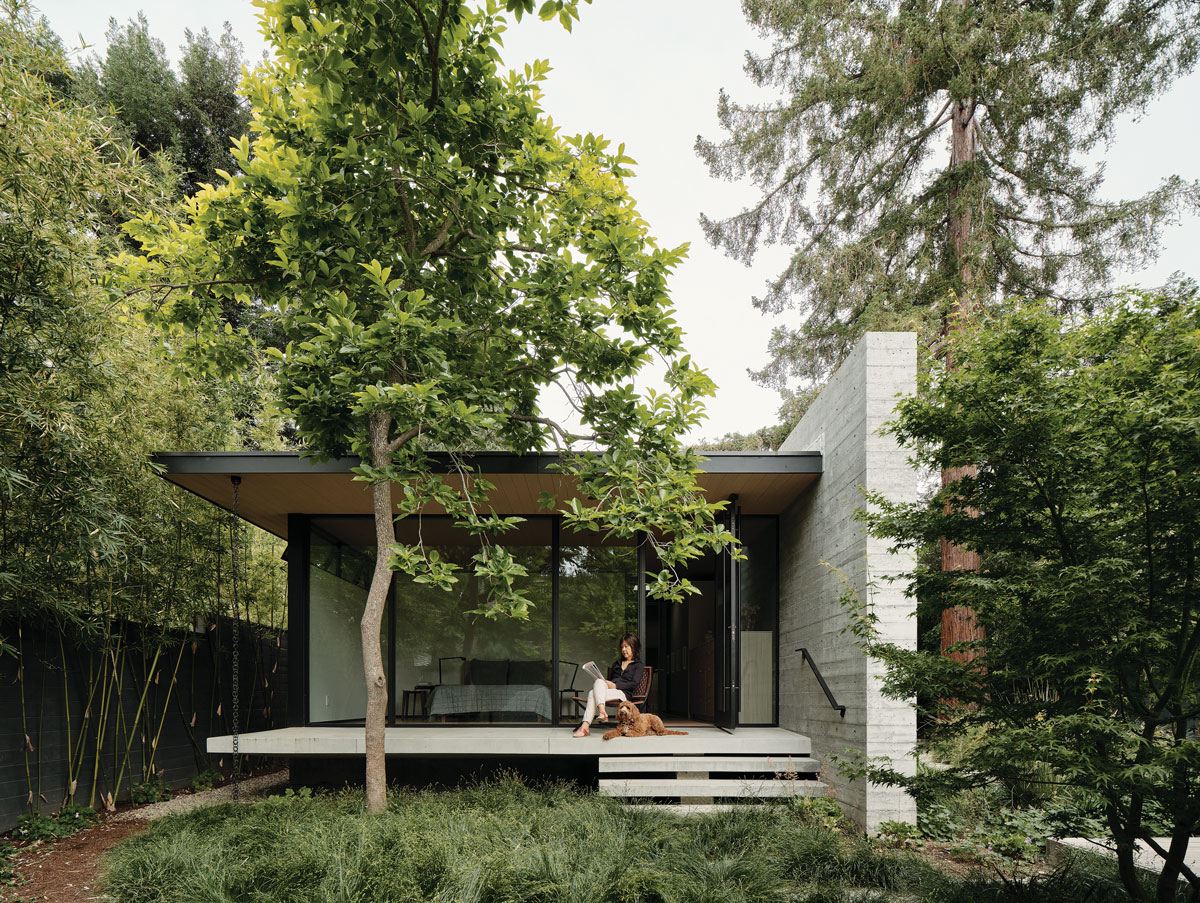
Architect Tai Ikegami Creates a Sanctuary in Silicon Valley
Feldman Architecture’s Sanctuary house is an oasis of calm in the city.

A Landscape of Leather
A royal descendant creates a new dynasty of art by applying traditional Chinese painting techniques to leatherwork

