


To strap a mechanical watch to one’s wrist is to engage in a subtle, highly deliberate act of anachronism. In an era governed by the relentless dictates of microchips, the mechanical timepiece does not simply tell the time; it remains anchored to the immutable laws of physics. With a Rolex, that connection is entirely tactile, revealed through the most implicit sensory signals: the sharp, micro-engineered click of a clasp closing home; the frictionless glide of milled steel against skin; and the gravity of an object that has spent a century anchoring itself to human movement.
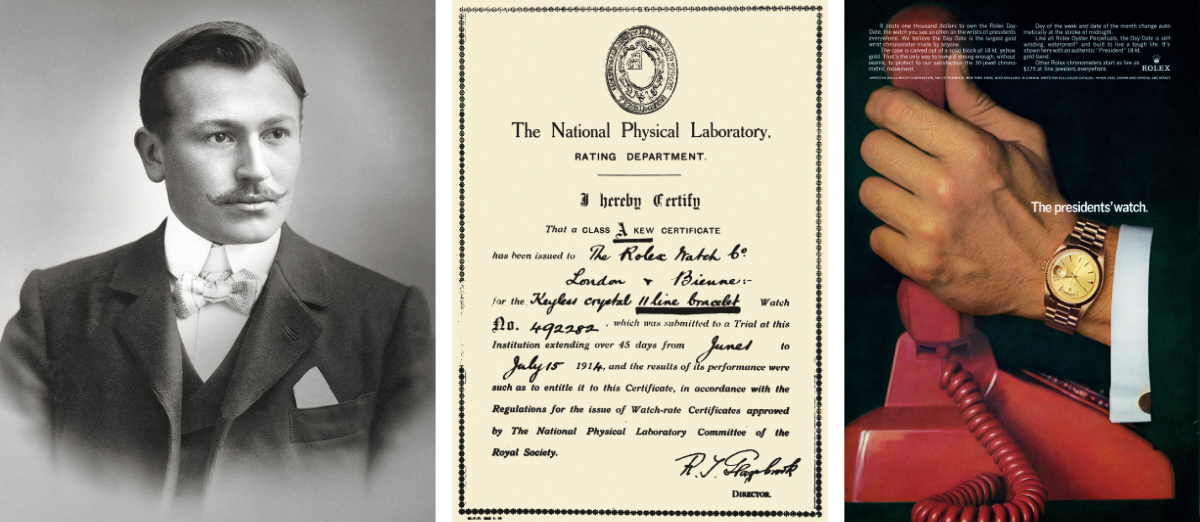
On a recent afternoon along Toronto’s Bloor Street, behind the sculpted limestone façade of the Rolex boutique at Royal de Versailles, this centripetal force felt unusually dense. This year marks a monumental milestone: exactly 100 years since founder Hans Wilsdorf introduced the original 1926 Oyster, the world’s first waterproof wristwatch.
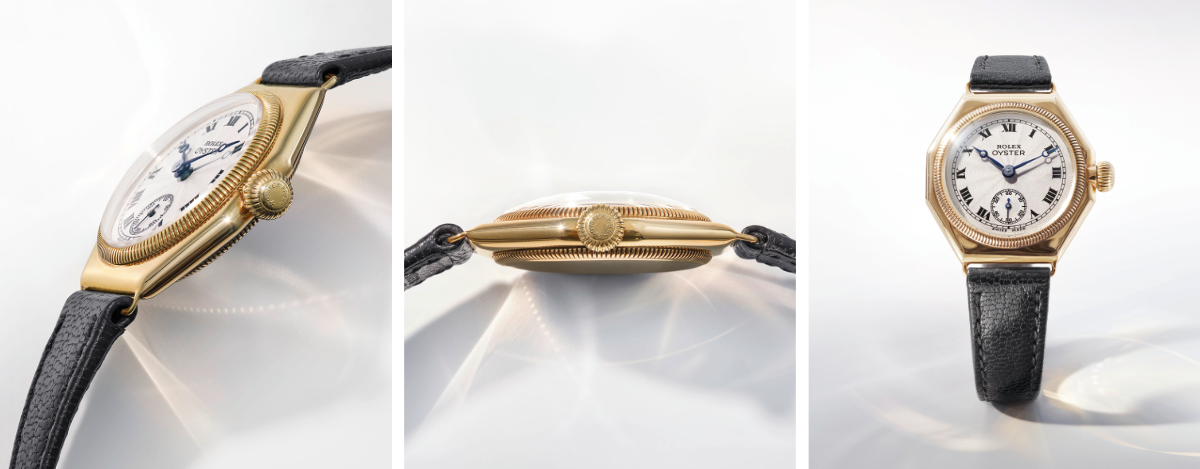
The hermetically sealed case effectively decoupled the wristwatch from its vulnerability to dust, moisture, and the unpredictable hazards of daily life. It was a visionary innovation that forever altered our modern relationship with time. A century later, that same singular impulse has culminated in a new lineup.

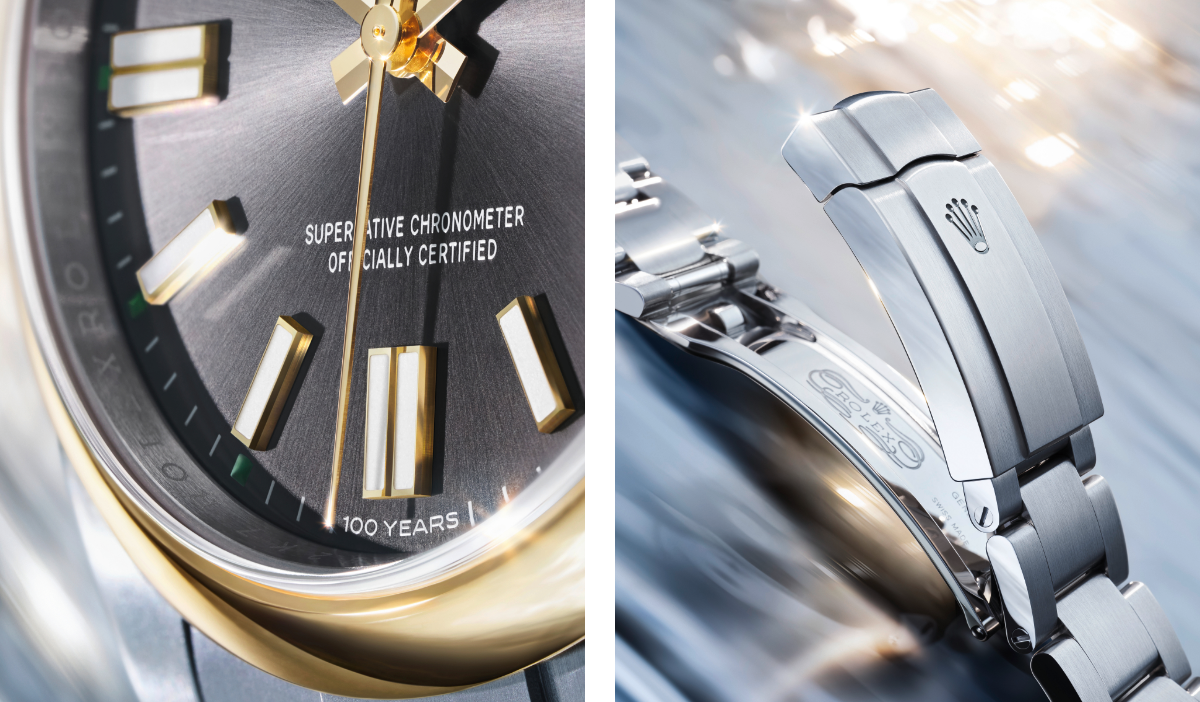
Leading the anniversary collection is the Oyster Perpetual 41, a watch designed specifically to commemorate the centenary. It is rendered in yellow Rolesor, Rolex’s signature fusion of gold and steel. Centenary touches appear throughout: the winding crown is engraved with the numerals “100”, while the slate dial replaces the standard geographical assurance of “Swiss Made” with a simple chronological statement: “100 years.”
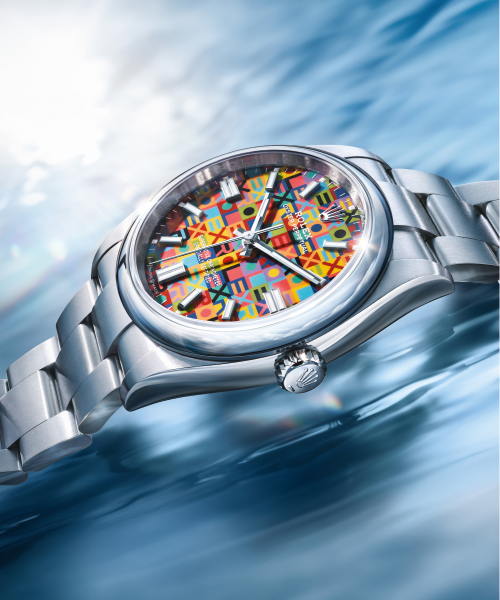
If the 41-millimeter model pays homage to Rolex’s origins, the Oyster Perpetual 36 is a chromatic counterweight. Its dial is an exercise in graphic exuberance, featuring the letters of the brand’s name scattered across a multi-coloured lacquer background in a composition that evokes the mid-century optimism of the Jubilee motif. Yet the whimsy is underpinned by industrial rigor. The dial requires ten distinct applications of pigment, each deposited individually through a specialized pad-printing process. It is a striking reminder that in Geneva, even joy is subjected to the disciplines of tolerance and calibration.
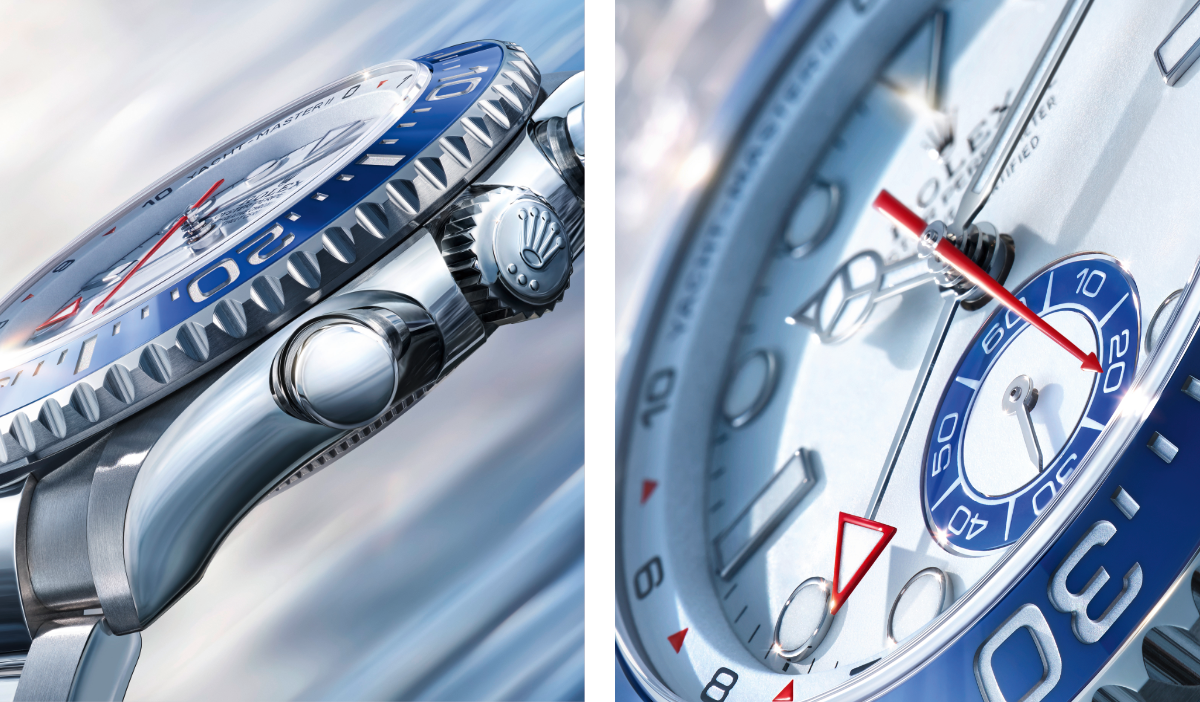
Still, the true center of gravity in the room belongs to the new-generation Yacht-Master II. Nominally a regatta chronograph designed for the specialized tactical maneuvers of competitive sailing, the watch possesses a physical commandingness that transcends its nautical utility. On the wrist, its weight is surprisingly balanced, a massive piece of engineering that somehow manages to feel deeply integrated rather than merely heavy.

The mechanism powering its countdown complication is where the brand’s characteristic audacity reveals itself. To streamline the frantic choreography required of a skipper at the start of a race, Rolex has reduced the operation of the chronograph to a single lower pusher. More compelling, however, is the visual inversion of the dial itself: both the countdown minute and seconds hands now sweep counterclockwise. Watching them move backward against a crisp white matte lacquer dial, framed by the deep, architectural blue of a ceramic Cerachrom bezel, produces a strange, almost hypnotic effect.
Nearby, other technical iterations demand a similar kind of close reading. There is a Cosmograph Daytona executed in Rolesium, its white enameled dial offset by an anthracite ceramic bezel that catches the light like wet pavement. Beside it sits a Datejust 41, fitted with a green ombré dial that shifts from a deep, mossy center to an almost absolute black at its perimeter, a nod to the brand’s signature hue.

The ambient murmur of the room eventually recedes, but the tactile impression of the metal remains. In an age where most of our possessions are designed for rapid obsolescence, there is something deeply reassuring about an object that measures its lifespan in generations rather than fiscal quarters. As the afternoon light faded through the deep glass apertures, casting long shadows across the limestone façade, the century-old lineage felt entirely present. The Oyster began as a utilitarian triumph over the elements, but it survives as something closer to literature, an unbroken narrative of human ingenuity, weighted for the wrist, and built to endure the long stretch of the century ahead.







Blazing a Trail, One Gem at a Time
A legend in America’s jewellery scene, Seaman Schepps continues its legacy of colourful and distinctively designed pieces.

