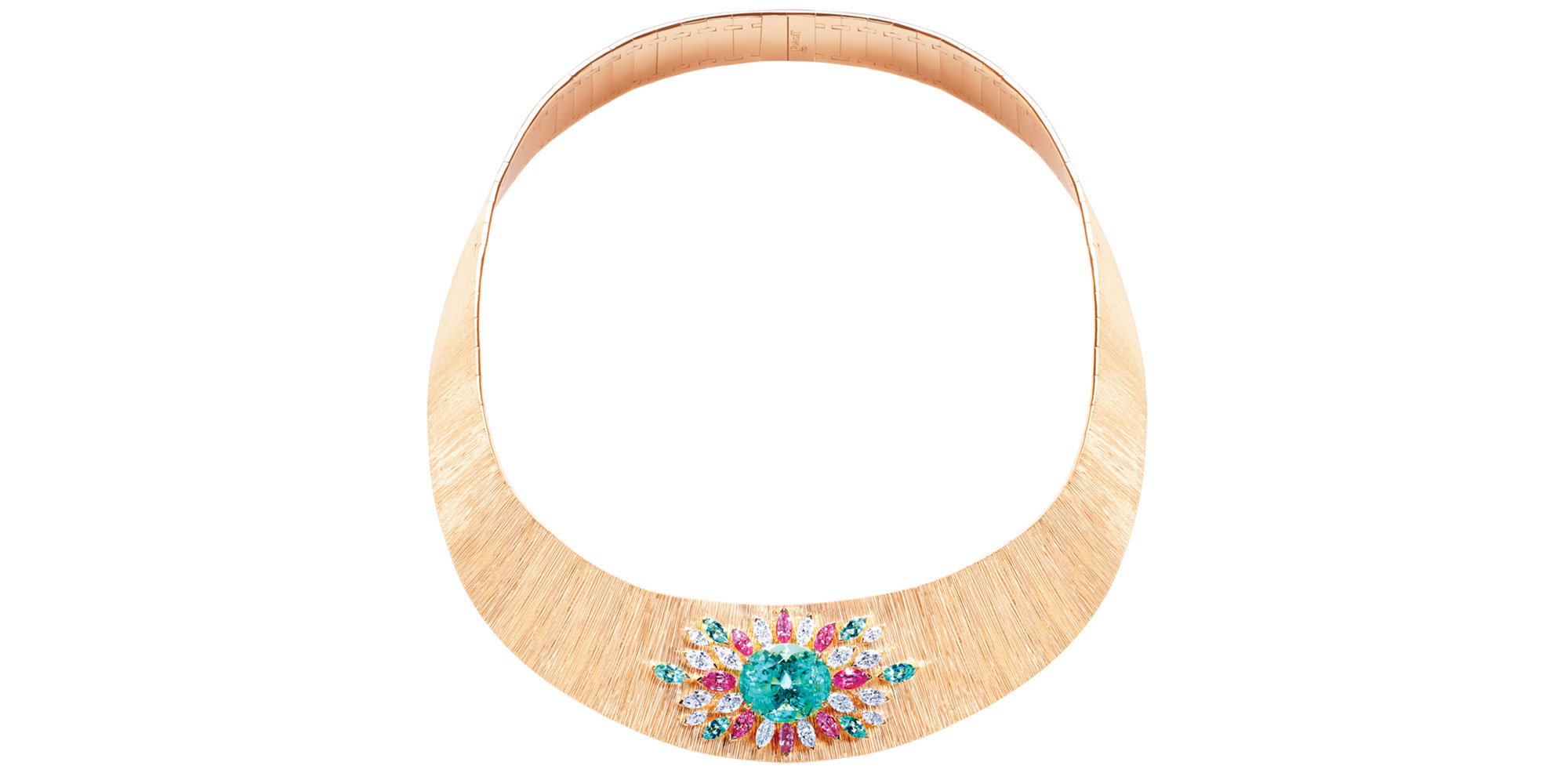

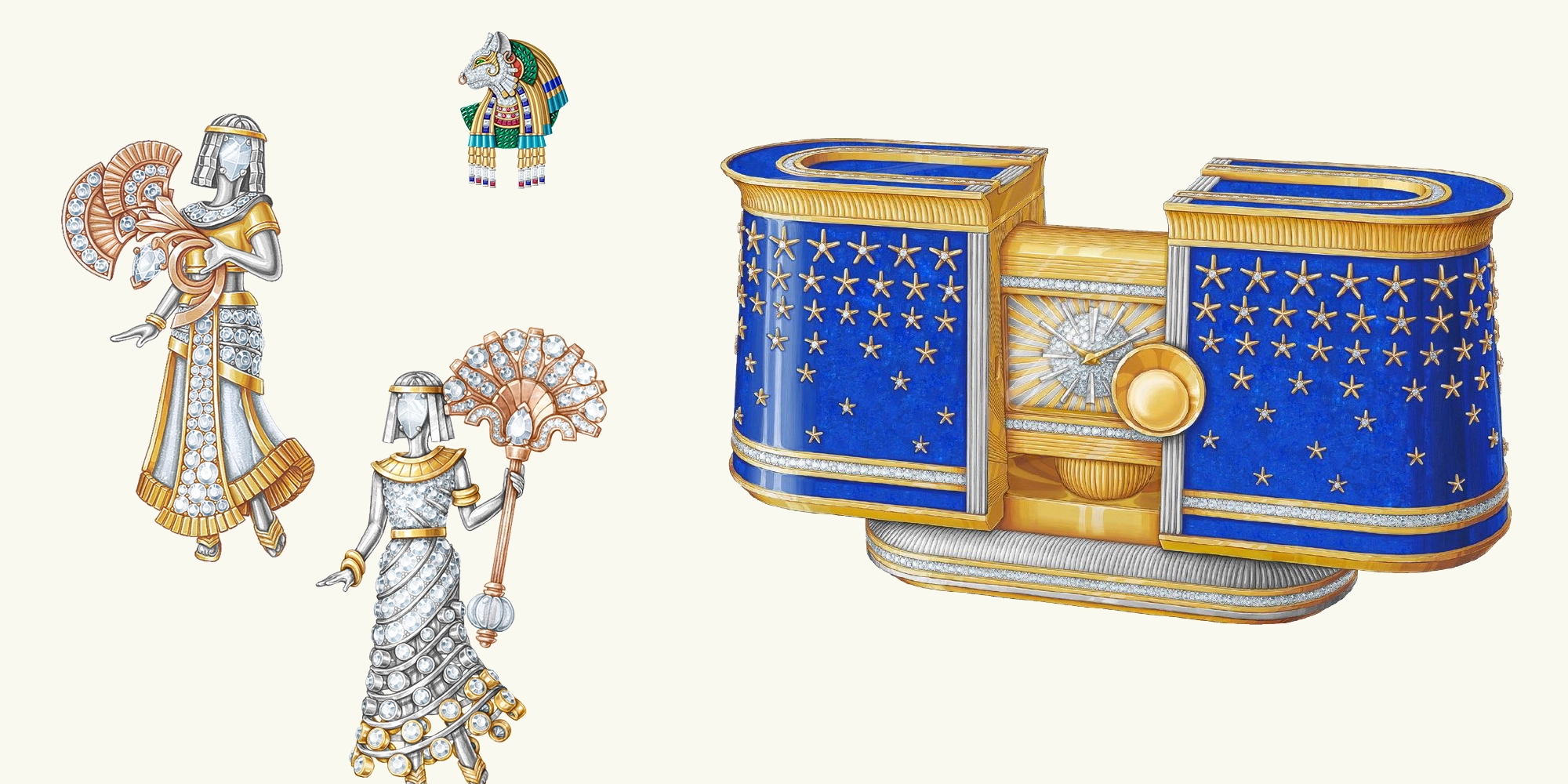
The allure of ancient Egypt has always operated like a particularly potent spell: half archaeology, half mirage. Long before Tutankhamun’s tomb cracked open in 1922 and sent a wave of scarab-madness through Western capitals, the civilization along the Nile had seduced poets, painters, and empire-builders with its gold-drenched mysteries and orderly obsession with eternity. But it was Carter’s discovery that turned fascination into frenzy. Suddenly, obelisks appeared on Fifth Avenue, lotus motifs bloomed on couture necklines, and jewelers began dreaming in hieroglyphs.
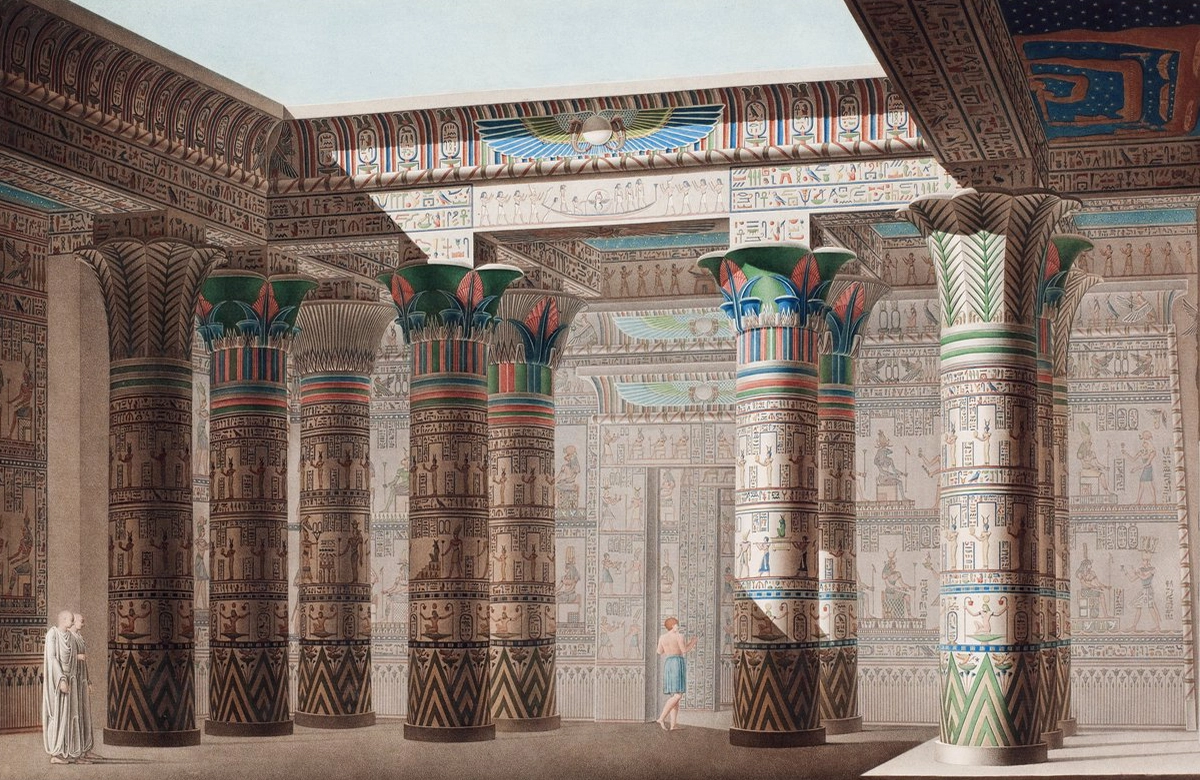
Van Cleef & Arpels entered the current early and with characteristic refinement. In the Art Deco years that followed, the maison fused the period’s sleek geometry with Egyptian symbolism (papyrus columns, profile figures, sacred beetles) setting cabochon emeralds and rich onyx against polished gold in ways that felt both archaeological and utterly modern. The attraction proved enduring. Like a scholar who cannot quit a favorite manuscript, the house has revisited these motifs across generations.
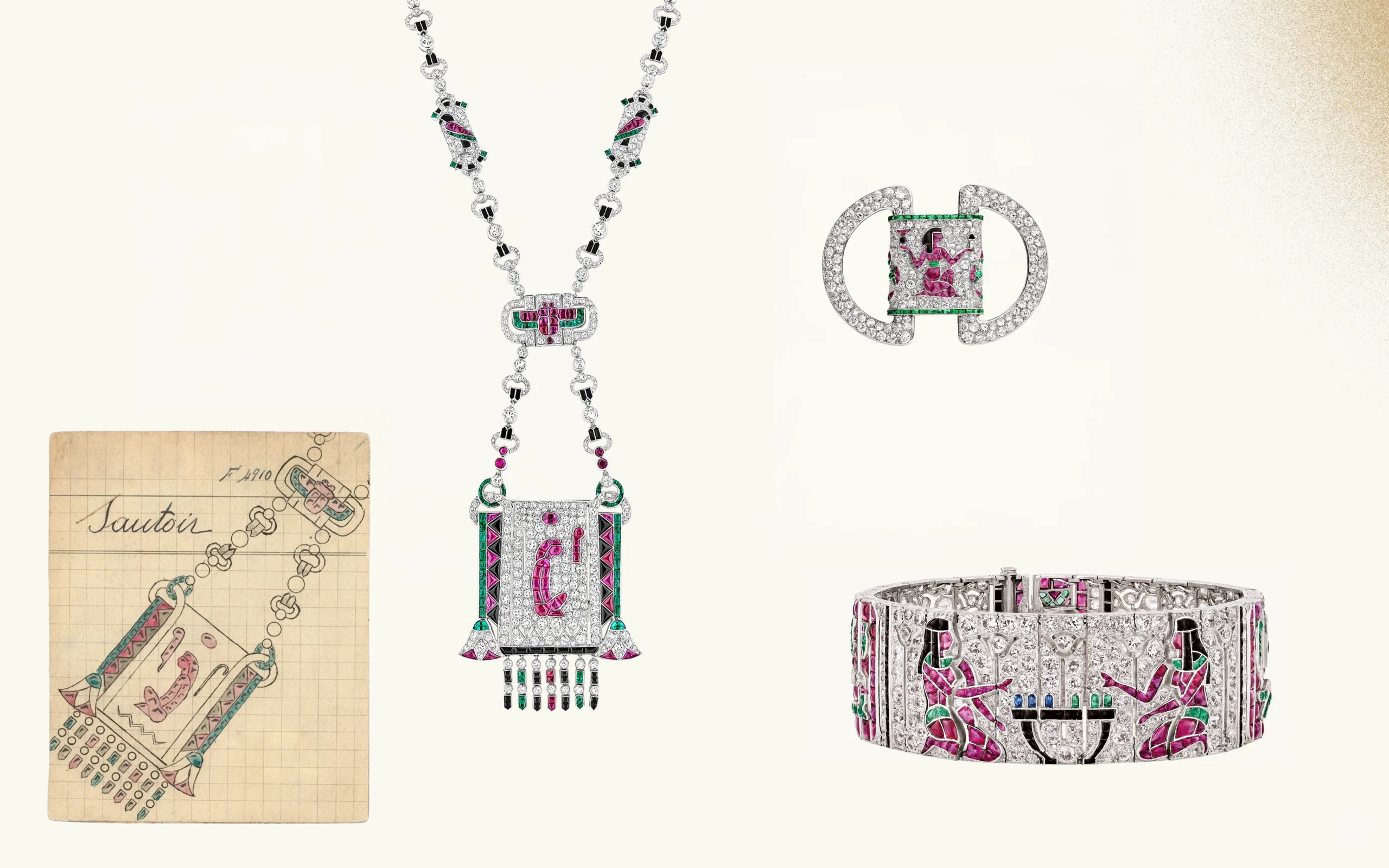
Egyptian Pattern long necklace, 1923.
Egyptian Pattern brooch, 1925.
Egyptian Pattern bracelet, 1924.
Its latest high-jewelry offering, Fascinating Egypt, is the most ambitious chapter yet. It comprises roughly 180 pieces that treat the pharaonic world not as costume drama but as a living visual grammar. The collection reinterprets the visual language of the ancients, including royal pectorals, divine animals, and carved inscriptions, through a twenty-first-century prism, preserving the weight of antiquity while letting the stones breathe.
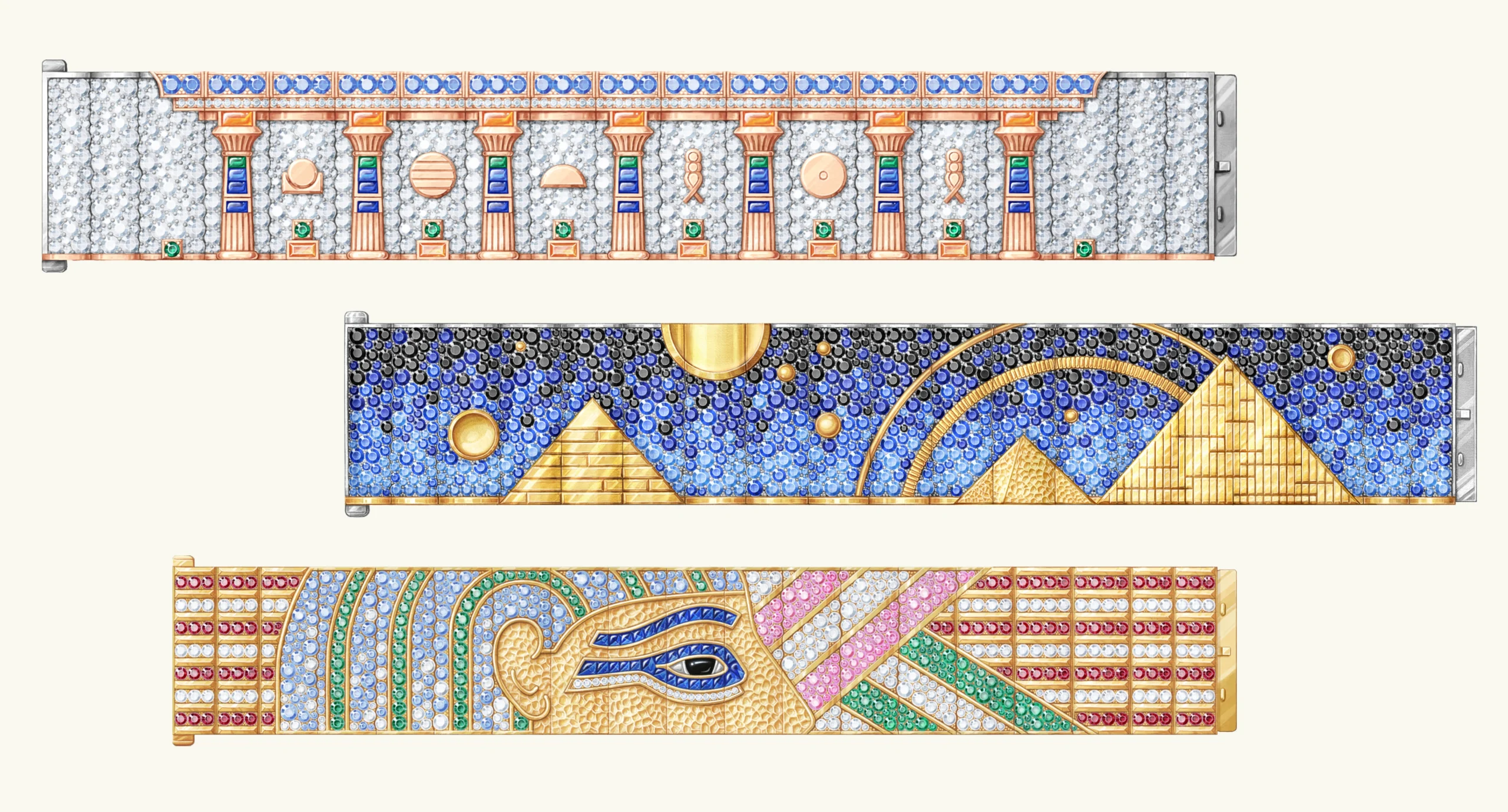
Paysage Merveilleux Bracelet.
Paysage Royal Bracelet.
The range is impressive in both scale and invention. Transformable necklaces recall the ceremonial grandeur of pharaonic collars. Sculptural clips take the form of sphinxes and stylized birds, as if they might take flight from a cocktail dress. Bracelets and earrings draw on geometric patterns lifted from temple friezes, composed with emeralds, turquoise, rubies, pearls, and diamonds that echo the vibrant palettes the Egyptians themselves prized.
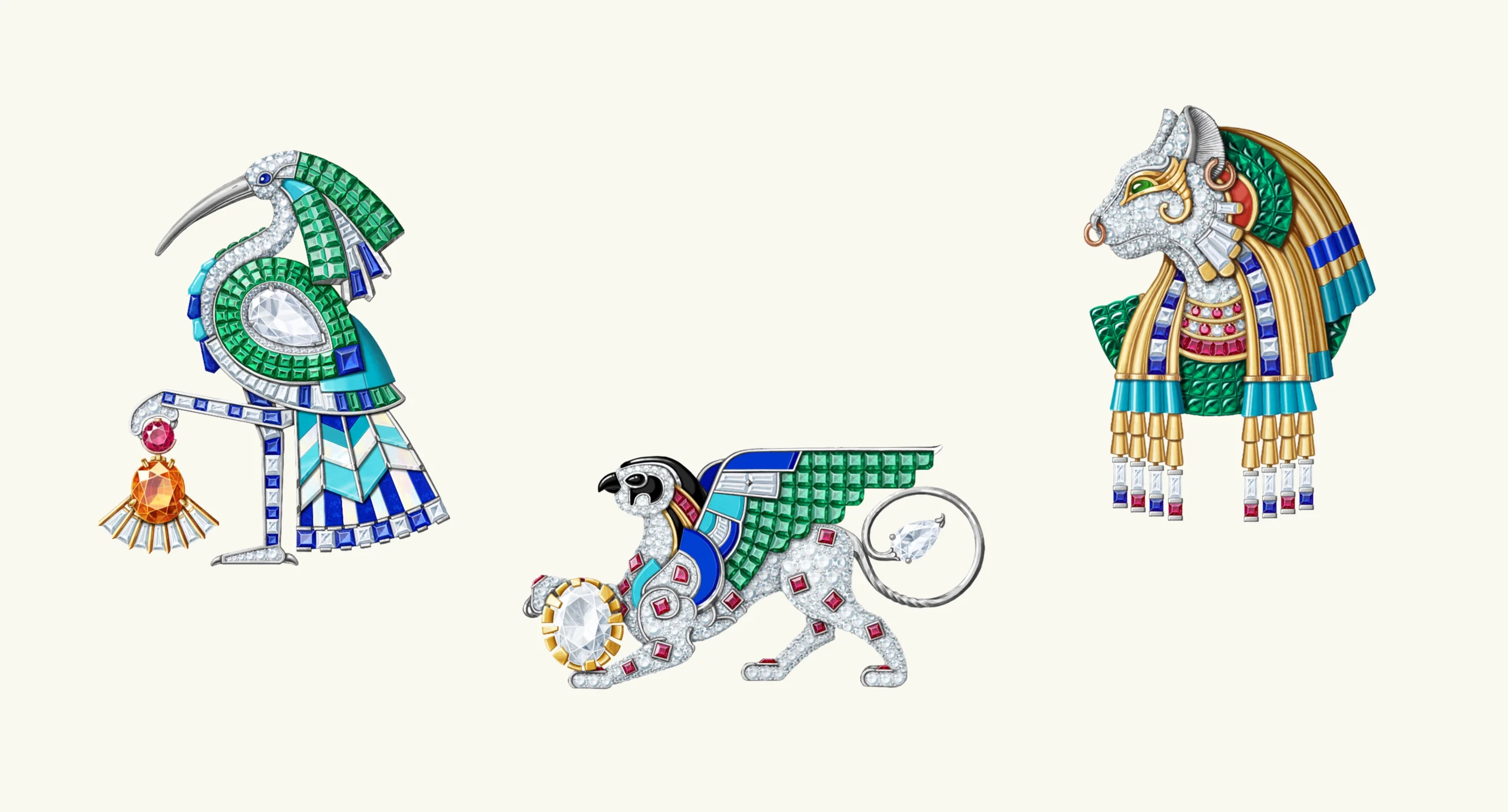
Griffon Mystérieux Clip.
Bastet Mystérieuse Clip.
Several designs nod explicitly to the maison’s own history, including a reimagined emerald-and-diamond necklace originally created for Princess Faiza of Egypt in the 1930s. In its current iteration, diamond motifs cascade into emerald drops and luminous pearls, creating a lingering dialogue between royal past and present elegance.
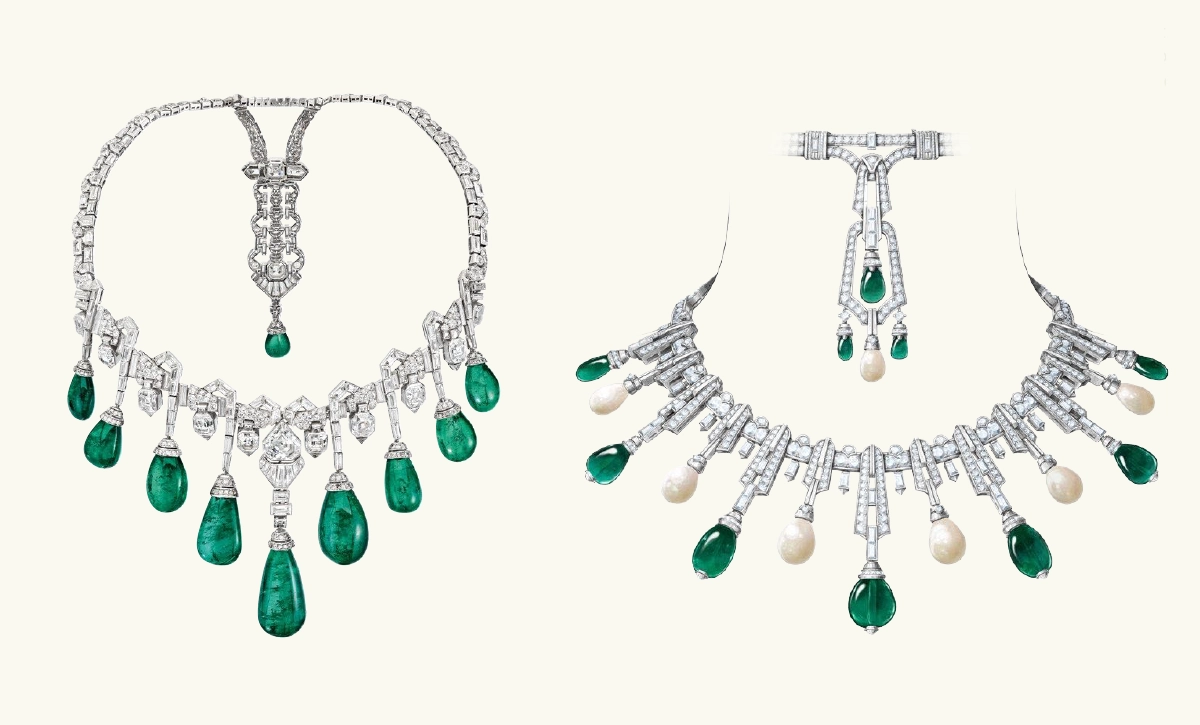
Right: Princess du Nil Necklace, a contemporary necklace with detachable back motif from the Fascinating Egypt collection. Echoing the geometric motifs and gemstone cascades of the 1929 original.
What distinguishes these jewels is not merely their subject matter but the depth of execution. Van Cleef’s gemologists have chosen stones with the precision of Egyptologists selecting artifacts. Artisans then bring them to life through engraving, hand-hammering, sculpted goldwork, and delicate texturing, gadroons, beading, and reliefs that reward close inspection.
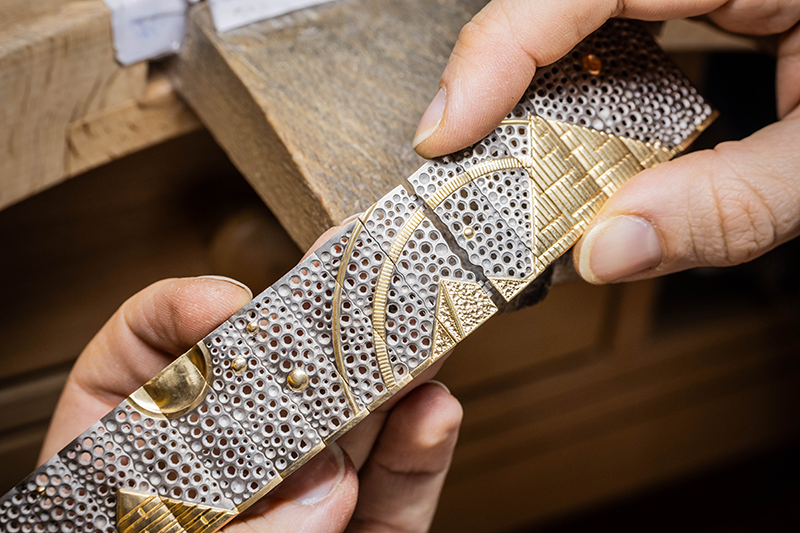
The house’s legendary Mystery Set technique, patented in 1933, returns here to particularly hypnotic effect: gems locked invisibly into place so that color flows uninterrupted, like pigment on a tomb wall. Even the Van Cleef & Arpels signature appears in stylized hieroglyphs, a final seal of authorship on each creation.
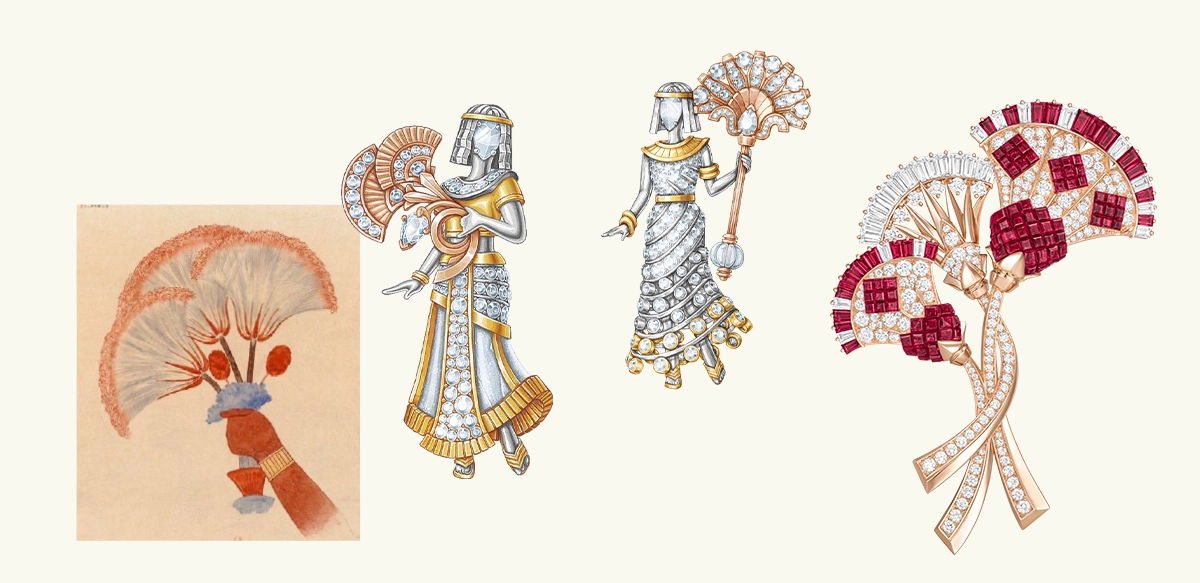
Danseuse aux Lotus Clip.
Danseuse aux Flabellum Clip.
Fleur de Lotus Mystérieuse Clip, which pays tribute to the iconic Egyptian lotus, a signature Maison motif popularized by the 1922 discovery of Tutankhamun’s tomb.
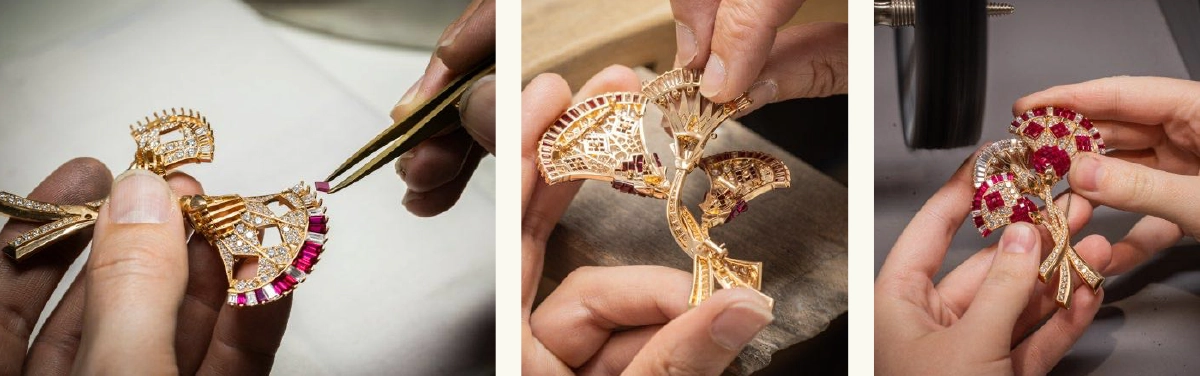
Assembling a lotus flower motif.
Final polishing of the clip.
In the end, these are more than luxurious objects; they are portable monuments. A secret cuff bracelet becomes a private amulet. A sphinx clip carries the serene authority of something that has watched civilizations rise and fall. At a moment when so much feels disposable, Van Cleef & Arpels offers pieces built for permanence, jewels that allow their wearers, however fleetingly, to borrow the Egyptians’ greatest invention: the illusion of immortality, rendered in gold and precious stone.