

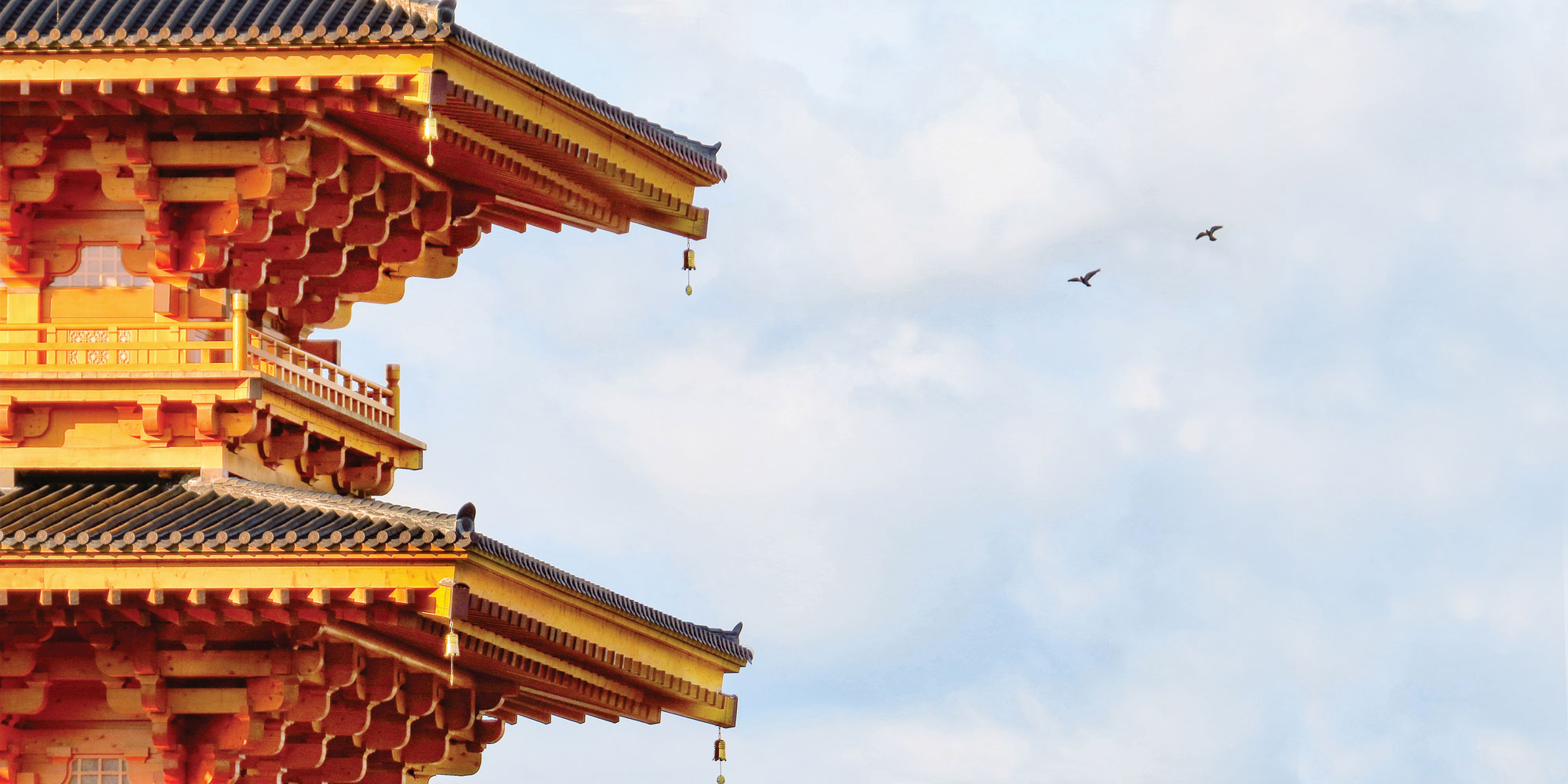
“The Tang Dynasty’s straight, far-reaching roofs were noble and magnanimous, much like the people of that time, embracing all thoughts of Confucianism, Buddhism, and Taoism.”
—Lai Hanchang, builder of traditional Chinese architecture
Just an hour away from the clamour of New York City, in a tranquil alcove of low-rolling mountains, a small group of Chinese people has begun a revival of traditional Chinese architecture and culture. At the heart of this community is a cluster of buildings that looks like something from a classical Chinese novel. The community is called Dragon Springs.
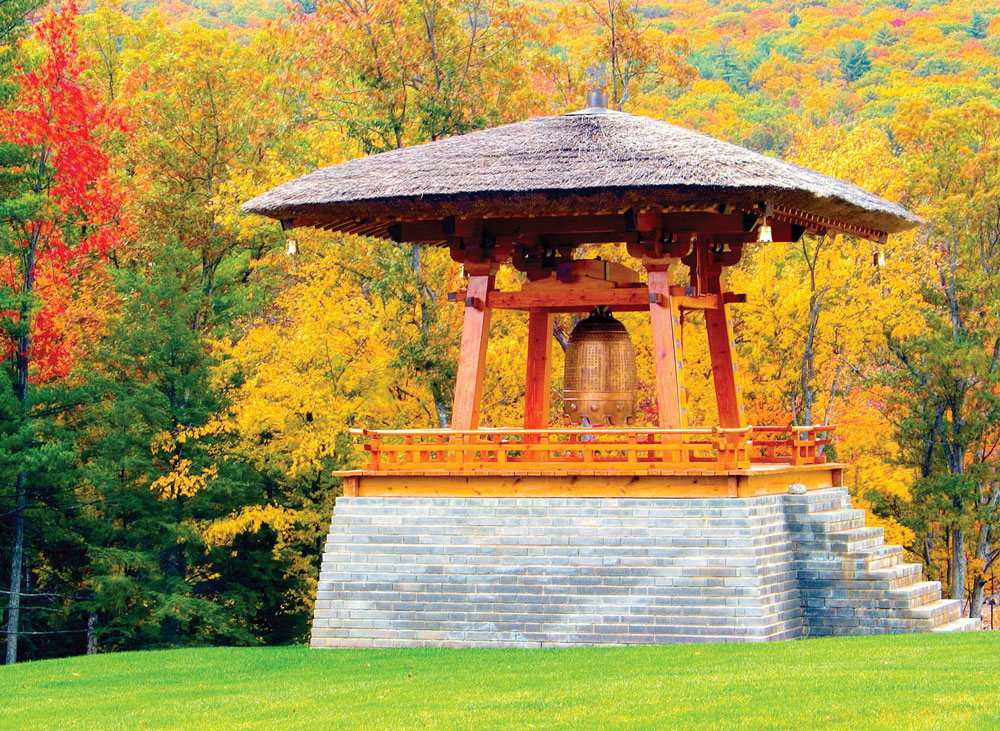
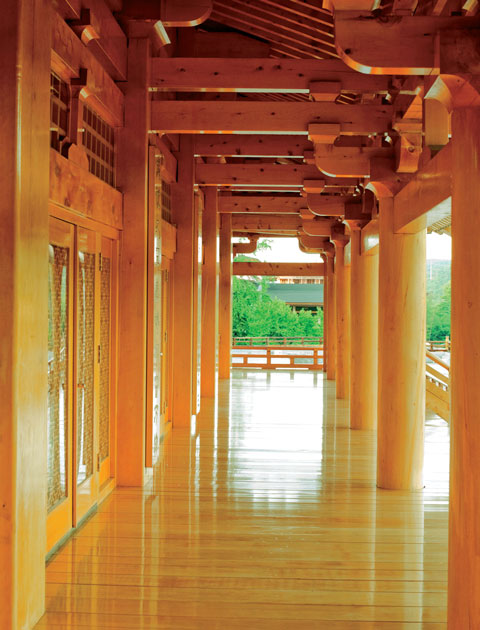
Lai Hanchang, the lead builder on the project, guides us around the workshop where he hand-carves the beams and eaves for new structures. These will be built—like everything else at Dragon Springs—using traditional methods of interlocking wood joinery. There isn’t a single nail or screw in these buildings.
Following the Way
In 2001, Lai moved from Taiwan to what was then an almost entirely forested mountain in western New York. All he knew was that a small group of Falun Dafa practitioners, under the guidance of the practice’s founder Mr. Li Hongzhi, had set out to create an expansive complex of authentic Tang-Dynasty style buildings.
“At the time, I knew absolutely nothing about Tang Dynasty architecture, and I knew nothing about building traditional wooden structures,” Lai says. He had been a cabinet maker back home, but once he started working with Master Li he found himself developing an intuitive understanding of the lost arts of wood joinery and structural engineering. These had been perfected over a thousand years ago during China’s Tang Dynasty.
Lai first learned about Falun Dafa, a practice of self-improvement and meditation, in 1997 from family members who told him about its core tenets of “Truthfulness, Compassion, Tolerance.”
From the moment he began doing the slow-motion exercises and studying the works of Master Li, Falun Dafa began to enrich every aspect of his life. But it never occurred to him in those early days that the beautiful spiritual practice would one day lead him to build a pagoda or grand hall inspired by the greatest architects and emperors of China’s history.
Memories of a forgotten past
Very few examples of Tang Dynasty architecture remain in the world today. Even very few books and drawings exist. The style and structure of Tang architecture were almost entirely lost, but Lai’s teacher guided him.
“Master Li taught us all about it. He showed us how to make sunmao joints without nails, and how to construct dougong-style buildings.”

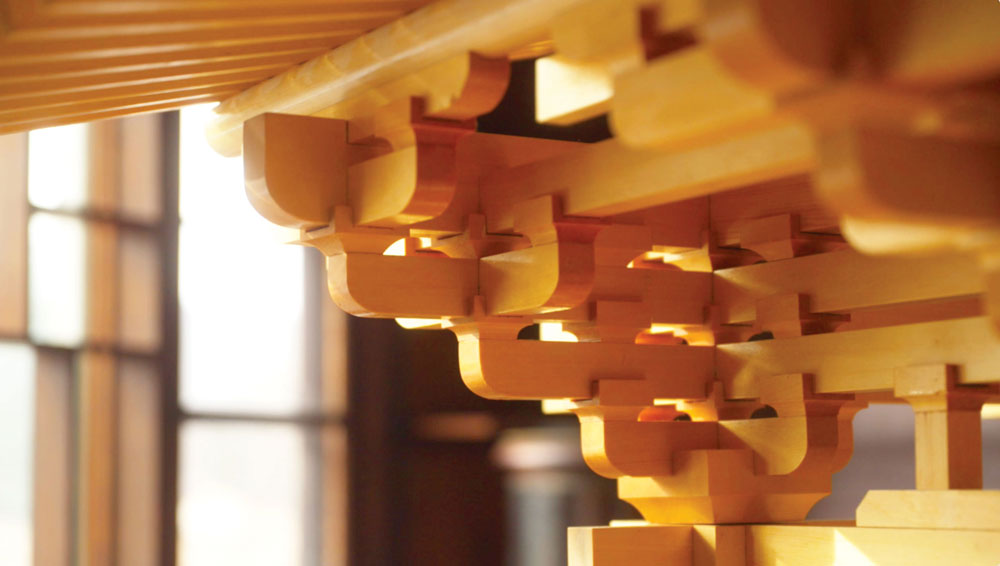
Sunmao is a traditional Chinese carpentry method of joining wood through tenons and mortises without using any nails or screws, while dougong refers to a network of interlocking wood pieces that connect the walls and the pillars to hold up the roofs with far-reaching eaves.
Back home in Taiwan, Lai wasn’t regarded as a skillful carpenter. In fact, he had to spend twice as much effort as everyone else to understand modern construction blueprints. Yet while the complicated structural compositions of the traditional sunmao and dougong techniques at Dragon Springs stumped even the most professional architects, Lai found he could understand them amazingly well.
“Buddhist schools of thought believe in reincarnation. We all have previous lives. I thought I must have practiced these techniques in my earlier lives. Cultivating Falun Dafa unlocked those memories and wisdom within me,” he says.
The Grand Tang Dynasty
“Master Li has been dedicated to reviving the divinely inspired traditional Chinese culture in every way. In regards to architecture, Master prefers the Tang Dynasty style,” Lai says.
The Tang Dynasty (618–907 C.E.) was a time of splendid economic, artistic, and cultural developments, and architecture flourished as well. With their bold pillars, intricate architraves, distinct rafters, and sweep roofs, Tang Dynasty buildings exuded grandeur. They were designed symmetrically, and the protruding roofs sloped evenly. The system of constructing wooden structures was comprehensive and well-developed at that time.
“Tang Dynasty architecture is characterized by its large and stately roofs,” Lai says. “Their sweeping eaves extend outwards smoothly in four directions. They don’t curve upwards like the ones from the Ming and Qing dynasties.”
“The Tang Dynasty’s straight, far-reaching roofs were noble and magnanimous, much like the people of that time, embracing all thoughts of Confucianism, Buddhism, and Taoism.”
To hold up the enormous roofs, Tang architecture relies on a system of stacked, interlocking wooden pieces that look like a giant 3-D puzzle. This comprehensive Tang-style dougong system seemed lost to history until Master Li guided his practitioners to rediscover its secrets.
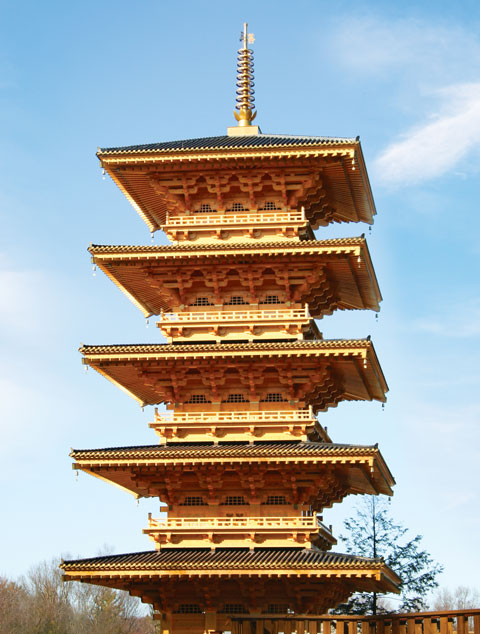
Just recently, Lai completed a five-tiered pagoda at Dragon Springs that stands 150 feet tall. The entire structure was built with sunmao and dougong techniques, which means there isn’t a single nail or screw anywhere to be found.
“In terms of wooden structures, this pagoda really is quite tall—especially since it was built with such grand roofs that are the same size for all five stories. We really pushed the load-bearing limit of the wood to the maximum. During construction, miscalculations between each level couldn’t go beyond five millimetres. Otherwise, when the layers stacked up, the structure would become unstable.”
The effect is grand, and at Dragon Springs, when the golden roofs shine in the sun, the buildings appear to be held up by Heaven’s light itself. The architecture stands as a testament not only to the skill of its makers but also to their pure hearts and connection to divine principles.
Reviving divine culture
To Lai, the construction of Dragon Springs isn’t merely the process of reviving traditional architectural techniques and design. It’s also the process of reviving the lost spirit of traditional culture. Since ancient times, Chinese people have believed that their culture is a gift from the heavens. Outstanding skill comes not only from technical practice but also requires practitioners to cultivate their inner selves.
Southern Song Dynasty poet Lu You once wrote, “Essays are composed by the heavens; a talented person merely receives them by chance.” Ancient Chinese people often referred to the particularly brilliant elements in paintings and literary works as “a stroke by the gods.” In artisanship, excellent work is often described as “divine” and “otherworldly.”
To cultivate his architectural talent, Lai focuses on cultivating his character rather than his skills, which is actually much more challenging. His wife sometimes jokingly calls him a “lump of wood” because of his reserved and stoic nature. However, one man can’t build a temple by himself. His team at Dragon Springs comes from around the world with totally different cultural backgrounds. Sometimes conflicts are unavoidable.
Whenever such issues arise, Lai says the teachings he learns from Master Li’s books help him to look inside and calm down. Once he sees his own problems clearly, he tries to improve internally before addressing the external situations.
“During the process of building Dragons Spring, the conditions have often been tough. The demands are intense, and sometimes I get really uncertain about the results. But if I cultivate myself according to the principles of Truthfulness, Compassion, and Forbearance, amazingly, I can always find a solution.”
“Looking back, I feel like the whole process of building this place is a miracle. If my boss and colleagues from 20 years ago could see what I accomplished today, they’d be amazed.”






Shen Yun Dancer Marilyn Yang Revives Legendary Tales
The gold medallist sheds insight into traditional Chinese culture

Healing Travel
From meditation to holistic spas, enhance your well-being at these six wellness treatment destinations.

