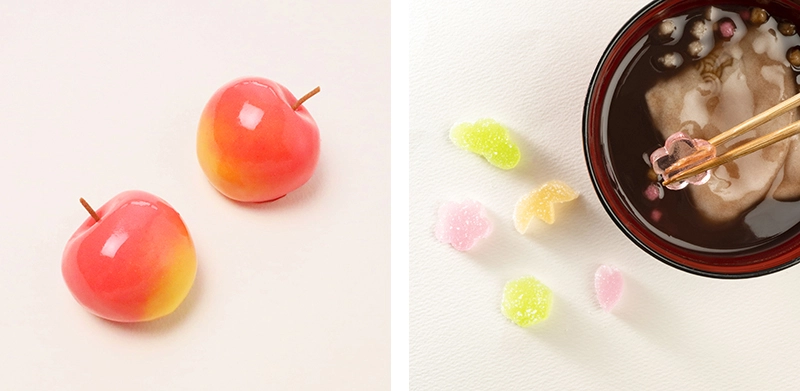

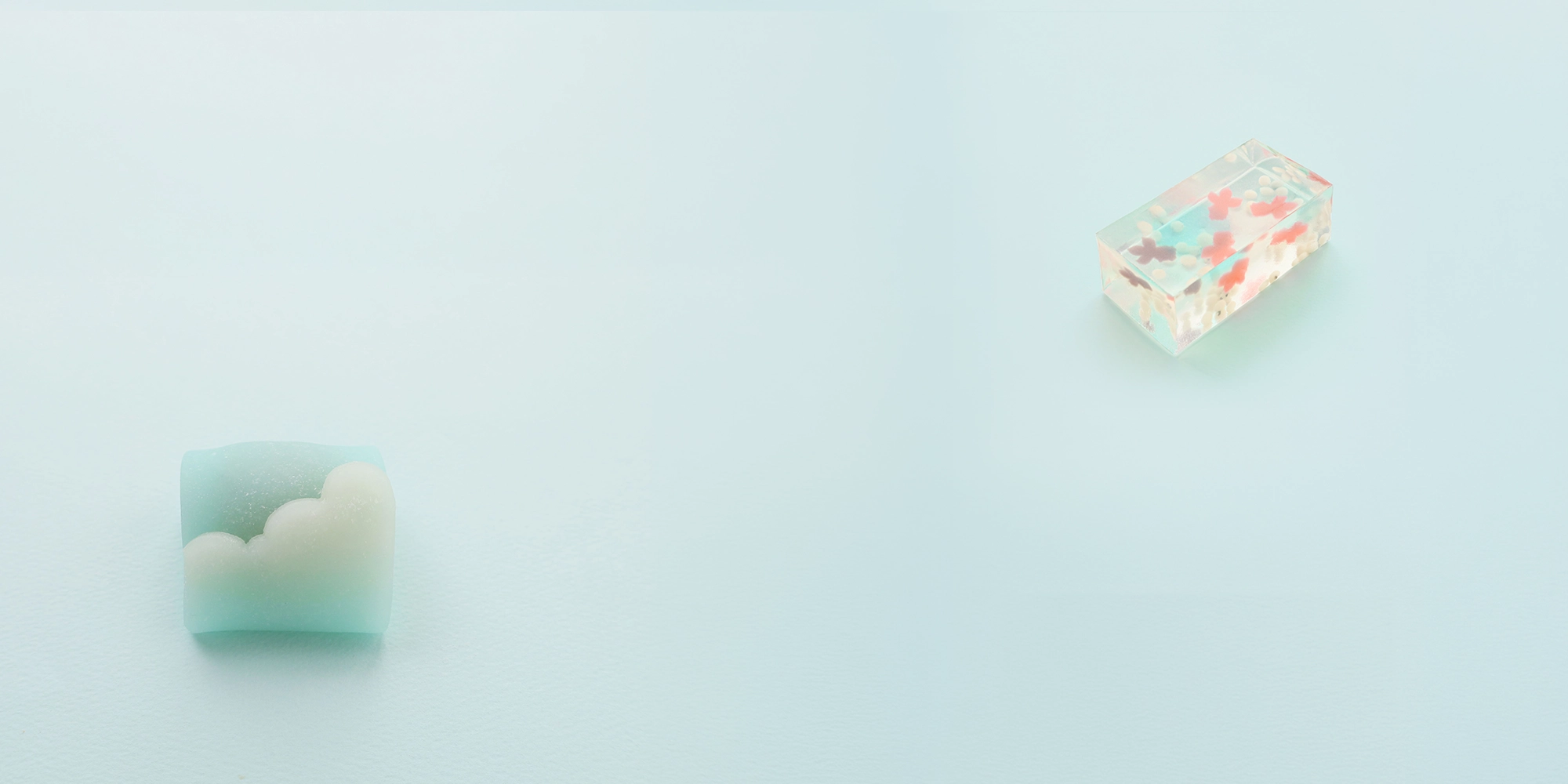
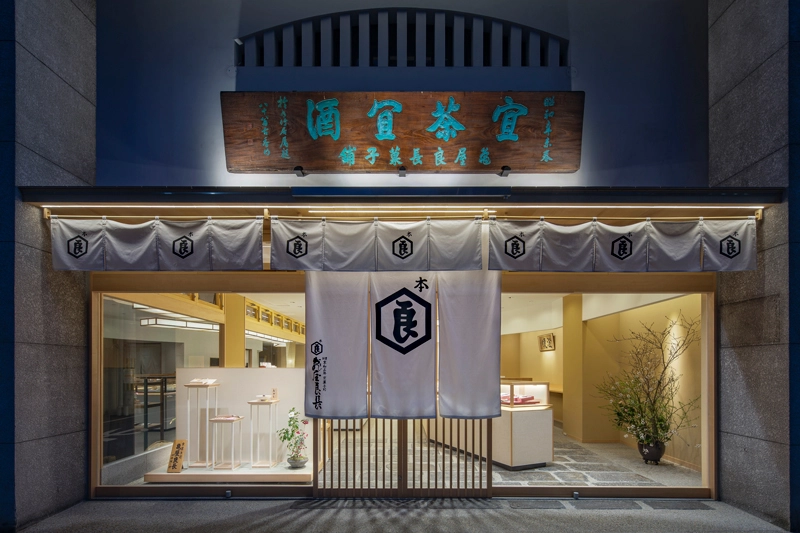
On a street corner in Kyoto’s bustling Shimogyo-ku ward, white noren flutter gently in the breeze above a traditional low-slung shop. An enticingly sweet aroma drifts through the open door, tempting passersby to step inside and discover artful displays of exquisitely crafted confections arranged on wooden counters.
Once inside, the gaze lingers longingly over rows of meticulously arranged bite-sized treats. There are fat, glossy karasuba balls; sugar-baked wasanbon meringues; chocolate-coated mochi cubes; petite red bean paste cookies; and melt-in-the-mouth monaka wafer cakes intricately shaped like chrysanthemums. Meanwhile, schoolgirls chatter excitedly about the shop’s famous sliced yokan; sheets of sweet bean jelly that, when topped with butter and placed on hot bread, transform into the beloved jammy Ogura Toast.
This is Kameya Yoshinaga, a traditional Japanese confectioner with over 220 years of history. Established in 1803, its artisans have elevated wagashi-making to a fine art using the finest ingredients and time-honoured techniques passed down through generations. Far more than simple sweets, these edible works of art are deeply rooted in the rhythms of nature and the cycles of the seasons and stars.