
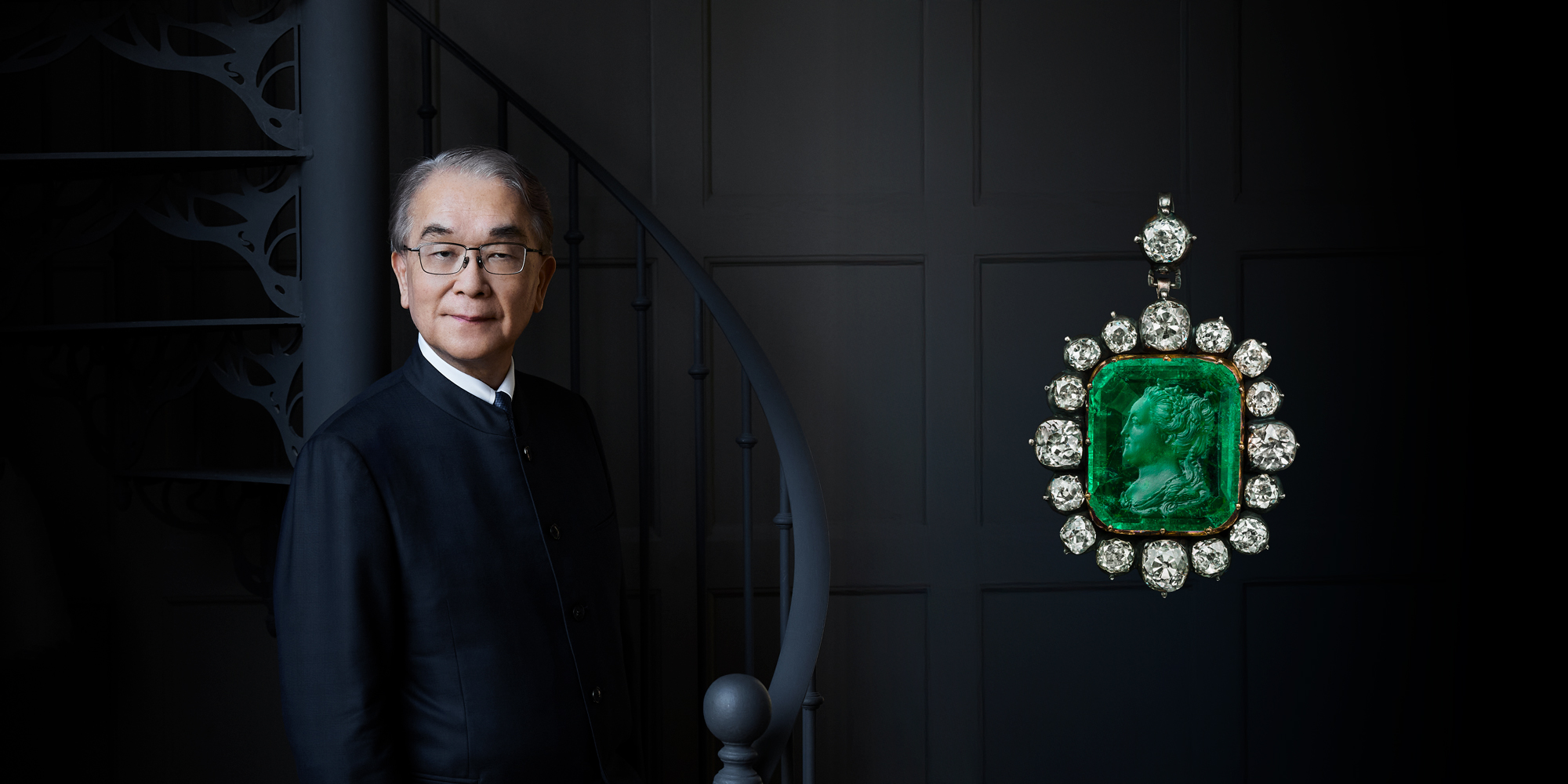
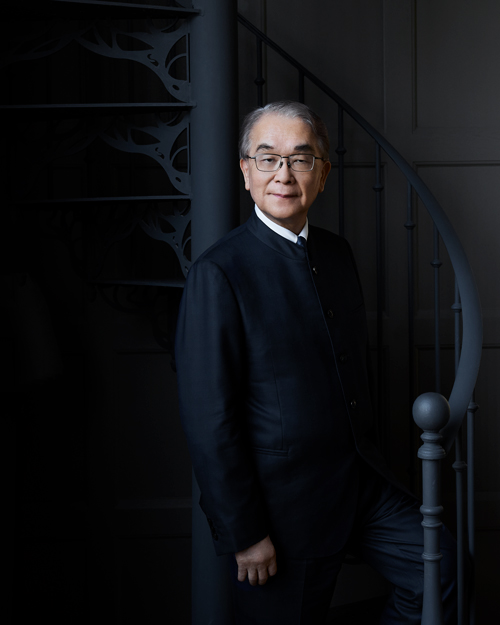
Kazumi Arikawa does not collect jewels in the ordinary sense. He does not chase carats, nor seek status pieces for glittering galas or sealed vaults. What he collects instead are fragments of history, spanning 5,000 years of artistry, culture, and wonder embedded in jewellery.
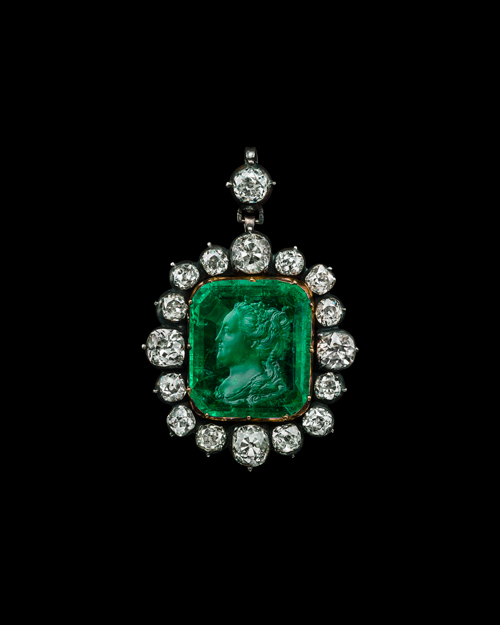
When he speaks of a jewel, it is not as an object, but as an unforgettable sensation.“I remember the moment I first held it,” he says, describing a cameo carved by Nicola Morelli (1771–1838), once the private possession of Napoleon himself. The piece, delicately human and achingly precise, was one of the few personal belongings the exiled emperor was permitted to take to Saint Helena.
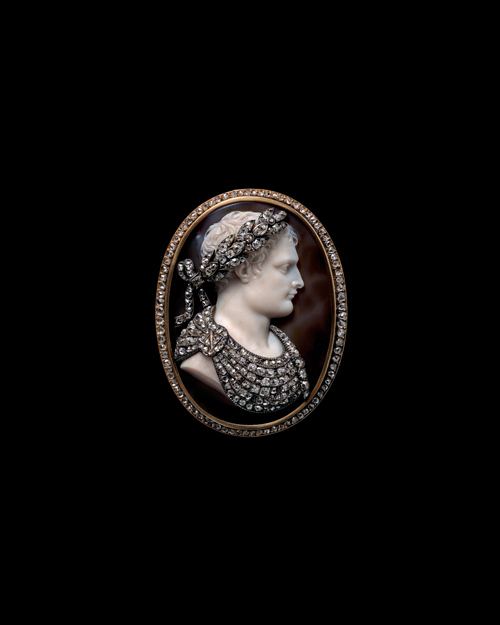
“When the piece eventually came into my hands,” Arikawa recalls, “I was so deeply moved that for nearly two weeks after its acquisition, I couldn’t let go of the feeling. It was as if my very soul continued to quiver.”
It is this visceral feeling, ineffable yet deeply stirring, that defines his philosophy. In Arikawa’s world, jewellery is not an ornament, but a vessel for memory, for emotion, and for the tremors that connect us to something greater than ourselves.
A legacy measured in millennia
To meet Kazumi Arikawa is to encounter a paradox: a man of courtly restraint whose ambitions stretch beyond centuries and toward something almost mythic. His aspiration is not simply to curate a world-class collection, but to build, over a lifetime and beyond, a museum that will endure for a thousand years.
This daring ambition found its turning point in a serendipitous meeting with Lord Camoys, then vice chairman of both Barclays and Sotheby’s, and later Lord Chamberlain to Queen Elizabeth II. Arikawa, still early in his collecting journey, shared his nascent vision that might have sounded delusional to anyone else: to become the best in the world in the domain, to build a collection of jewellery brimming with sacred, ultimate beauty, and to leave it as a legacy for humanity.
Lord Camoys, without hesitation, offered his support.
Eventually, doors began to open. Through Camoys’ introduction, Arikawa was granted rare access to handle the collections of the British Museum and the Victoria & Albert Museum, a privilege typically reserved for scholars with decades of tenure. It was also through Camoys that Arikawa met Diana Scarisbrick, the preeminent jewellery historian, who became his lifelong academic advisor. One revered European jewellery dealer, struck by the audacity of Arikawa’s vision, gathered his family and resolved: we will help him become the best.
Three decades later, even those mentors now concede: he has.
“Today,” Arikawa says with characteristic understatement, “they tell me, ‘Kazumi, you’ve already reached the top of the world. We can no longer handle works of this caliber.’”
Now, his collection includes objects of extraordinary rarity and irreplaceable historical weight.
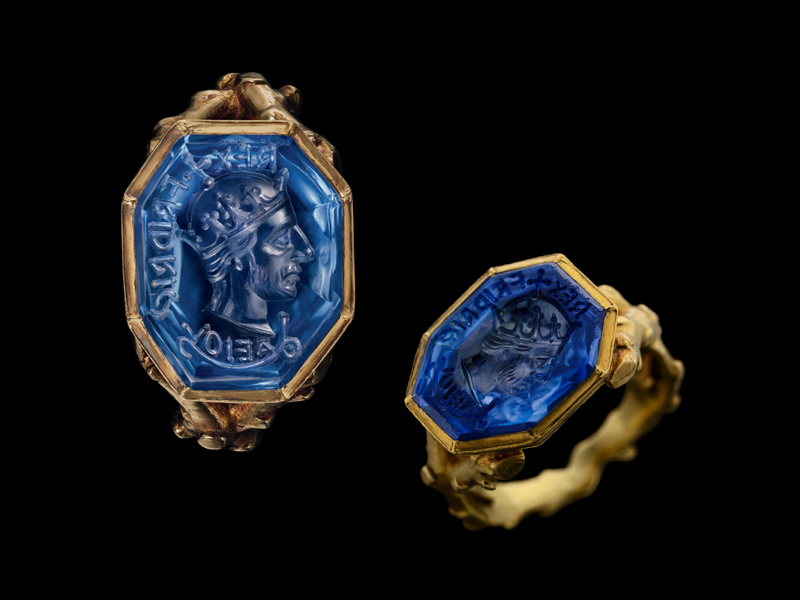
Among them: the signet ring of Holy Roman Emperor Frederick III, dating to the mid-15th century. Its sapphire intaglio, engraved with a declaration of Austria’s dominion, somehow escaped a posthumous decree that such seals be destroyed to prevent forgery. By all accounts, it should have vanished into history. And yet, it survived, miraculously, becoming a mute witness to the power, history, and beauty.
The emotional force of his collection is not abstract; he has witnessed viewers weeping before Napoleon’s cameo numerous times. At a tiara exhibition in Tokyo, three women fainted, physically overcome by the sheer beauty before them.
“Jewellery is far more than a fashion statement or a symbol of vanity,” he explains. “It is awe, when the soul meets something inexplicable and trembles in its presence.”
Beauty against the grain
From a distance, Arikawa’s life might resemble a dreamscape: velvet-lined cases, six-figure pieces, a world steeped in rarefied treasures. But beneath that dazzling surface is a life forged and refined by inexorable hardship.
“Over 90 percent of my life has been marked by continuous struggle,” he admits.
The most harrowing chapter came in the aftermath of the 2008 financial crisis. A client’s sudden bankruptcy left Arikawa exposed to a massive debt. There was no lifeline, no patron waiting in the wings. Only the weight of an ambition, and a promise to fulfill it.
“I went to the bank,” he says. “I explained everything. And I asked them to wait.”
They did. And over the next 10 years, he repaid the debt in full.
That long decade earned him more than financial freedom; it earned him trust. What was once a time of fear and sleepless uncertainty has become, in his eyes, the most treasured chapter of his life.
“Struggle keeps me grounded,” he reflects. “It humbles me. It prevents arrogance, which I’m naturally prone to.”
He does not romanticize this chapter. He remembers the exhaustion, the fear, the temptation to let go. Still, he stayed the course and held fast to his ambition, the same one that once made Lord Camoys lean in and listen.
“What matters most,” Arikawa contemplates, “is not ability or personality, but having a meaningful ambition. When you do, the conditions necessary for its achievement will naturally come together.”
And they have.
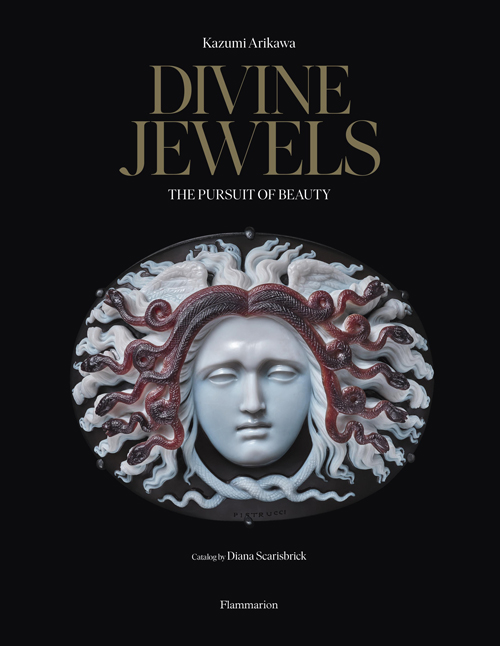
Today, Arikawa holds the honour of Chevalier of the Ordre des Arts et des Lettres. He sits on the International Council of the Metropolitan Museum of Art. His recent work, Divine Jewels: The Pursuit of Beauty—a sumptuous 520-page volume unveiling 250 treasured pieces for the first time—was described by L’ÉCOLE, the School of Jewelry Arts, as “an important testimonial to the vision and life of the collector.”
Forbes called him “the man with the most valuable jewelry collection you never knew existed.”
But it is not the valuation that moves him.
It is the vibration, the ineffable trembling of time that lives inside a 5,000-year-old shard of collective memory; the unspoken moment when beauty becomes something more than visual, when it slips into the soul and leaves it changed.
A Louvre of jewellery yet to be
What Arikawa seeks is not merely timelessness through objects. It is communion. Through his museum-in-the-making—still unnamed, still mostly secret—he hopes to build a kind of cathedral, a place of beauty to gather humanity’s finest jewels.
“To gather,” he says simply, “is to become a Louvre.”
He imagines a place where children might encounter, for the first time, the ring of a king, the diadem of a queen, the tears of a civilization crystallized in emerald. A sacred place where beauty does not only please but also elevates. A place where the soul, too often desensitized by screens and speed, might once again learn to tremble.
And when it does, Kazumi Arikawa will know he has fulfilled his vision.
Not because he collected the finest jewels in the world.
But because he helped awaken the world to feel something timelessly beautiful.






Healing Travel
From meditation to holistic spas, enhance your well-being at these six wellness treatment destinations.