

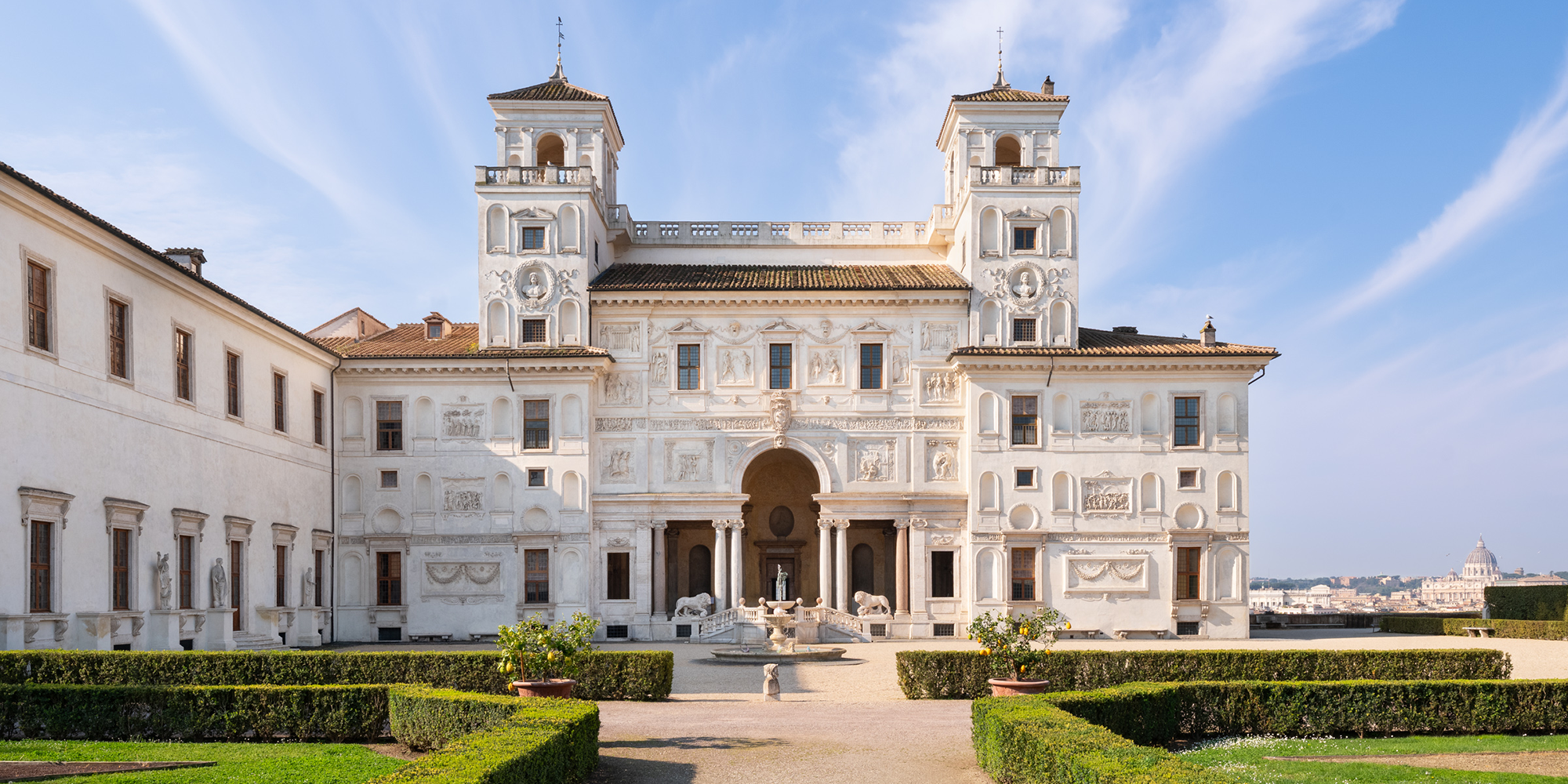
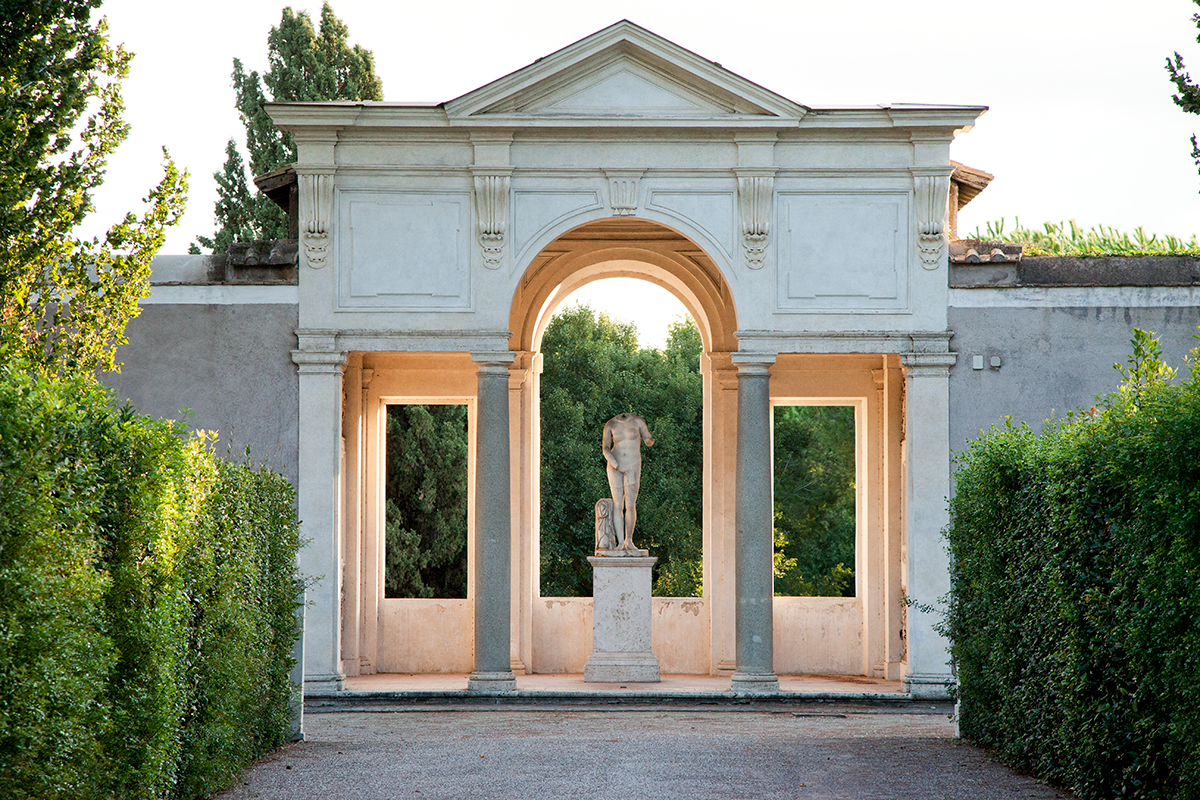
The Villa Medici, perched atop the Pincian Hill like a gilded crown above Rome, has long functioned as a lodestone for the continent’s artistic soul. Built in the 16th century for Cardinal Ferdinando de’ Medici, it remains an architectural wonder whose lush, brooding loggias and Roman reliefs vibrate with the bounty of antiquity, commanding a certain sort of deference.
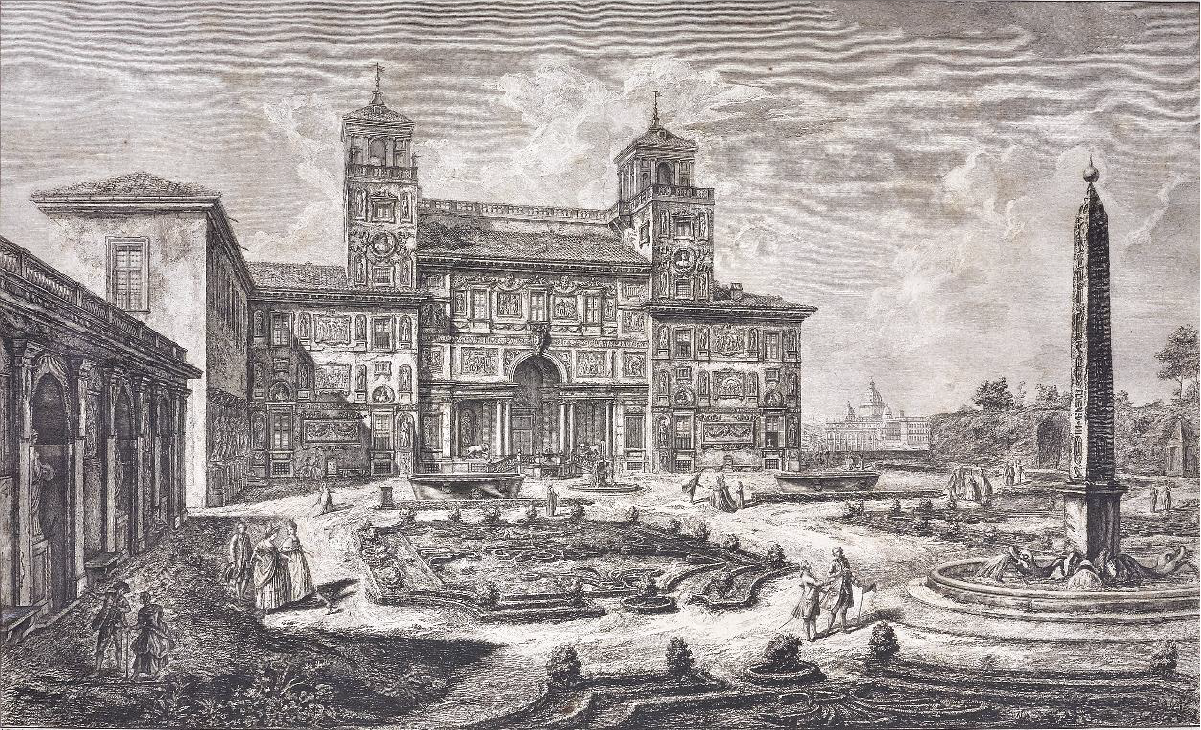
Since the days when Napoleon designated it the permanent seat of the Académie de France à Rome, the villa has served as a crucible for generations of French creatives. Painters, sculptors, and poets have passed through its gates, spent their residencies in intense periods of production, and departed, leaving behind the rich sediment of their own visions.
To walk through its halls is to read a living history, written in layers of plaster, tapestry, and stone.
To honor this rich legacy while ensuring its continued vitality, Sam Stourdzé, director of the French Academy in Rome, has launched Re-enchanting Villa Medici, a multi-phase restoration and reinterpretation project. The initiative invites a vanguard of contemporary architects, designers, and artisans into a spirited dialogue with the Renaissance. Having already reimagined the villa’s reception salons, the project has now unveiled a new suite of six guest rooms and two gardens.
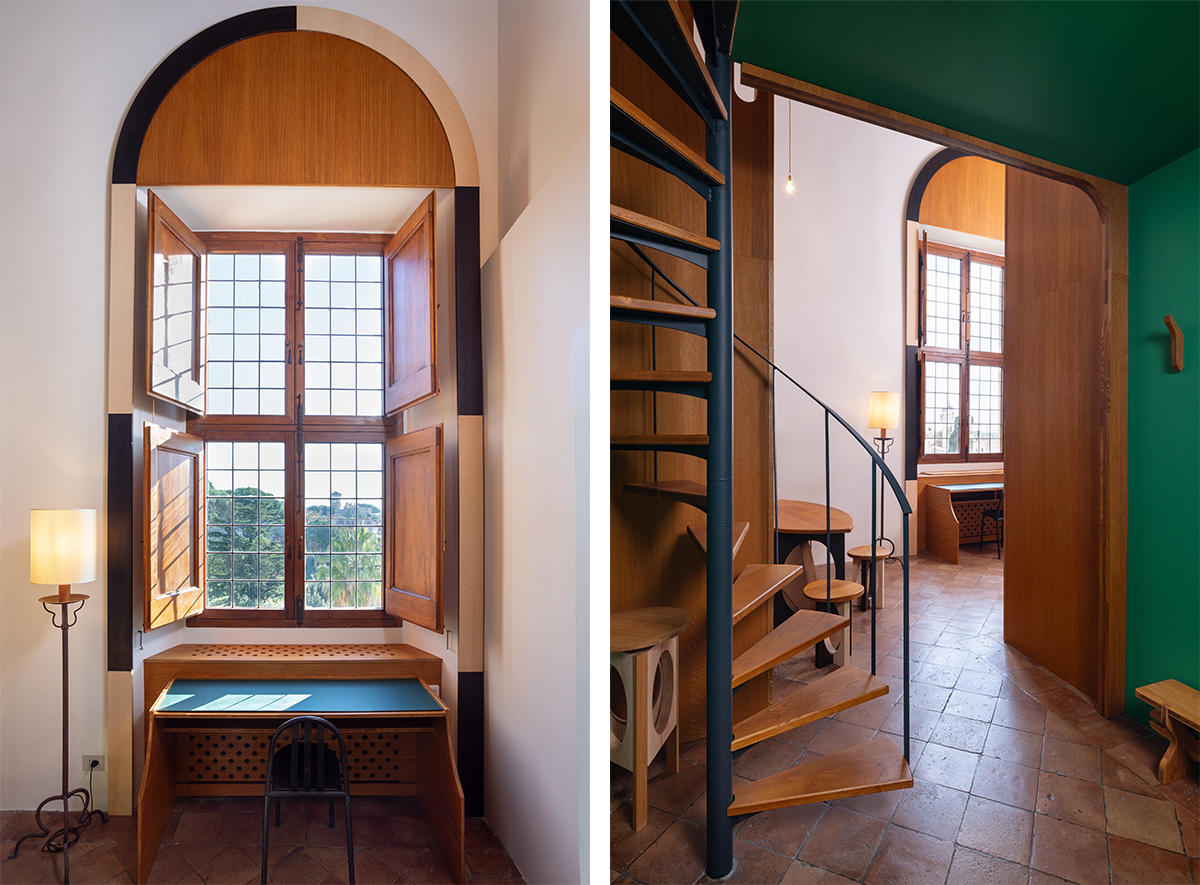
In the room dubbed Studiolo, the designers Sébastien Kieffer and Léa Padovani, in collaboration with the artisans at Atelier Veneer, have forged a rapprochement between the 16th-century cabinet of curiosity and modern sustainability. Inspired by Antonello da Messina’s Saint Jerome in His Study, the room is an exercise in restraint. Its geometric marquetry, crafted from reclaimed wood offcuts, is designed for the kind of monastic contemplation the villa’s original residents would instantly recognize.
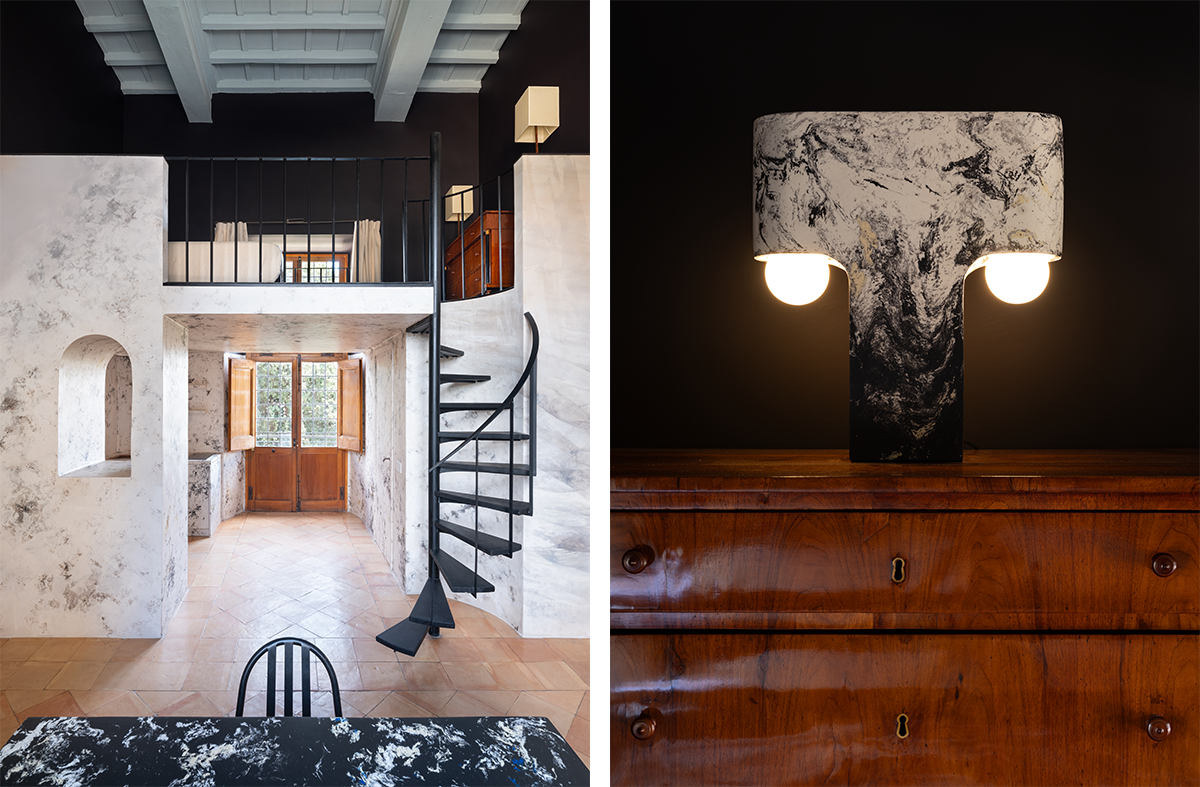
Elsewhere, the boundary between the material and the imagined becomes porous. In Camera Fantasia, Studio GGSV and the paper specialists at Paper Factor have essentially turned the room into an essay on the plasticity of pulp. Through intricate micro-paper techniques, they have created textures that ripple and drift, at times masquerading as the very antique stone that defines the building’s exterior. It is a sleight of hand that feels distinctly Roman, a city where one is never entirely certain where the ruin ends and the restoration begins.
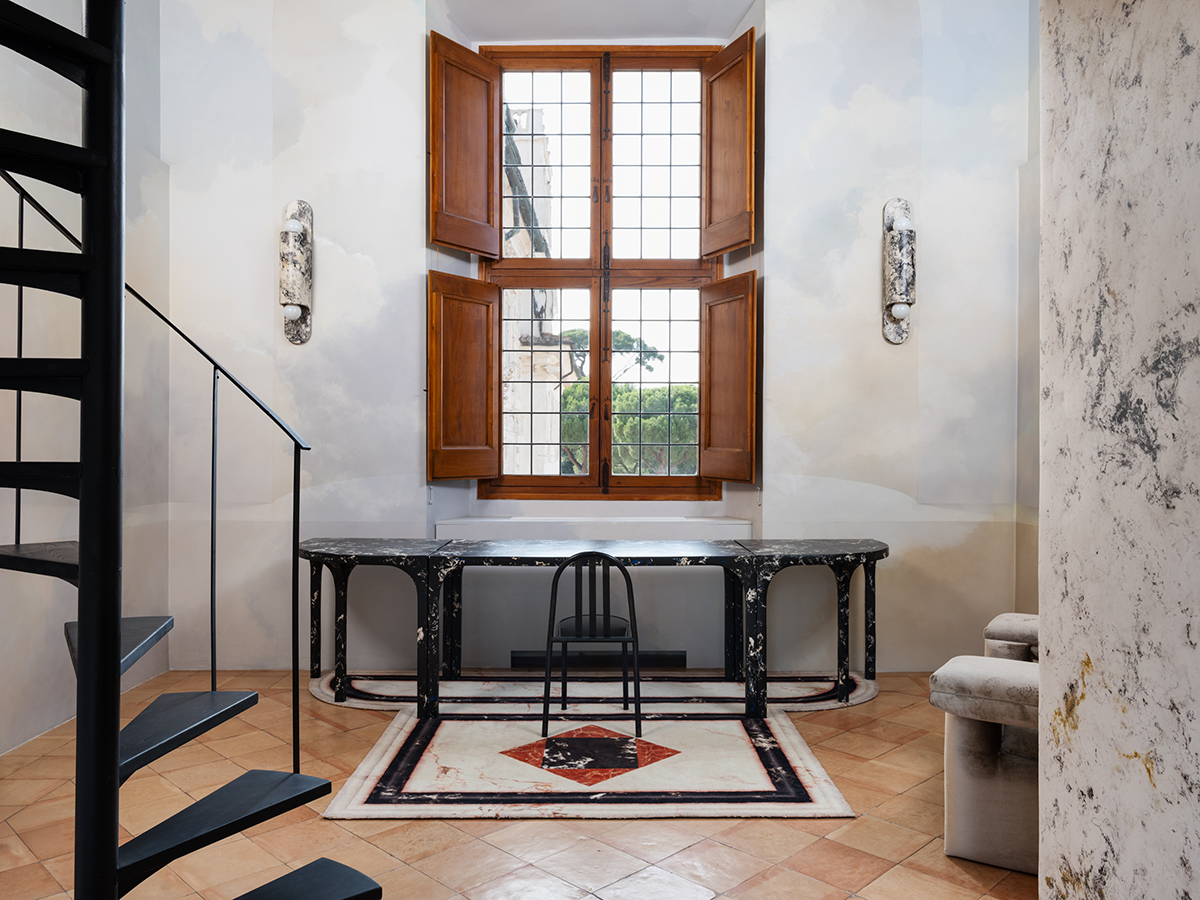
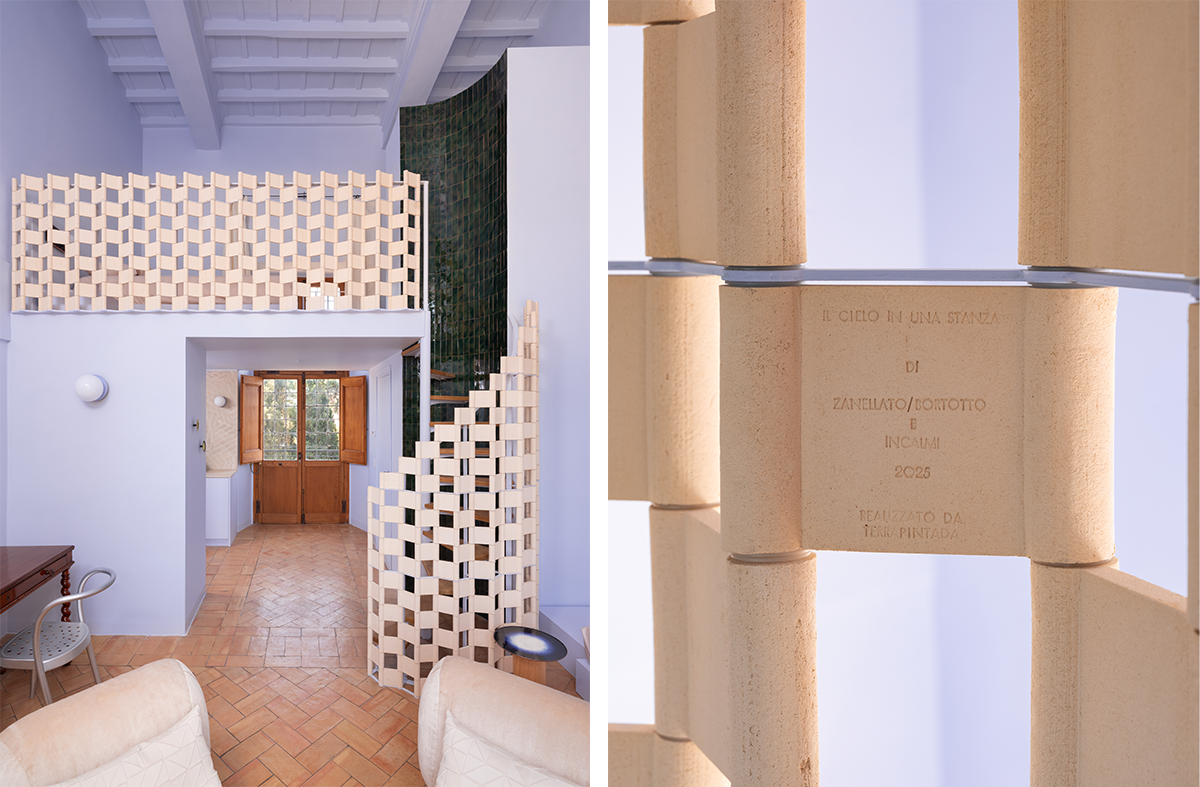
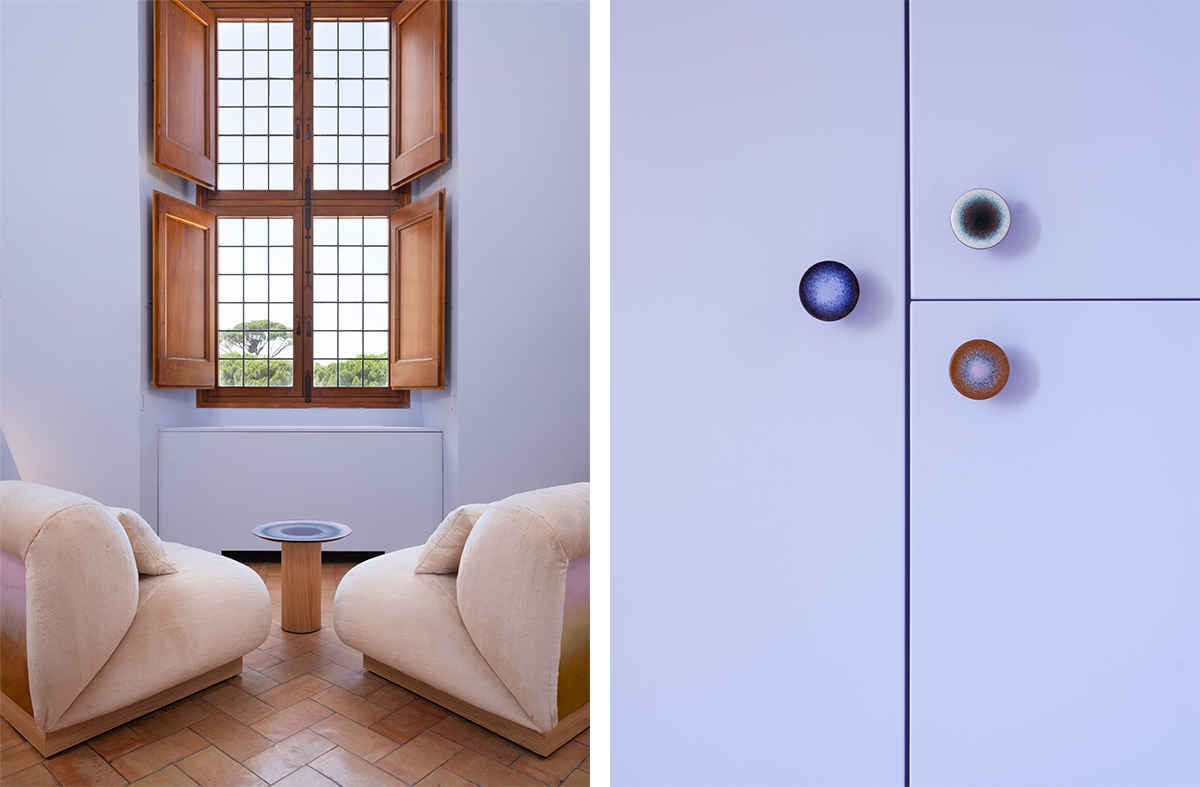
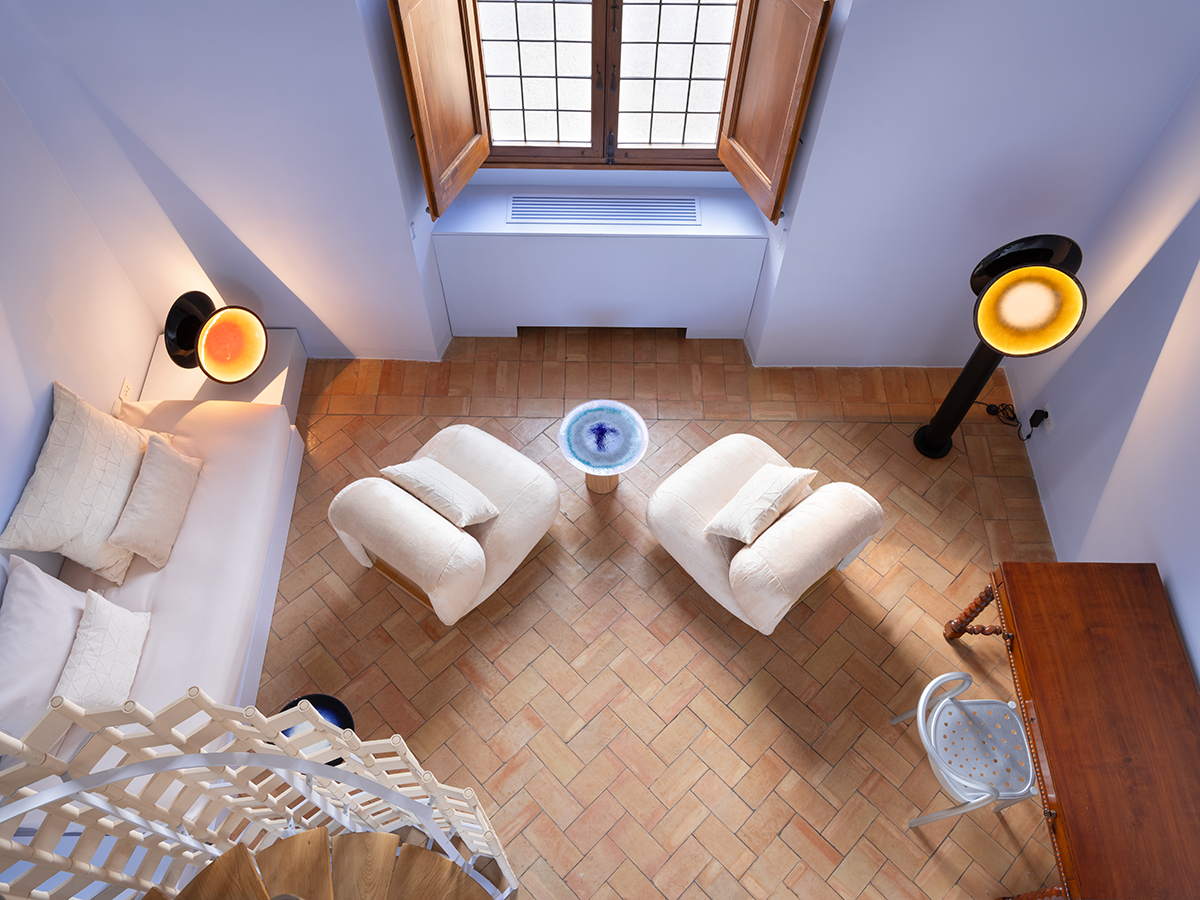
The Il Cielo in una Stanza room takes a more chromatic approach. Studio Zanellato/Bortotto, working with the Venetian glass masters at Incalmi, distilled the color palette of a Roman stroll: the wisteria blues of spring gardens and the deep, resinous greens of the city’s pines. A wall of fire-glazed copper tesserae catches the light in an almost liturgical manner, reflecting the shifting moods of the Eternal City back into the room.
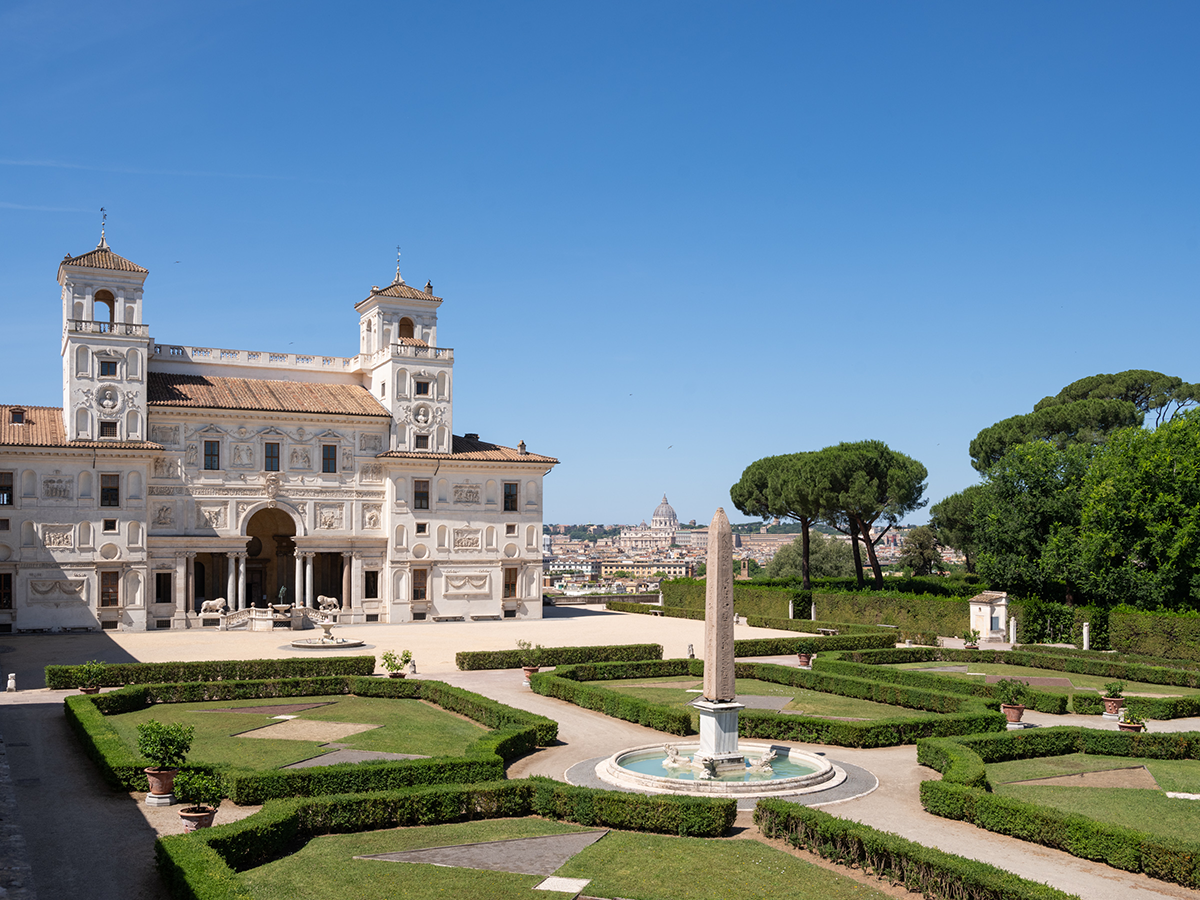
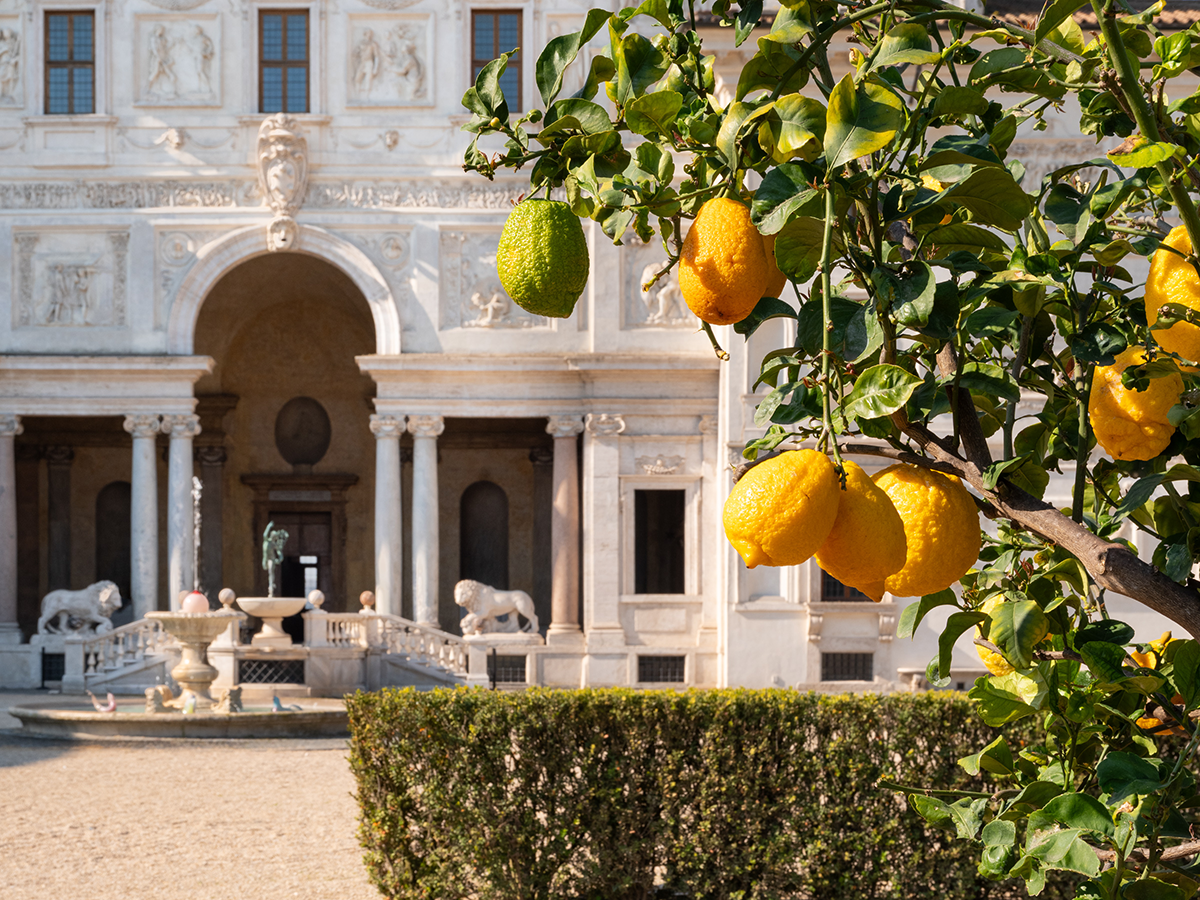
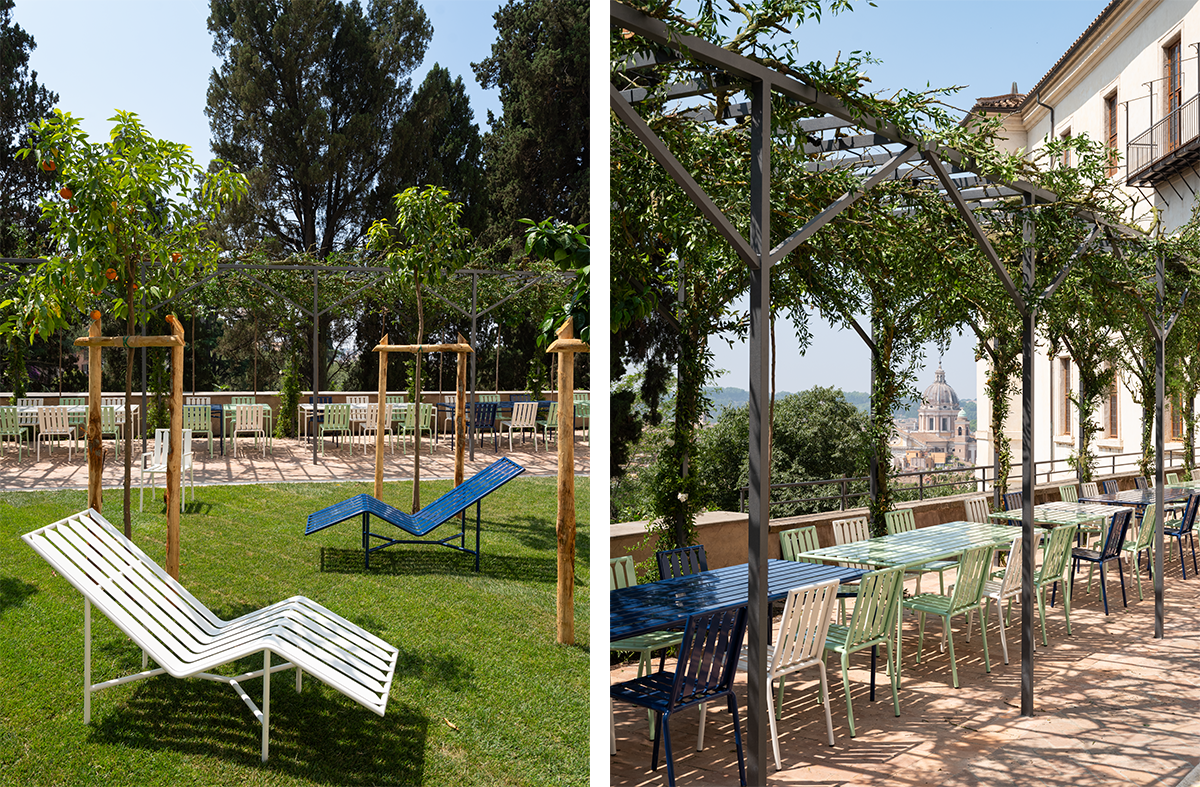
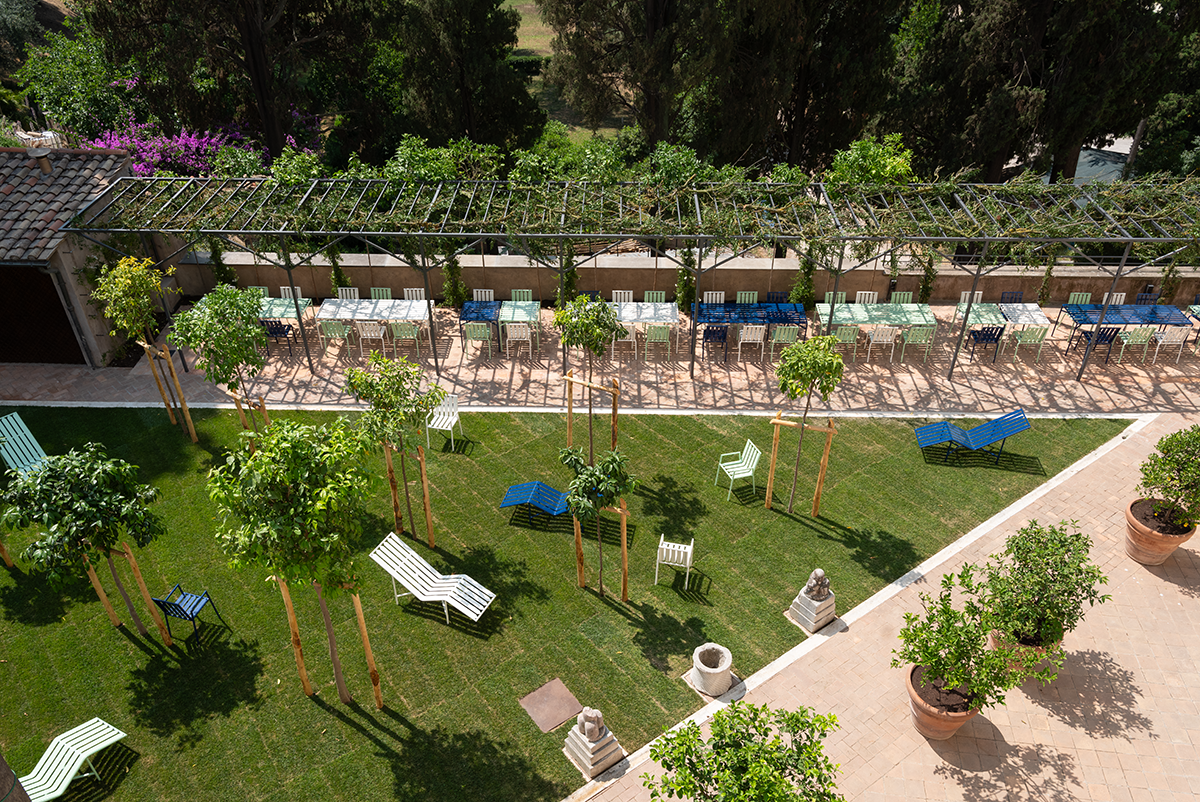
If the interiors feel like a series of intimate conversations, the work of the landscape architect Bas Smets and the historic-monument architect Pierre-Antoine Gatier extends the dialogue outdoors. They have reimagined the Cardinal de’ Medici’s lemon garden with a pergola of Lunario lemon trees that frames the sprawling view of Rome below.
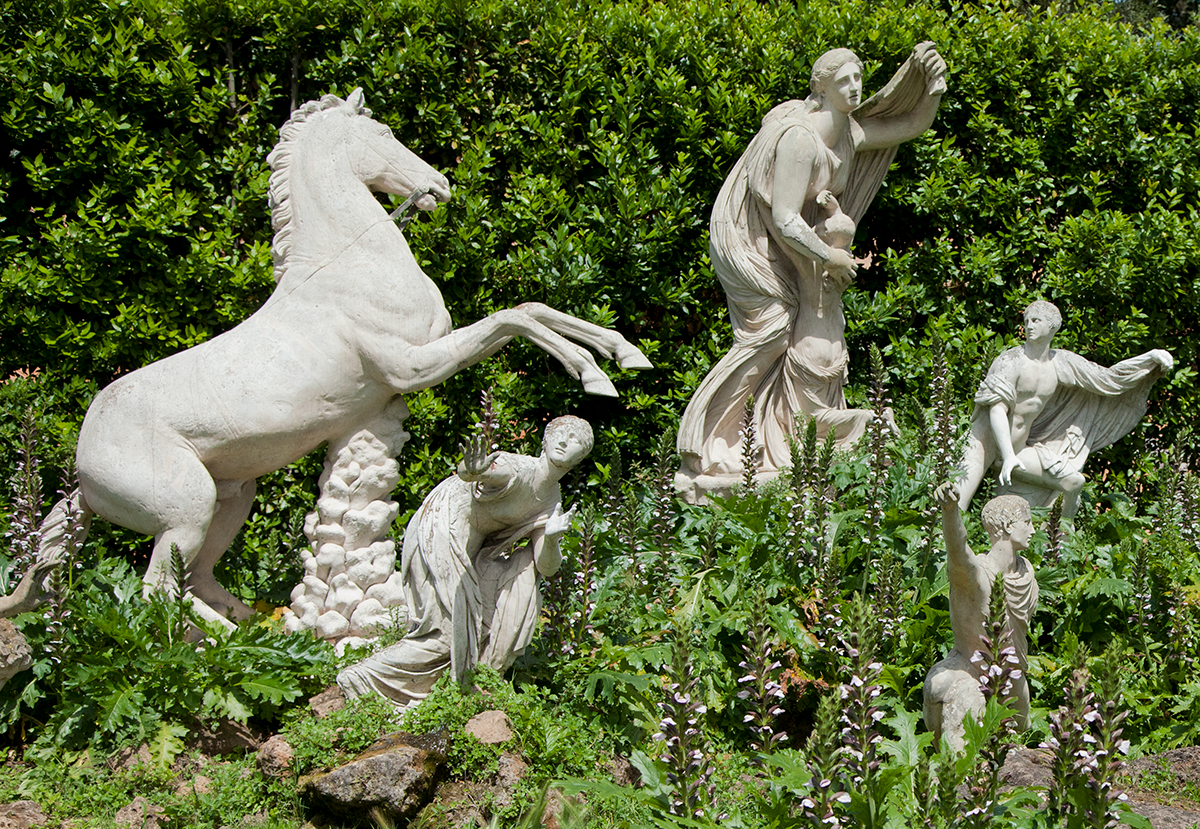
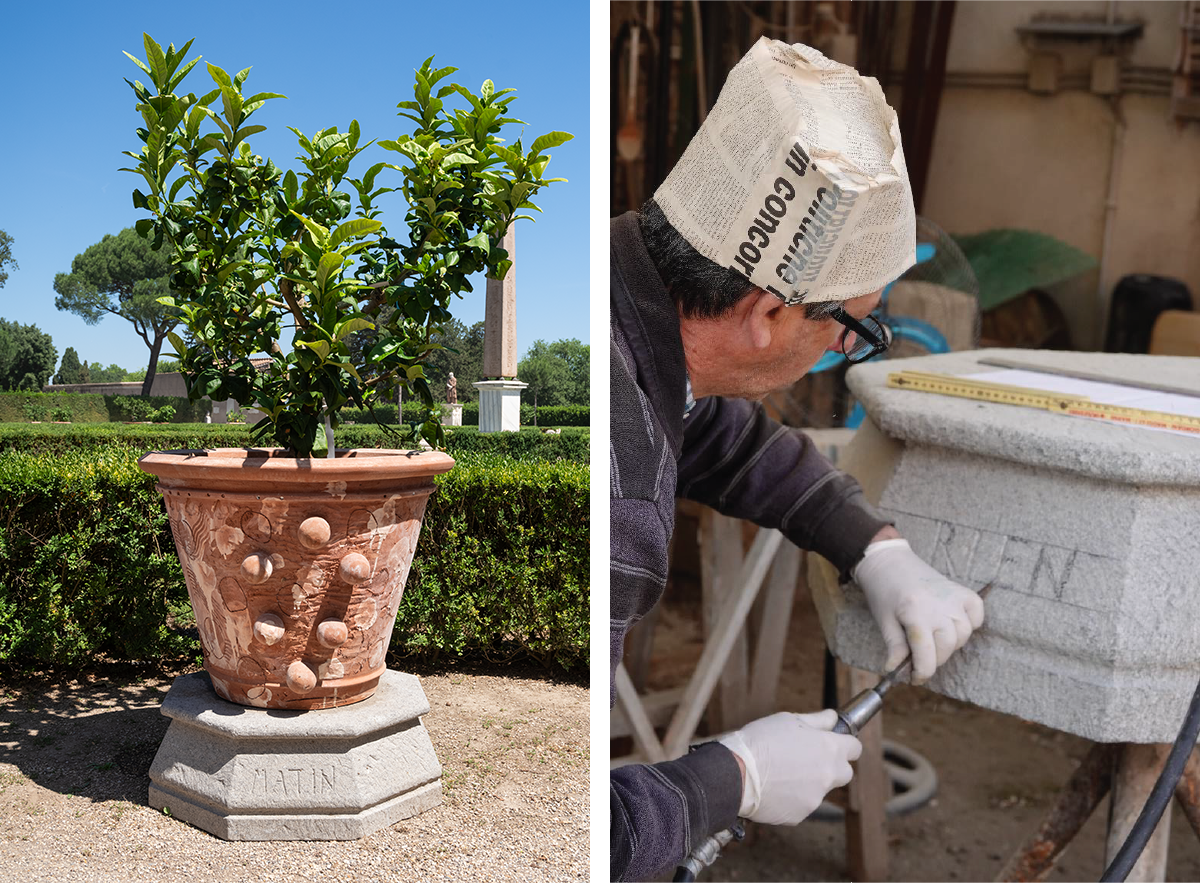
In the parterre, the additions are more lyrical: Japanese ceramicist Natsuko Uchino has created custom terracotta pots, while stone plinths are engraved with lines from the poet Laura Vazquez. These fragments of verse drift through the garden like half-heard snatches of gossip, a reminder that the villa is, and has always been, a place of voices.
To “re-enchant” a place like the Villa Medici is a daunting task. It acknowledges that preservation is rarely a matter of freezing time; it is, rather, a matter of keeping the conversation going. By inviting the present to press its thumb against the past, Stourdzé has ensured that the villa remains not a static monument to what was, but a kinetic site of what is still to be.




A Look at Nicolas Ghesquière’s Louis Vuitton Cruise Collections
Travel through a decade of fashion creativity at Nicolas Ghesquière’s Louis Vuitton Cruise shows

A Symphony of Petals: The Nature-Inspired Art of Claire Basler
Discover the enchanting world of artist Claire Basler as she expresses nature’s beauty through her unbridled brush and deep connections to home
Discover the Sacred Lacemaking of France
A secluded cloister of French nuns continues the beautiful tradition of French lacemaking.
Queens of the Castle: Chanel Metiers d’art 2020/21
A chateau in Loire Valley plays host to CHANEL’s Metiers d’art 2020/21 collection.

