

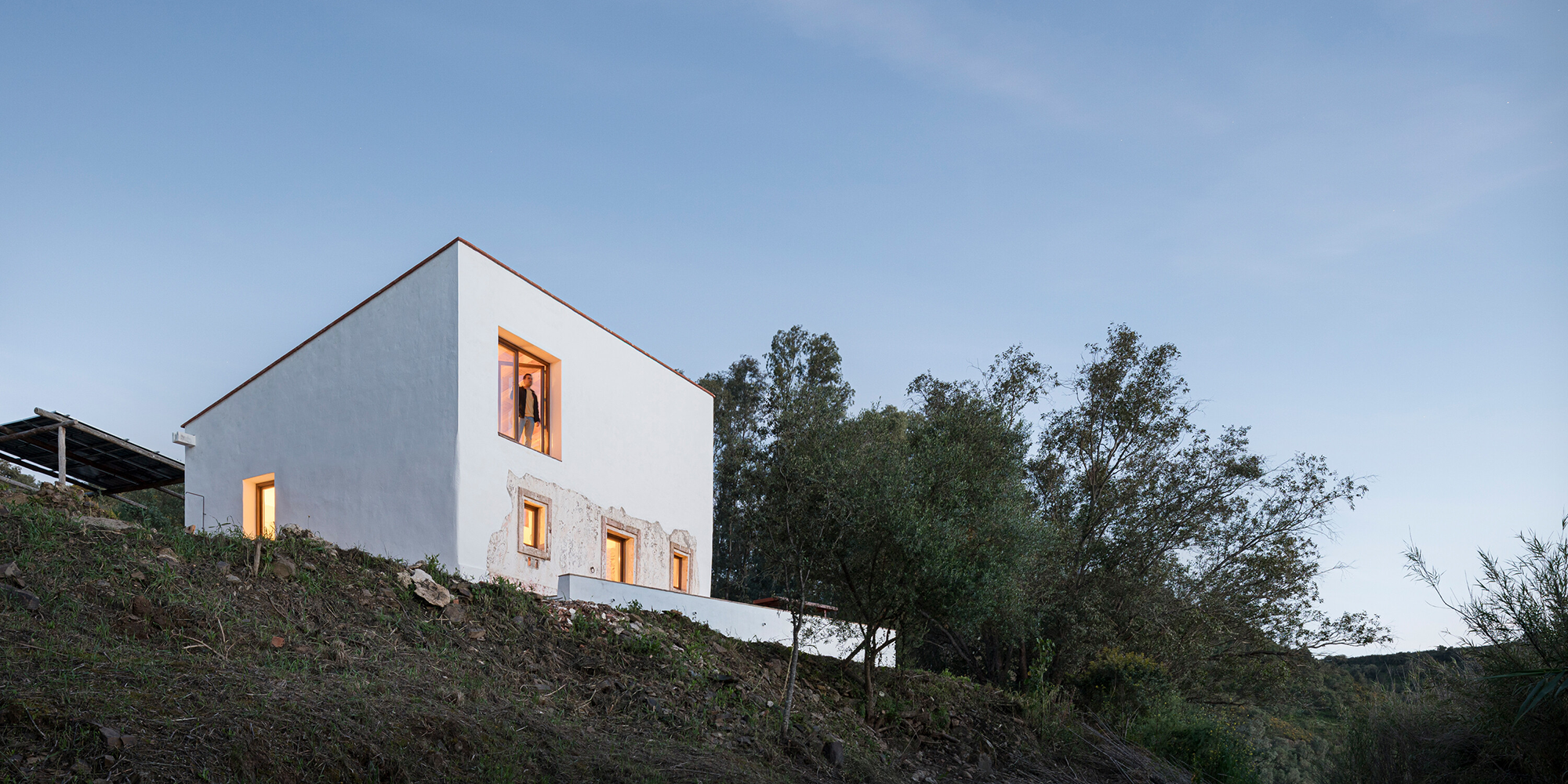
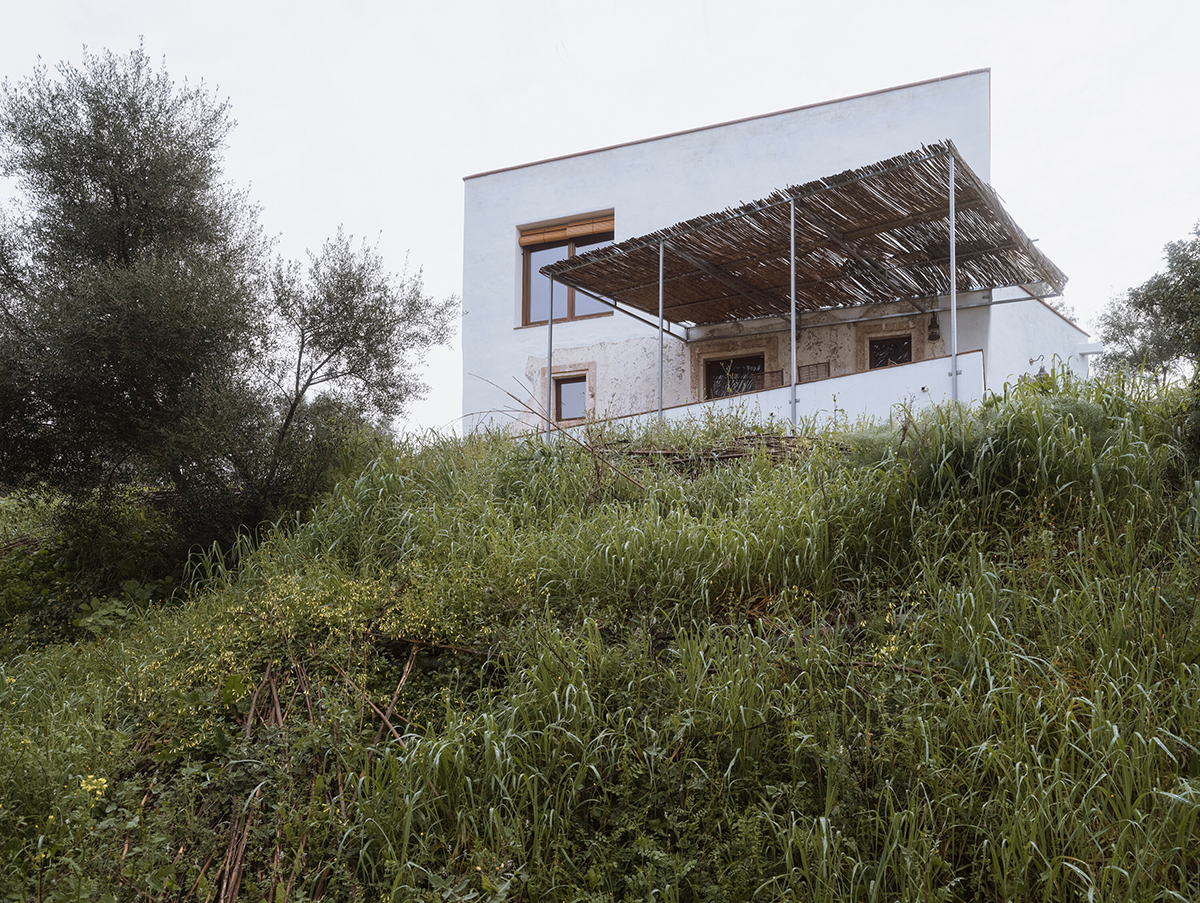
High on the sun-baked banks of the Guadiana River, where Spain and Portugal meet in a centuries-old embrace of borderlands, stands a home named Piedra y Agua (Stone and Water). Compact and doorless, this striking redoubt masterfully balances a palpable history with the clean edges of contemporary Iberian design and a river-bound way of life.
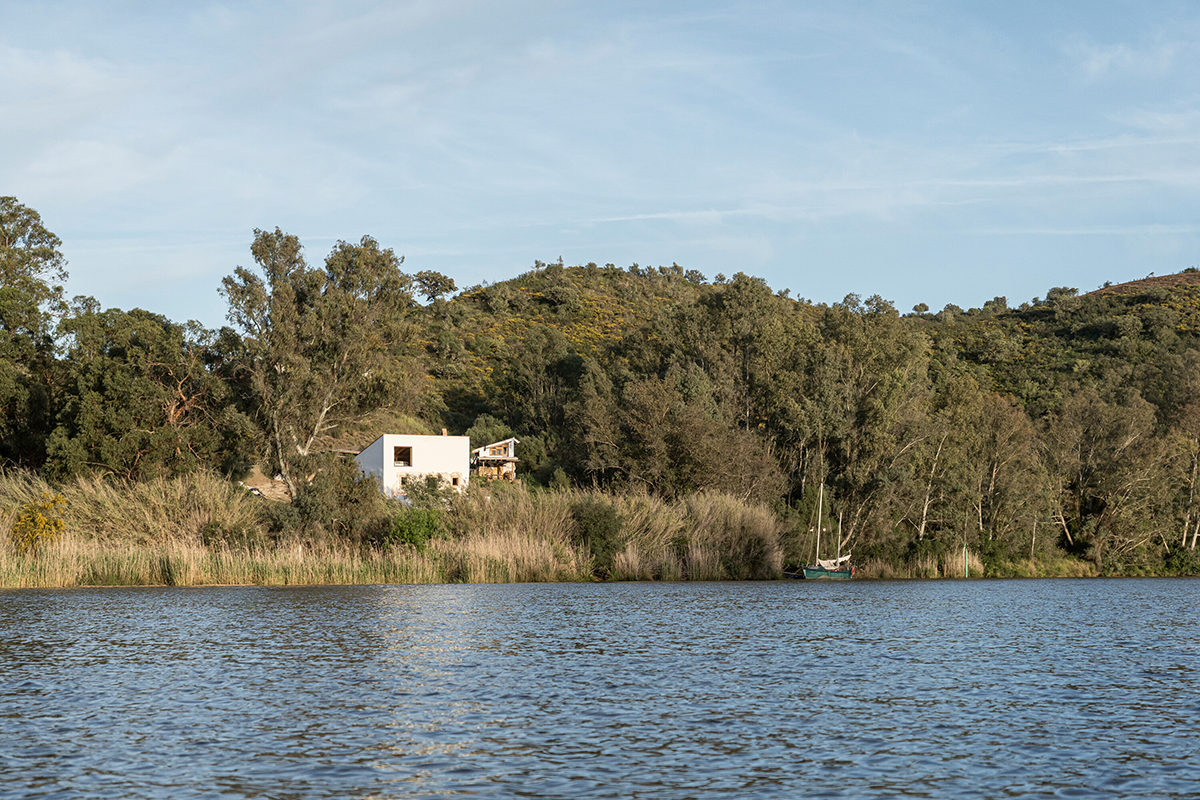
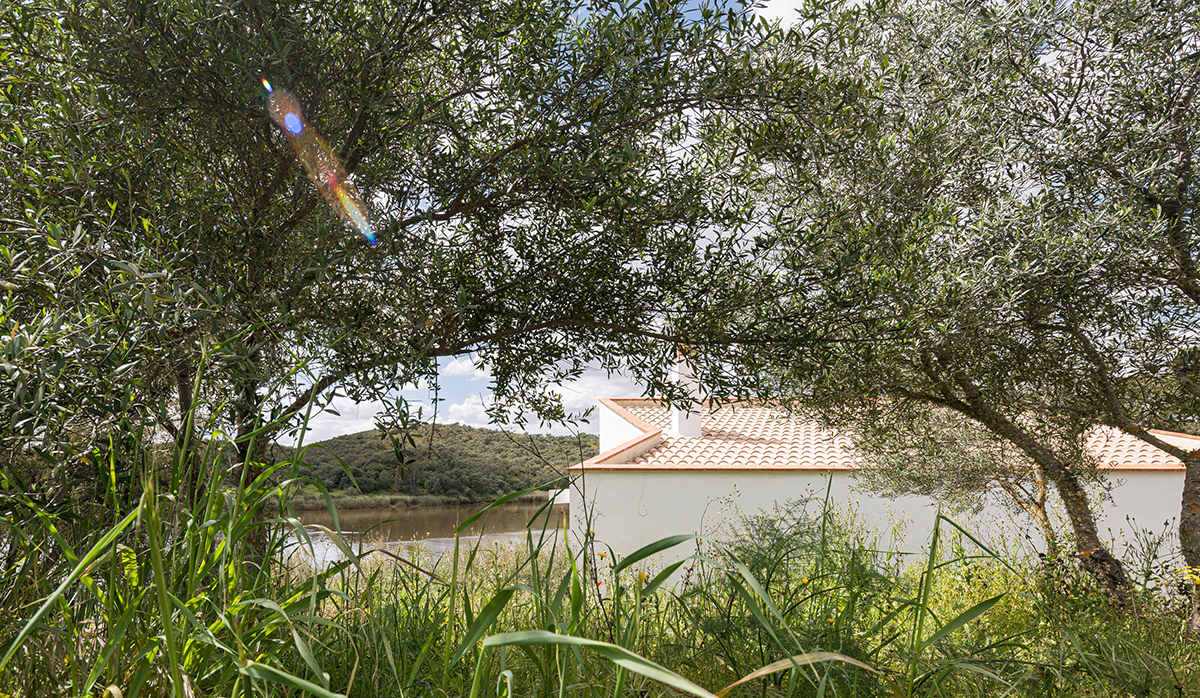
The house is located in Sanlúcar de Guadiana, a village of just over 400 residents whose history has long been shaped by the water. As the first sheltered anchorage inland from the Atlantic, Sanlúcar has historically served as a vital gathering place for sailors and travelers. Over generations, many of these voyagers chose to drop anchor permanently and settle here, weaving a distinct culture of mobility and an anchored connection to the river.
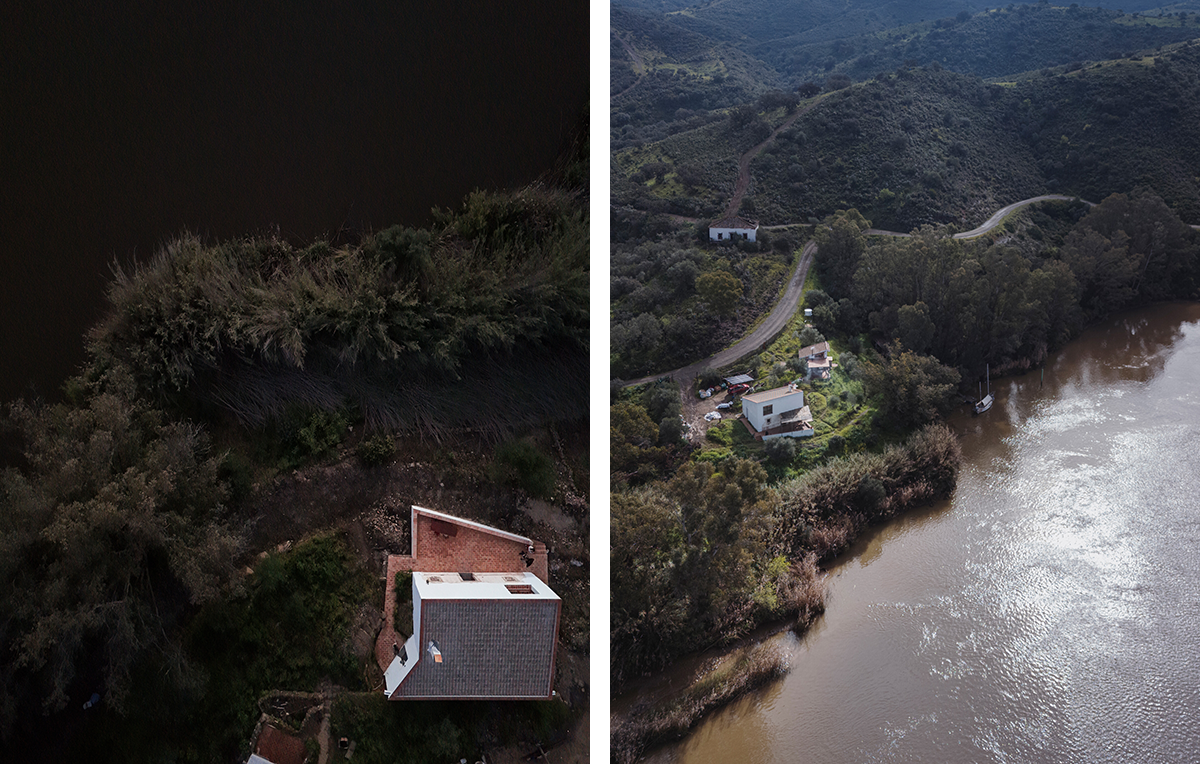
For the homeowner, Olga, the project is the culmination of a decades-long love affair with the river. Having spent years visiting the Guadiana by boat and staying along its banks, she longed for a permanent refuge. She discovered her ideal site in the crumbling stone ruins of a 19th-century Guardia Civil outpost, once used to monitor river traffic and intercept local smugglers.
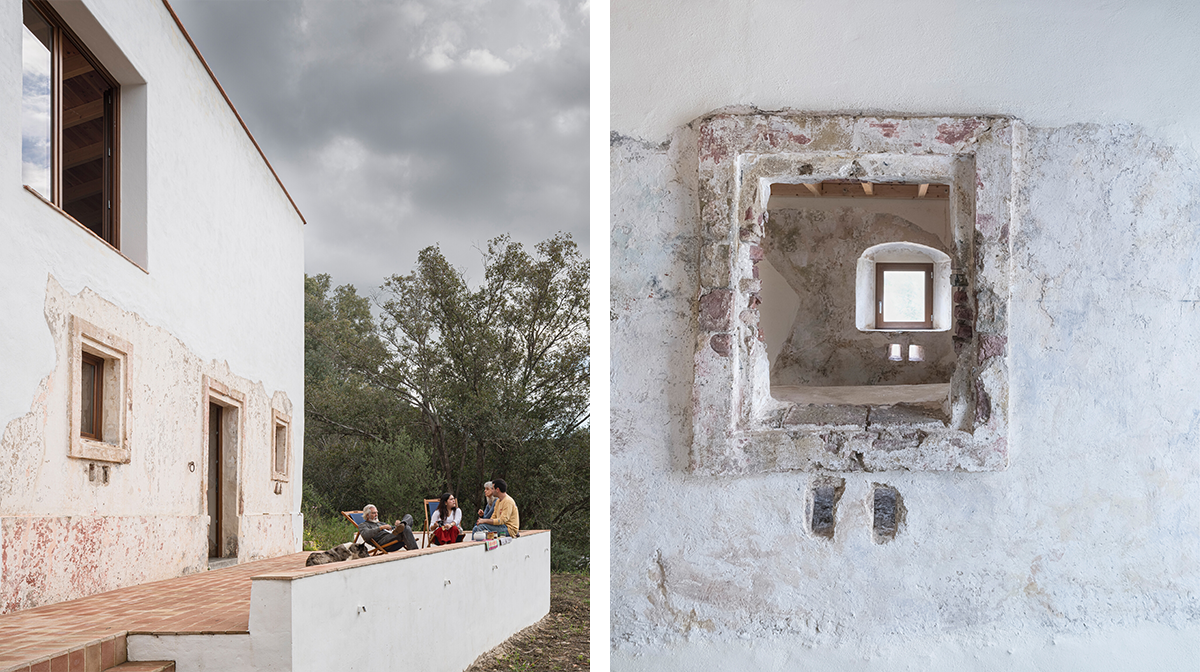
Instead of pursuing a historicist restoration, Seville-based Zurita Studio and Madrid-and-Padua-based Kalibra Arquitectura chose to treat the surviving 150-year-old stone ruins as both a physical container and a conceptual framework. By leaving the original stone perimeter intact to define the home’s footprint, the architects allowed the rough, tactile masonry of the historic watchtower to dictate the light, volume, and spatial character of the contemporary renovation inside.
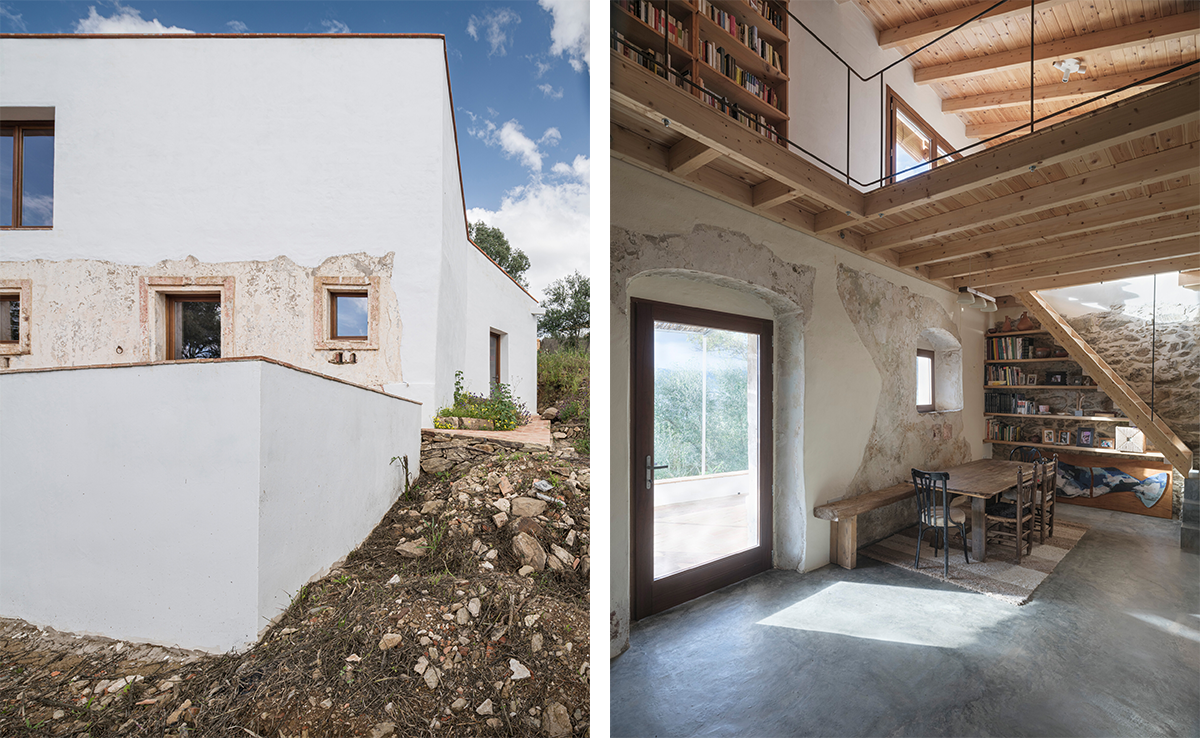
This dialogue between the raw, historic exterior and the refined interior rests on a rigorous “economy of means” that transforms budget limitations into a tour de force of textural coherence. With poetic pragmatism, the architects embraced circular principles: salvage, restraint, and resourceful reinvention.
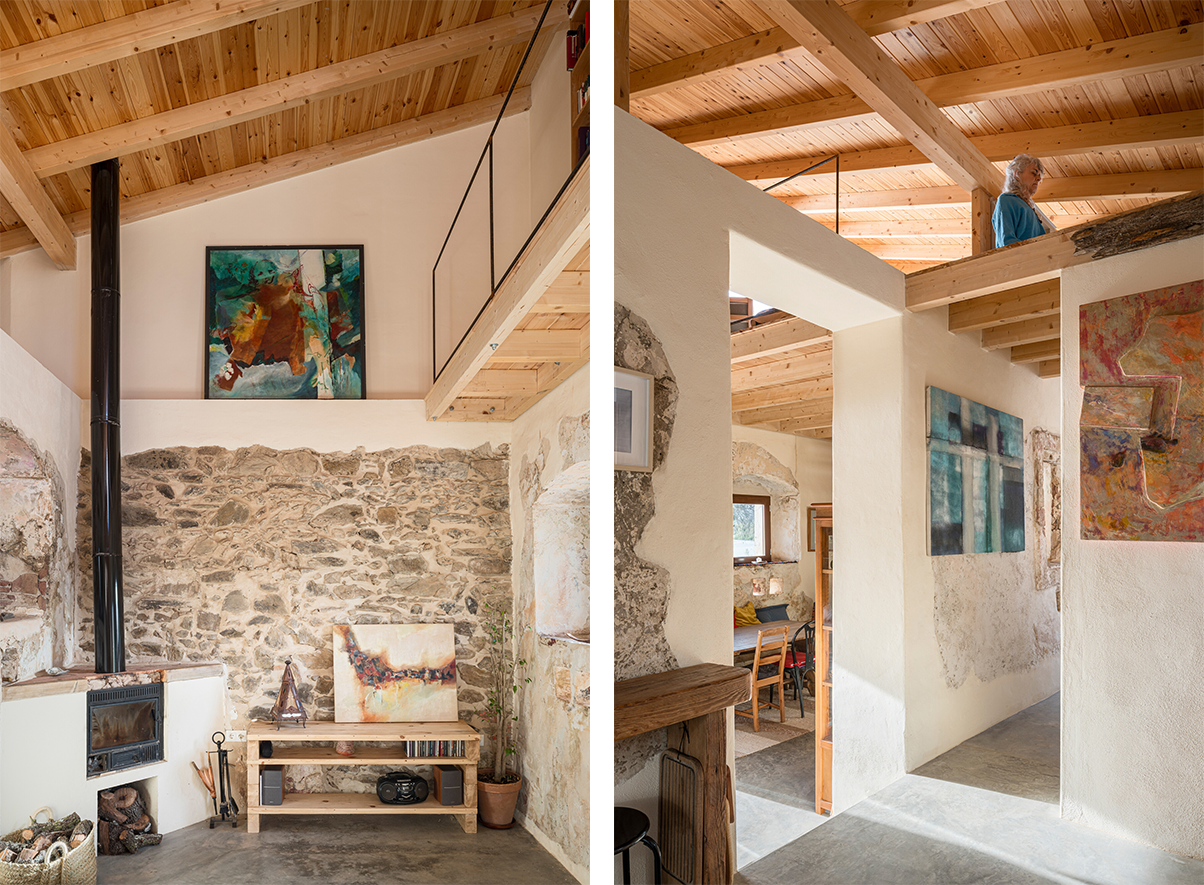
The material palette is tightly edited. Decayed pine roof beams from the original ruin were salvaged and milled into the floating staircase and minimalist kitchen elements. A soft, sandy-hued micro-cement flows seamlessly across floors and rises to form countertops, integrated sinks, and open shower basins, creating a calm, monolithic expanse.
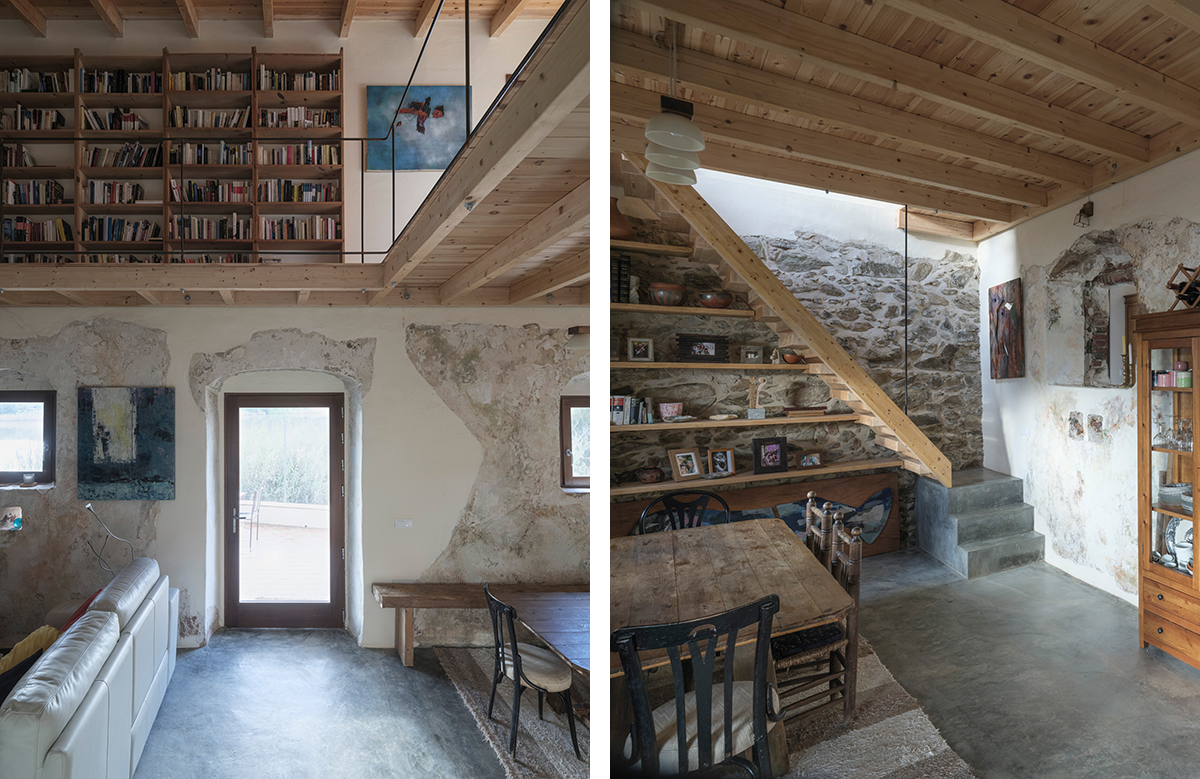
Against these clean, continuous surfaces, the textures of local craft assert themselves. A massive sculptural lamp woven from esparto grass hangs dramatically from the soaring pine ceiling. Beside the ancient exposed masonry, an antique wooden cupboard and contemporary works by an Argentine painter create a quiet dialogue between frontier history and modern creative expression.
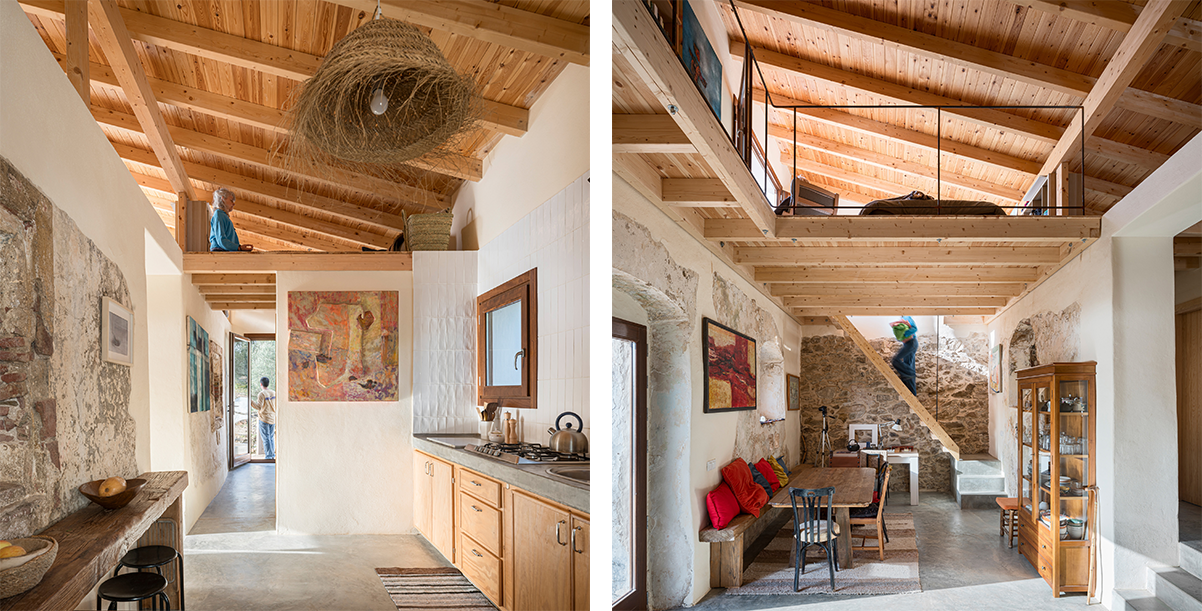
Perhaps the most radical design decision of Piedra y Agua is what it lacks: the house has no air conditioning. In southern Andalusia, where summer temperatures regularly soar, the home revives ancient climatic strategies instead.
The nearly meter-thick stone walls act as a thermal battery, absorbing the sun’s heat by day and releasing it slowly at night. A sloping roofline rises dramatically toward the river, forming a double-height volume that naturally stratifies warm air and draws it upward, away from living spaces. Strategic cross-ventilation, recessed western windows that act as structural visors, and cooling breezes off the Guadiana complete the system.
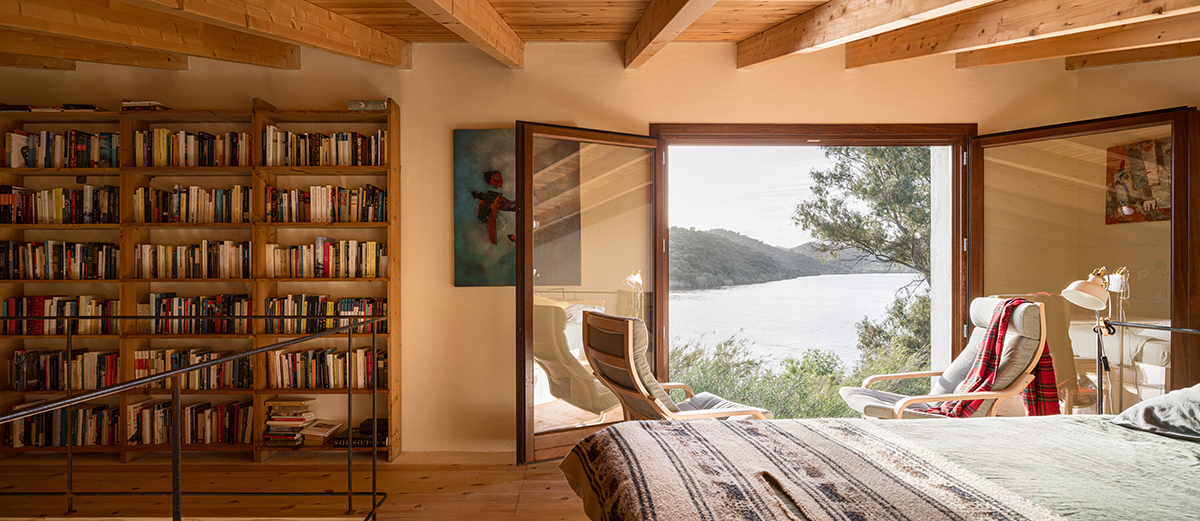
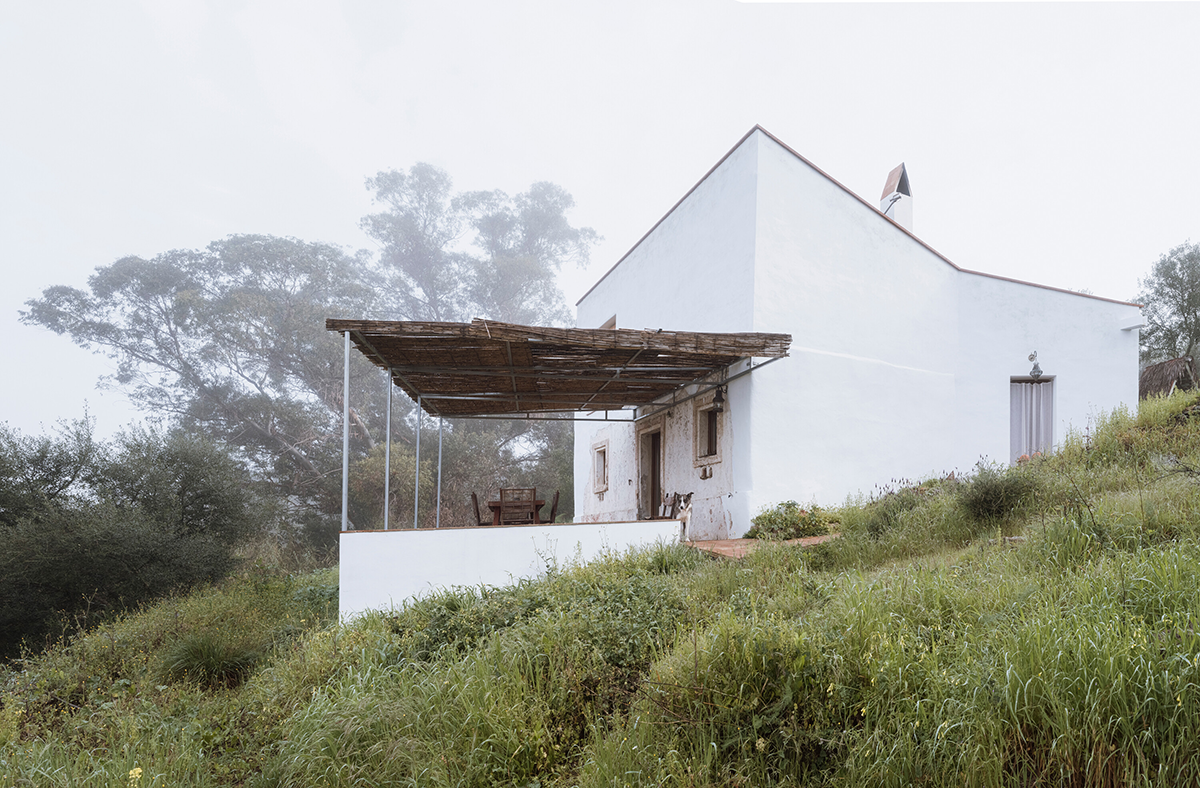
By eliminating interior doors and walls, the home unfolds as a fluid sequence of social spaces. Rooms merge into one another, encouraging a life lived in constant communion with the water, the breeze, and the shifting light of the borderlands.
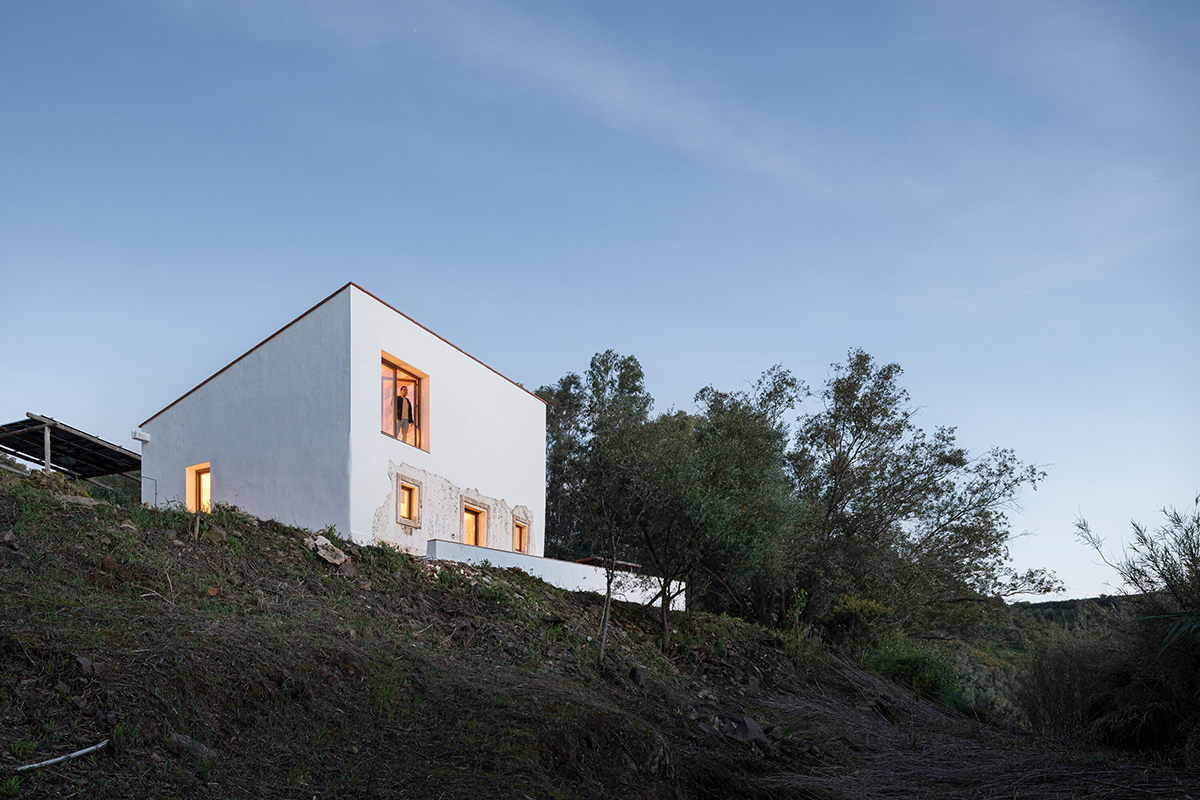
In the end, Piedra y Agua offers a compelling testament: the most luxurious homes of the future may not be those filled with technology, but those that listen most attentively to the ancient wisdom of the land.




Step into Professor Cheng-I Wu’s Inky Wonderland
Exploring the infinite flow of time through poetic brushstrokes

Reviving the Legend of Konoha Tenmoku
Artist Joyce Lin recaptures the ethereal charm of a centuries-old craft with her breakthrough innovations
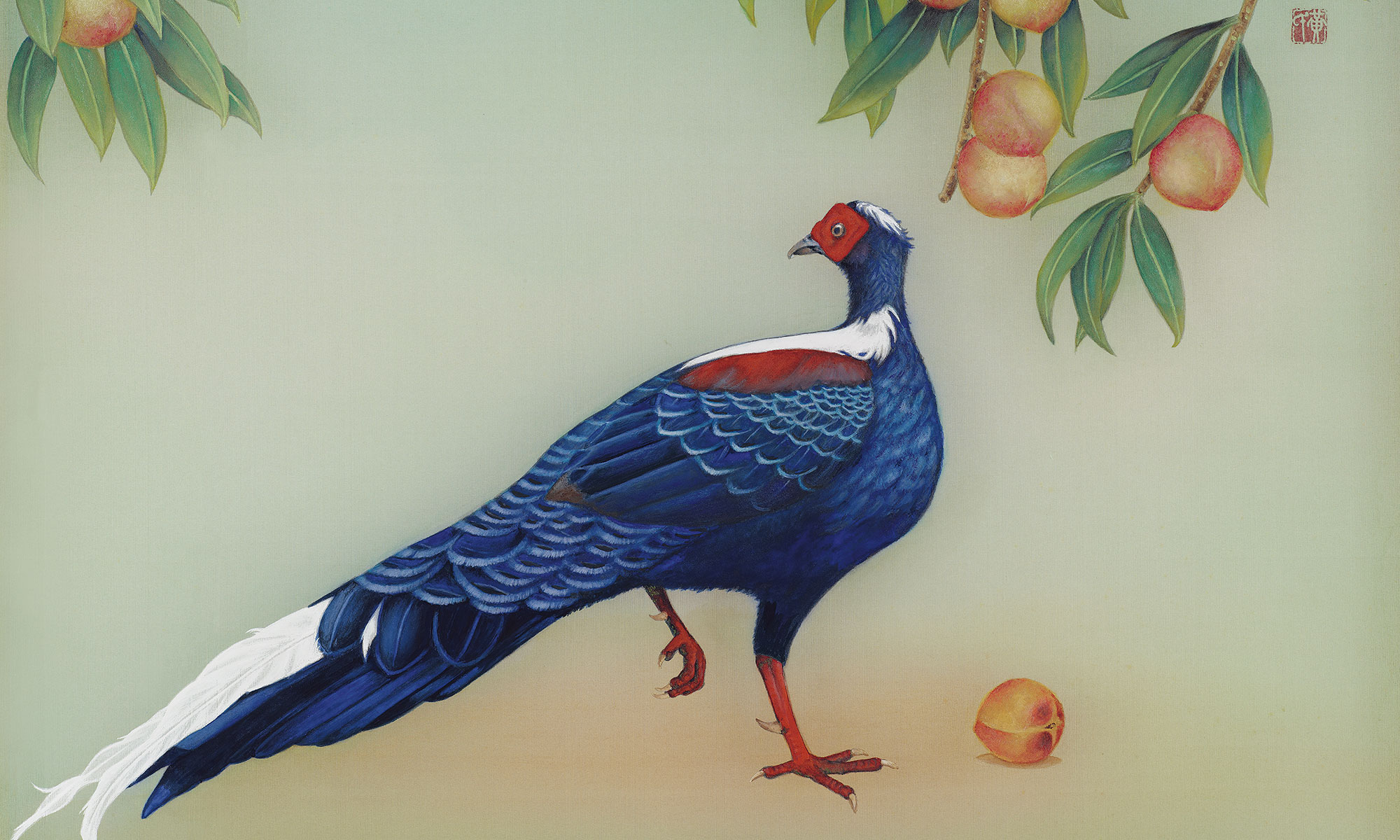
Jeweled Canvas of Glue-Colour Paintings
Taiwanese artist Huang Hung-chi infuses Western realism techniques with Eastern aesthetics in his glue-colour paintings.

