

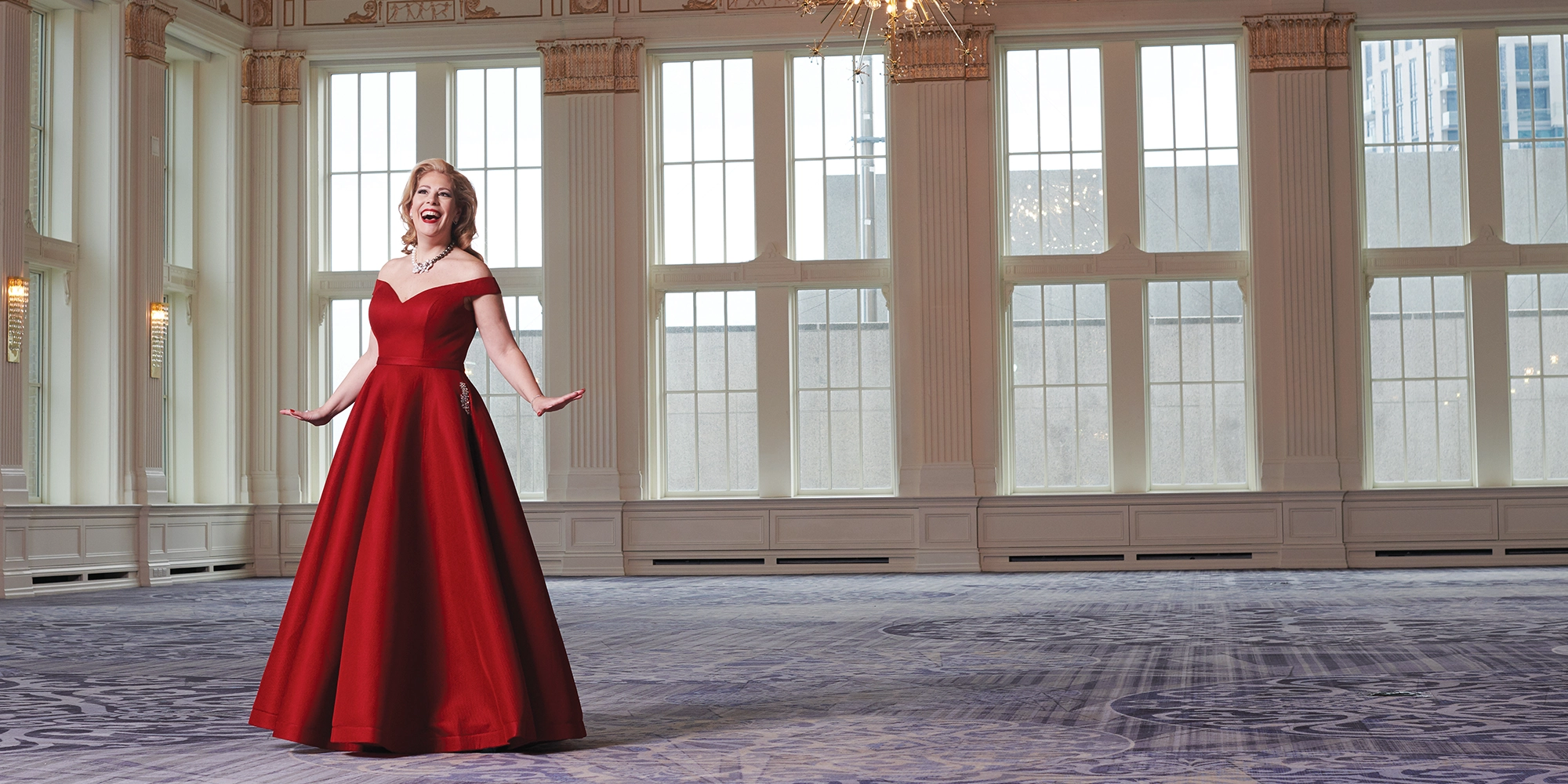
Soprano Sondra Radvanovsky calls her onstage persona “Sandy Singer,” a creature of high-octane necessity. Sandy Singer has to be “on,” she says. To inhabit Sandy’s stamina is to submit to a rigorous, athletic discipline. When Radvanovsky assumes the mantle of the aggrieved queen in Roberto Devereux, she must carry the character’s volatile, heavy-water emotions for three consecutive hours, a feat of endurance that would leave most mortals, and many singers, thoroughly hollowed out.
Offstage, she is simply Sondra—more reserved, private, and grounded in her faith. Before every performance, Sondra Radvanovsky prays to her father, who died when she was 17, asking for help: “not to hit it out of the ballpark or anything,” she says, “but to do the very best I can today.” Facing the grand expectations that accompany her level of achievement isn’t easy, so that mantra helps her manage them.
Over a 30-year career, she has been a regular star at the Metropolitan Opera and other leading houses. She has defined, for her generation, the title role in Norma, along with other heroines of the classic repertoire.
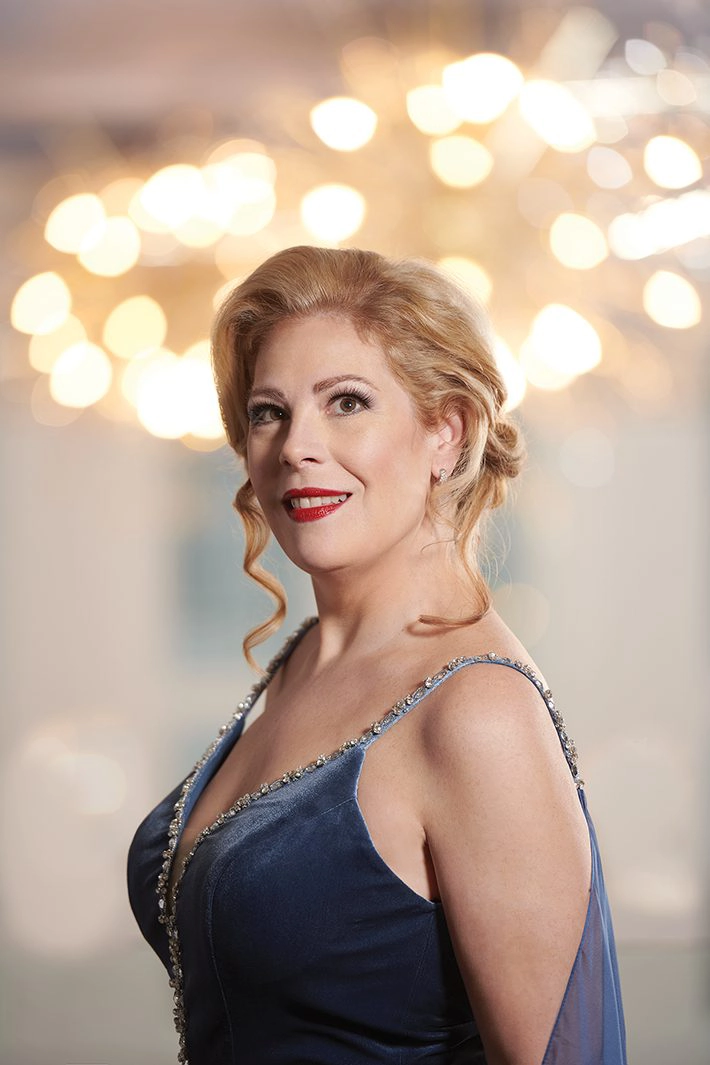
“My father never really got to hear me sing onstage professionally,” she says, recalling his reaction to her first solo, at age 8. It was a spectacular mishap in her Indiana church. While she stood before the congregation, poised to deliver her solo of He Shall Feed His Flock, her memory faltered; instead of the sacred lyrics, a curse word rang out through the nave.
“My father dropped the offertory plate full of all these coins, ching, ching, ching, ching,” she laughs. The cacophony of metal bouncing against the floor shattered the stunned silence, while her mother, mortified, slinked down into her seat. It was a holy mess.
That early moment of chaos in an Indiana pulpit seems to have inoculated her against the terrors of the proscenium. She brings a serene, disciplined focus to her craft, yet she never loses sight of the fact that opera, for all its high-flown nobility, is essentially a high-wire act.
This autumn, she brings that hard-won equilibrium to the stage of the Canadian Opera Company in Toronto, near her home turf in Caledon, for a production of Antonín Dvořák’s Rusalka. The role is a kind of homecoming, both to her Czech heritage, through her father who prized Dvořák’s lush, demanding scores, and to her Danish roots, shaped by the Hans Christian Andersen tales read to her by her grandmother.
“Tell my love that I miss him”
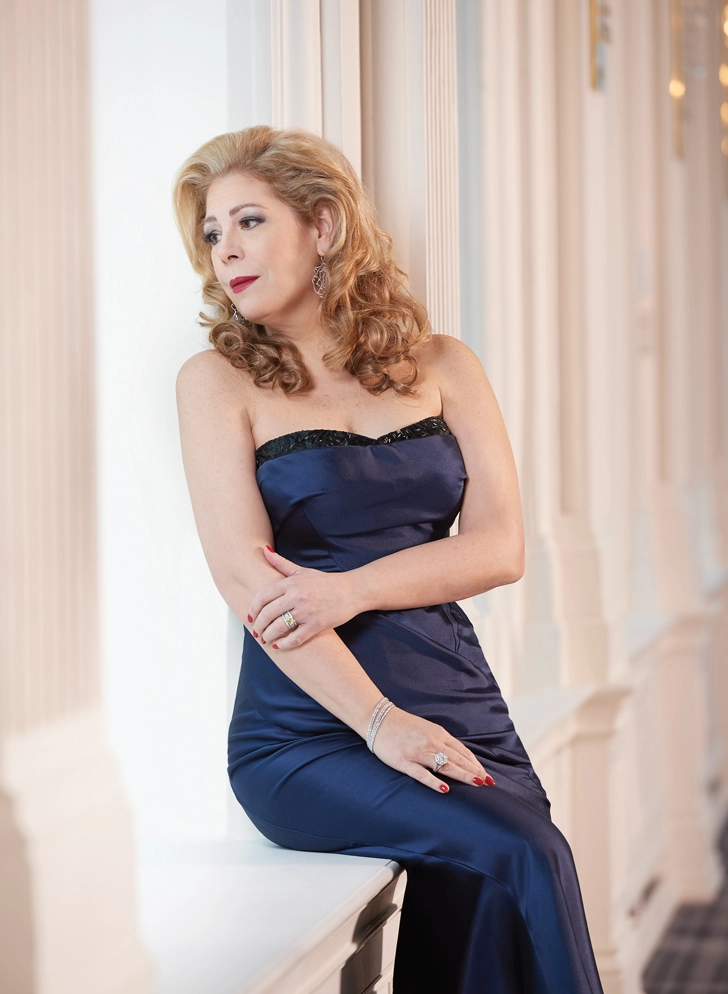
“Song to the Moon,” Rusalka’s aria, is Sondra Radvanovsky’s favourite aria of all time, a notable claim from someone who has practically sung them all.
She describes its meaning: Rusalka addresses the moon, asking it to carry her message to her beloved: “Tell my love that I miss him, and carry my love to him, and tell him not to stay too far away.” When Radvanovsky sings Rusalka’s plea to her prince, she says, “I am also singing this to my father.”
The power to mesmerize, to cleanse the soul
Radvanovsky grew up in a family that loved music, especially classical. It was a televised opera performance she saw when she was 11 years old that set her mind on opera.
She was entranced by Plácido Domingo’s performance in Tosca. A New York Times review of that performance attests to its power: “Mr. Domingo’s singing … could only be described as downright thrilling. … The sheer sound sets the ears to tingling.”
Radvanovsky asked her mother, “What is that? Can I do that?”
“I was fortunate to find my purpose in life at a very young age,” she says. Throughout the interview, her answers flow forth with ease; she’s well accustomed to media interviews, and her nature is easygoing. Yet she has to pause and consider how to articulate her purpose as an opera singer.
“I want to touch someone’s soul when I’m performing,” she says. “They forget their worries and their cares in life, and we can just let them live in the moment with us. … Music cleanses a person’s soul and their being.”
She experienced that power of opera when she watched Domingo on the television in 1980. And in 2005, it was Domingo again who helped her see this power and purpose in singing.
She was playing Sister Angelica in Puccini’s Il Trittico at the Los Angeles Opera, where Domingo is the general manager. She performed a scene in which an agonized Sister Angelica contemplates suicide, but regrets it and repents. She has a vision of her dead son, an illegitimate child whom she held only briefly after his birth before they were separated, and of the Virgin Mary, who forgives and soothes her.
When Radvanovsky left the stage, she found Domingo bawling, she says, and he continued crying for a long time afterwards. “That was really a moment for me that I’ll never forget,” she says. “If I can touch him that much, then I guess I’m doing okay.” A reviewer at the time also attested that there was a good amount of “sniffling and sobbing in the audience.”
Gravitas and comic relief
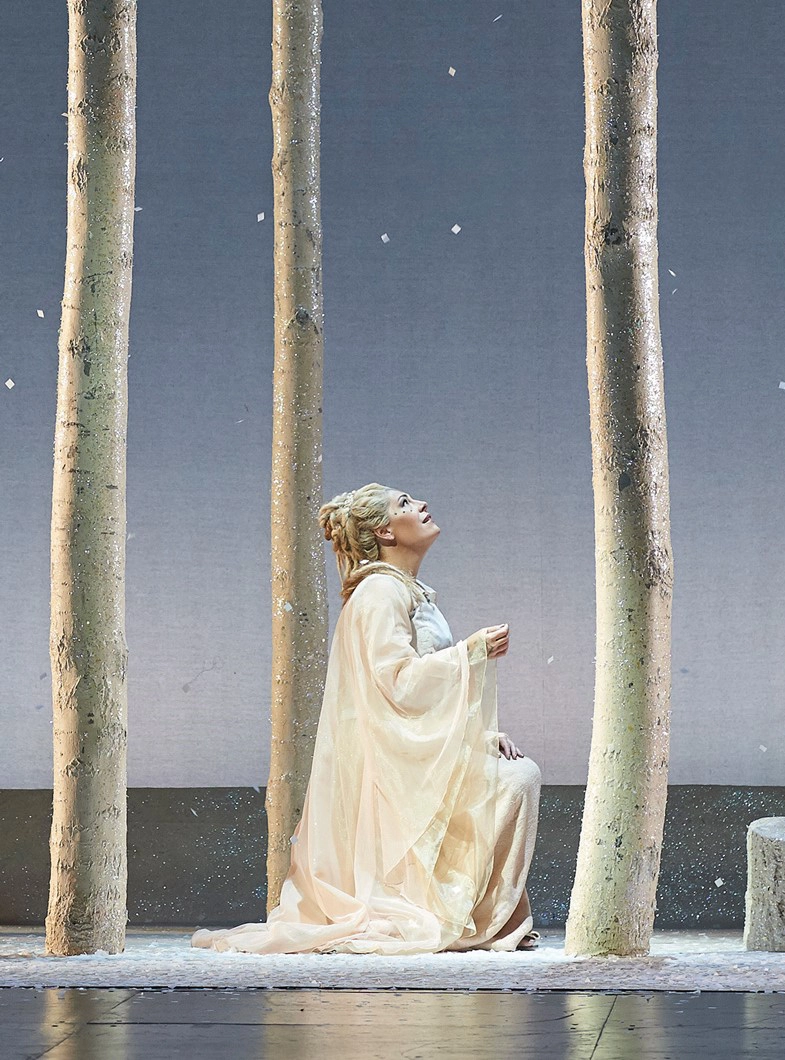
The emotions of opera can be hard on the actors. One of the most difficult roles Radvanovsky has had to play was Manon in the opera Manon Lescaut at the Royal Opera House in London.
Manon is a young woman who becomes the mistress of an elderly gentleman in exchange for the riches he can offer. “Basically, she becomes a prostitute for this man, all the while realizing she made a mistake,” Radvanovsky says. Radvanovsky describes some of the scenes she acted as pornographic. The 18th-century novel upon which the opera is based was controversial and banned in France upon publication. “With a bunch of men [in the front] rows watching me, I truly felt like a woman who was being paid for and bought and ogled,” she says. “I came home every night and just started crying and said to my husband, ‘I feel so cheap and useless.’”This was just a year before the #MeToo movement gained traction on social media, highlighting the issue of sexual mistreatment of women. Sondra feels her performance resonated with what a lot of women have experienced and were starting to open up about at the time. There are also times of comic lightness onstage, sometimes unintentional. Radvanovsky has encountered multiple blunders in her years of live theatre, much like that first solo that caused her father to scatter offertory coins all over the church floor.
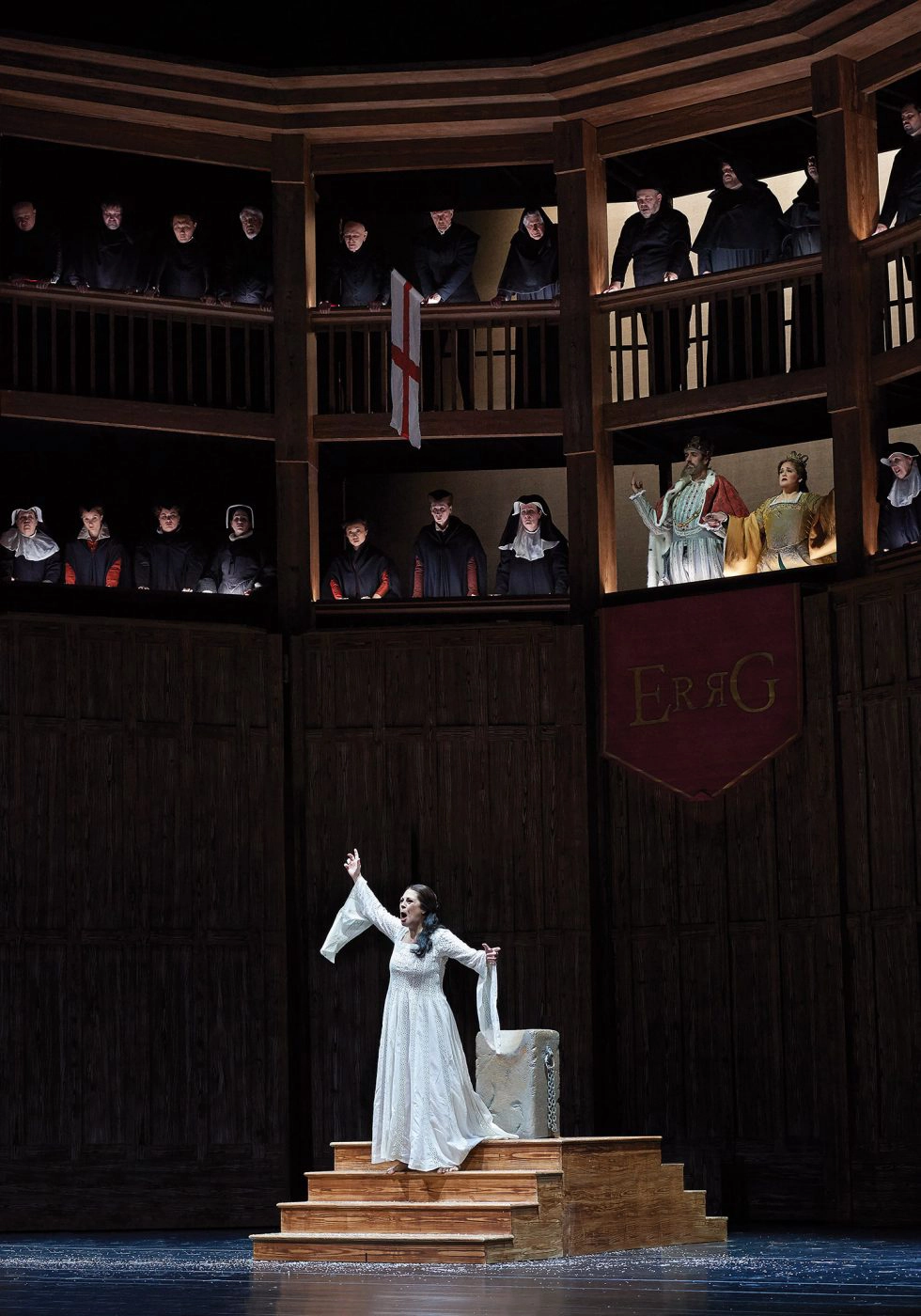
One time, a costar of hers got stuck in an elevator trying to get to the stage. When she didn’t show up, Radvanovsky turned one way to sing the costar’s line, then turned back the other way to sing her own lines.
“I think faith and spirituality is important, especially in the business we’re in, which is so transient,” she says. “Being onstage, it’s so easy to get caught up in the glitz and the glamour of it and forget about your roots and stay grounded in who you are as a person.”
And her husband, Duncan Lear, is also there to pull her down to Earth if she starts to fly too high, she says. Their home in Caledon, Ontario, is close to the Canadian Opera Company’s Four Seasons Centre. Radvanovsky considers it her home venue, and it’s one of her favourites — another reason this fall’s production of Rusalka will be close to her heart.





The French-Indian Connection
Jean-François Lesage reunites two cultures with one art form that redefines what decorative art means.

Harrowing Path of Prosperity
An entrepreneur’s “beautiful and sustainable” contribution to society

