

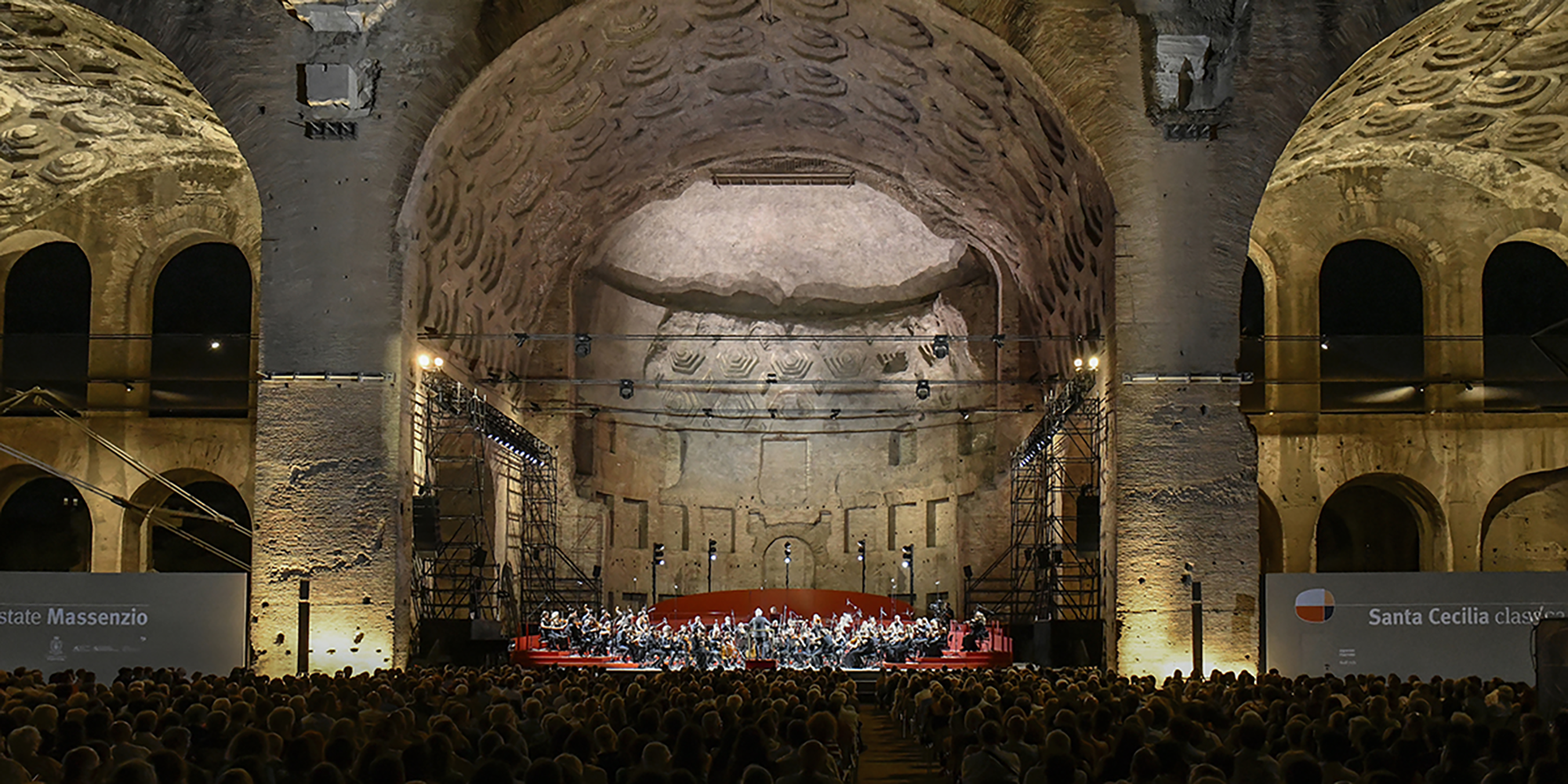
The Basilica di Massenzio was never meant for concerts; or, for that matter, Olympic wrestling matches.
Nestled on the Velia Hill in the ancient heart of Rome, just steps from the Colosseum’s looming shadow, the monumental civic structure was built nearly two thousand years ago, between 308 and 312 A.D. Commissioned by the Emperor Maxentius and completed under Constantine the Great after the latter’s decisive victory, it was the largest building in the Roman Forum and the final great basilica of the imperial era.
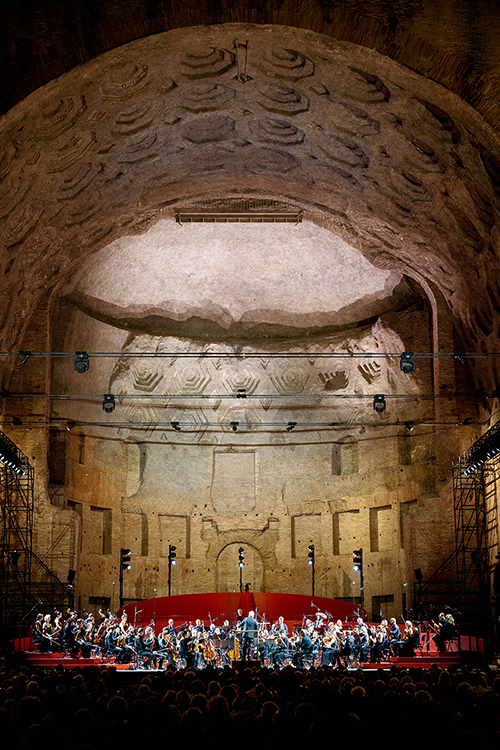
Beneath those vast, vaulted ceilings—once among the most audacious feats of Roman engineering—the space pulsed as the urban heartbeat of empire. Citizens thronged the floor for a ceaseless round of legal hearings, administrative decrees, financial negotiations, and the clamorous commerce of a city that still believed itself eternal.
Much of the basilica has surrendered to time and the elements, yet what endures has become an unlikely stage for a different kind of eternity. Today, the Basilica di Massenzio hosts an intimate dialogue between antiquity and the present, where music, architecture, and collective memory converge beneath its towering stone apse.
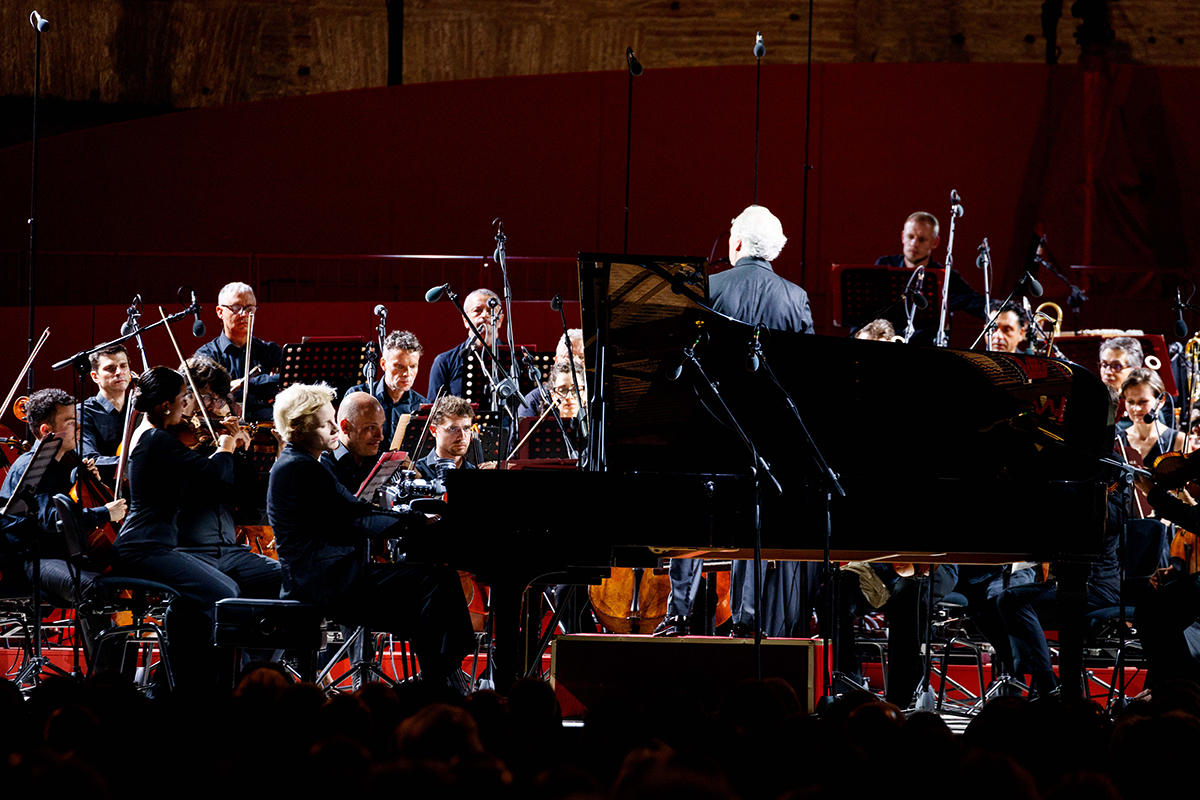
From its improbable turn as a venue for the 1960 Olympics to its current life as an open-air museum and performance space, the basilica has proven remarkably adaptable. Its essential nature, as a magnetic gathering place for people, has remained unchanged, even as its functions have shifted across the ages.
In preparing the monument for the 2026 summer season with the Accademia Nazionale di Santa Cecilia, the Parco archeologico del Colosseo faced a familiar Roman dilemma: how to introduce modern performance into the majesty of antiquity without violating the spirit of the architecture.
The solution, masterminded by the Rome-based firm Alvisi Kirimoto, is a masterclass. Founded in 2002 by the Italian-Japanese partners Massimo Alvisi and Junko Kirimoto, the firm has built a reputation for navigating the delicate boundary between the contemporary and the historic. Their approach here is not to dominate, but to converse.
Rather than erecting a solitary stage destined for quick dismantling, the architects conceived a multi-functional public square, with connecting aisles that allow visitors to wander through, pause, and discover the basilica from fresh vantage points.
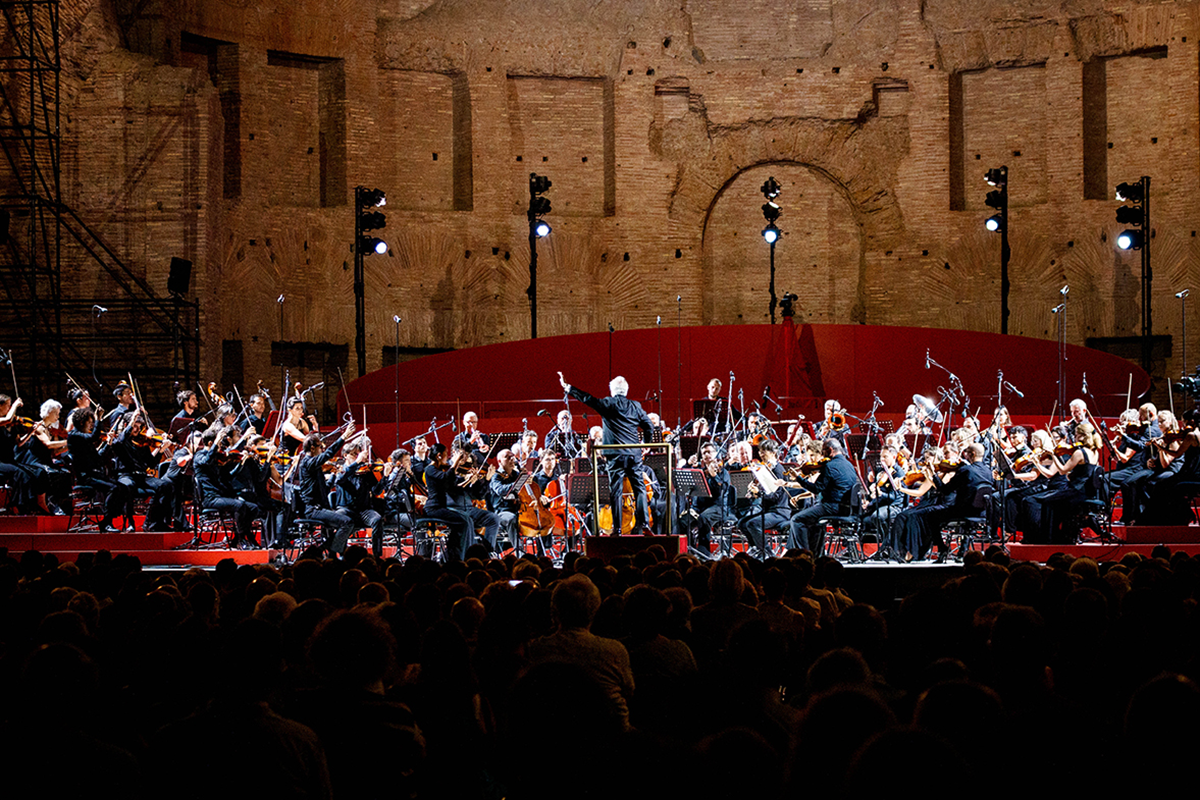
In its main configuration, the stage is rendered in marine plywood painted a visceral red, a hue that evokes the rich crimson of classical Italian theatre curtains. Calibrated for grand symphonic forces, the setup features a sweeping semicircular stepped platform capable of accommodating up to ninety orchestral musicians, paired with a circular element nestled in the apse for an eighty-member choir. The repertoire—works by Handel, Vivaldi, and Chopin—feels almost predestined for the space, the notes rising to meet the scale and solemn gravity of the colossal ruins.
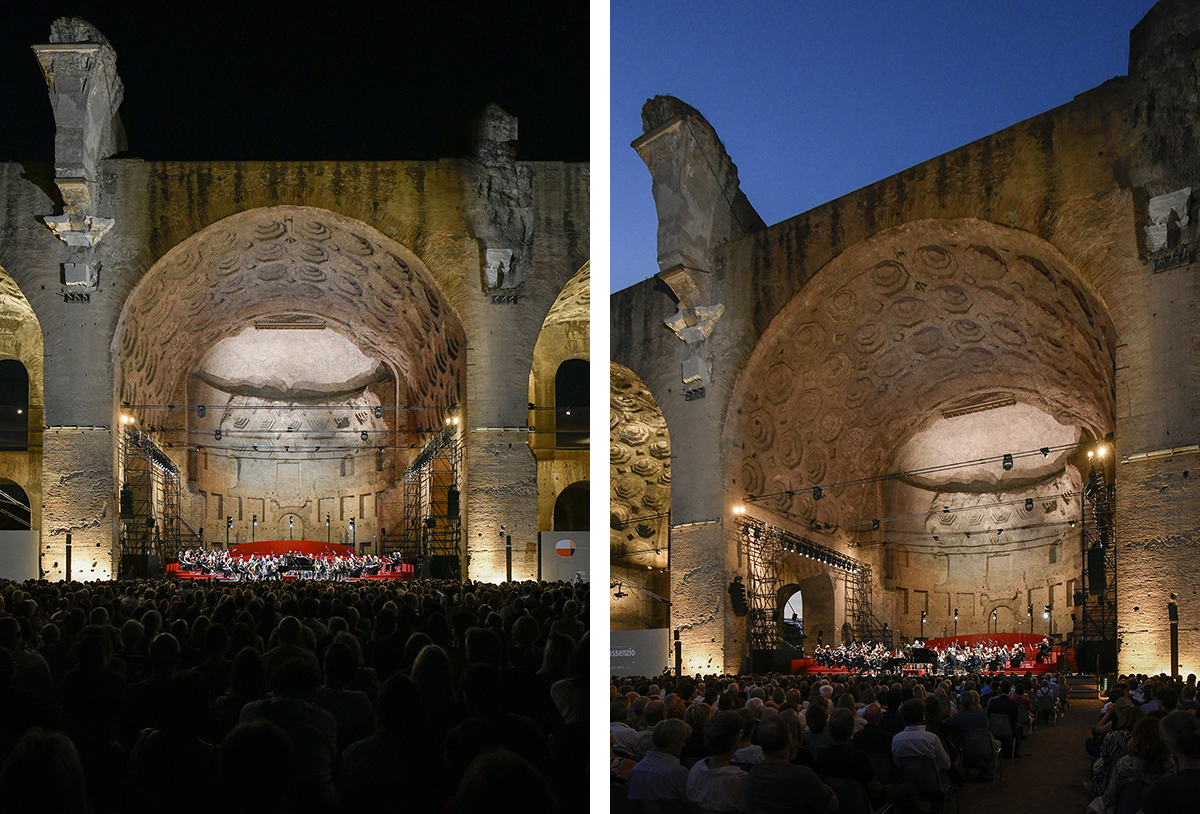
Layered atop this is a scenographic installation that uses light to shift atmospheres, subtly illuminating textures and proportions that might otherwise remain hidden in the stone’s weathered grandeur. The effect is one of understated revelation.
Such interventions are familiar territory for Alvisi Kirimoto, whose practice has long explored the delicate art of inserting contemporary gestures into historic fabric without erasure. Their portfolio includes the headquarters for the international law firm DLA Piper, a sleek modern office carved within a Roman historic building, and the sensitive restoration in Ferrara of a structure now housing the Contemporary Art Pavilion dedicated to the filmmaker Michelangelo Antonioni.
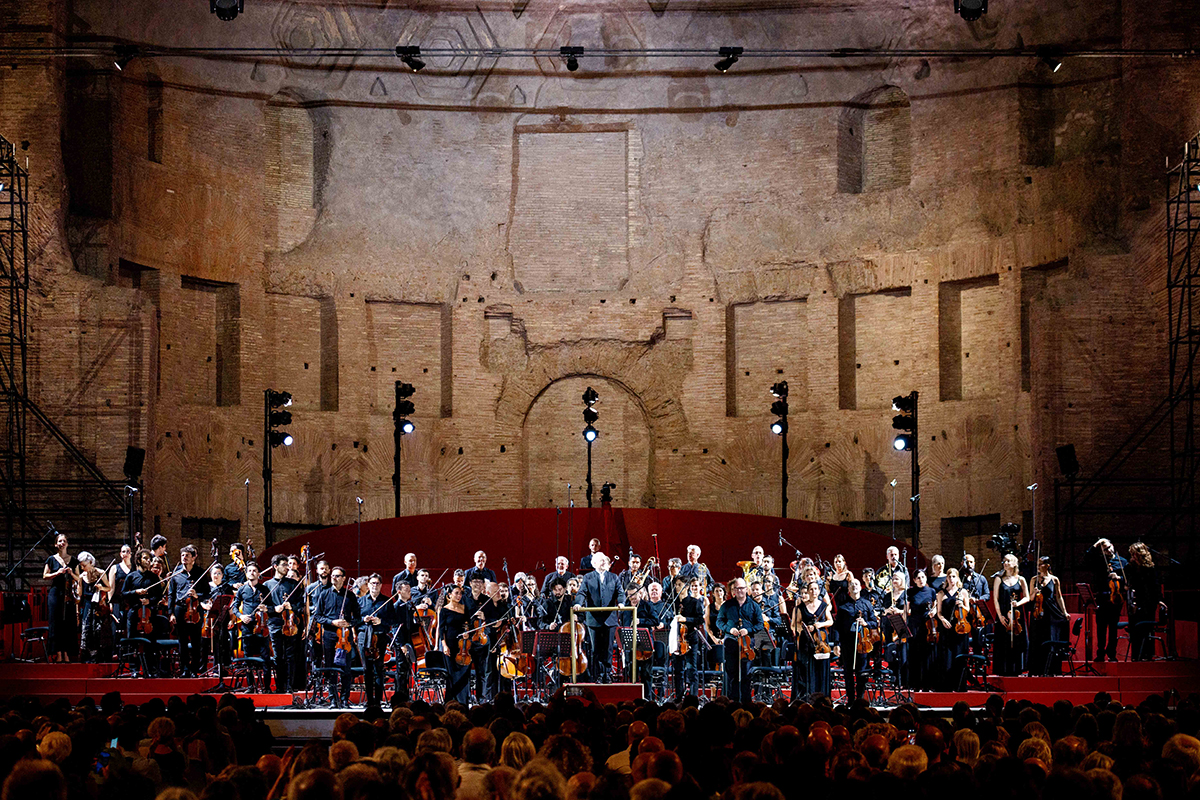
At the Basilica di Massenzio, the firm resists the temptation of the ostentatious gesture. Instead, it works through unobtrusive continuation: using lighting to reveal the tactile richness of the ancient masonry and a refined geometric aesthetic to accentuate the architectural silhouette. In doing so, it has allowed this ancient monument to do what it has always done best: remain a vibrant, enduring center of public life.




The Enchanting World of Jewels
L’ÉCOLE, School of Jewelry Arts invites us to delve into the curious and fascinating facets of jewellery savoir-faire, history, and precious materials.


Must-See Haute Couture Collections at Palais Galliera Museum
Don’t miss collections that feature pieces from The Duchess of Windsor, Princess Grace of Monaco and Baroness Rothschild.

