


Imagine standing 4,000 metres above sea level on top of Yushan (Jade Mountain) in south-central Taiwan. This is Southeast Asia’s highest peak, where winters are especially brutal: biting winds howl, snow blankets the land, and vibrant vegetation fades into a desolate landscape.
Despite these unforgiving elements, the ancient juniper trees on the mountain endure—their roots gripping the rocky terrain, growing slowly but steadfastly.
In 2021, as the world grappled with the COVID-19 pandemic, artist Lee Tsung-jen found himself heartbroken and helpless as a family member also battled the virus. It was during this challenging moment that Lee stumbled upon an image by photographer Wang Congxian that showed Yushan’s resilient juniper trees rising above a sea of clouds, their twisted forms set against the backdrop of snow-covered cliffs.

after year, the tree twists its trunk to face the biting cold winds, until the tree, like a soaring dragon, carries its boundless vitality straight into the clouds.
A spark of inspiration ignited Lee, filling him with hope and setting him on the path of artistic discovery. This inspiration turned into a breathtaking collection of paintings inspired by the Yushan junipers, Sanctuary—Demeanour and Attitude, in which Lee combines traditional Chinese ink aesthetics with Western artistry.
With each stroke of his brush, Lee brings forth a unique style that leaves viewers with a poignant message of resilience, which continues to resonate long after we have admired his works of art.
Strokes of wisdom
Lee’s paintings depict the juniper trees, their life pulsating through the gnarled and textured barks. Rough like calloused hands, these barks narrate tales of fortitude while their deep grooves—like wrinkles etched by relentless wind and snow—speak of enduring perseverance.
“The secret to their longevity in such challenging weather probably lies in their adaptability,” Lee says. “When winter’s winds blow, the trees twist in the same direction as the wind, and over thousands of years they develop into the unique shapes we see today.”
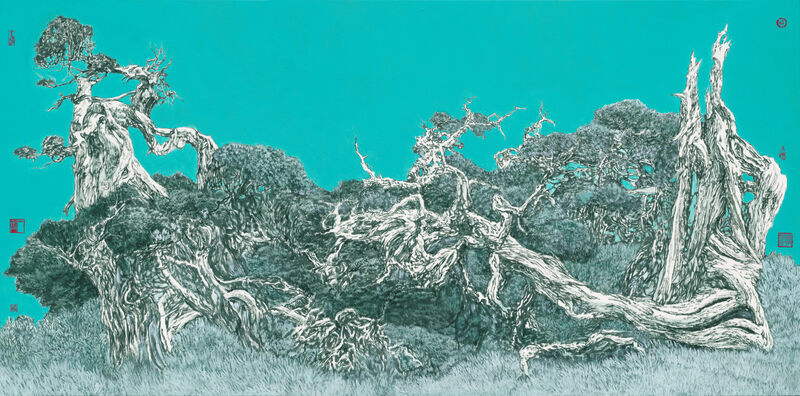
By acclimatizing to the winds and twisting their trunks and branches, the trees minimize damage and erosion. Through this twisting and bending, they build up strength.
“Yushan junipers grow in harsh conditions and can live for over 5,000 years, surpassing even the span of Chinese civilization,” Lee says.
Infused with rhythm and dynamism, Lee’s unconstrained brushwork brings emotional depth to the trees. As he dips his soft brush into the ink, gracefully gliding it across Xuan paper, he paints the trees’ lines with endless nuances of shade and thickness, conjuring awe-inspiring visuals.
Lee pays homage to the wisdom of nature, intertwining beauty with profound truth. His painting Bow and Raise, inspired by a line from the ancient Chinese text Book of Changes, shows a twisted tree trunk at the bottom of the painting. With strong, bold strokes, Lee has painted the trunk to look as solid as a boulder, as dynamic as a cloud, and as full of life as a surging, meandering river.
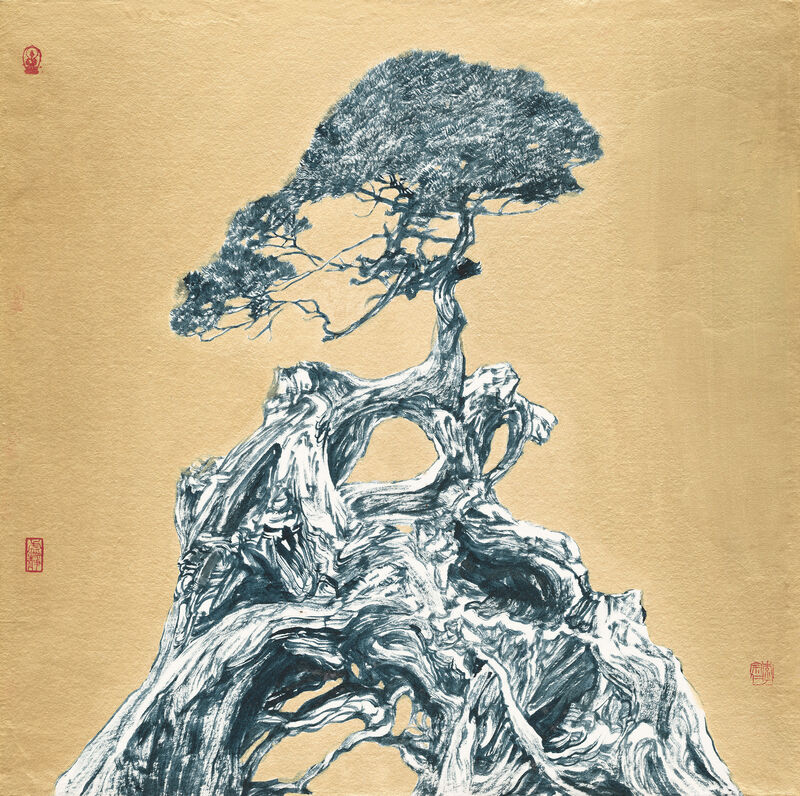
Through their bends and twists, the junipers gather strength to bloom anew in the spring. Under the distinctive eloquence of Lee’s ink strokes, the trees become a symbol not only of survival but also of vibrancy amid adversity.
Reimagining tradition
Traditional ink paintings have been admired for their simple yet powerful brush strokes since the Song Dynasty (960–1279). Largely monochromatic, these paintings combine water and ink to create a diverse spectrum of shades that can evoke a dynamic range of moods. The subtle yet sophisticated aesthetic of these ink paintings reflects at once the simplicity of Daoism, the self-discipline of Confucianism, and the empty stillness of Zen Buddhism.

When studying Western art in the United States 30 years ago, Lee was intrigued by the extensive use of colour in the West. He later infused such vibrant colours into his own ink paintings, departing from black-and-white Chinese ink painting traditions.
This fusion is evident in Lee’s collection of Yushan juniper paintings, where he incorporates rich hues, such as dark aquamarine, mustard yellow, and purple. Once prevalent in the elegant attire of ancient Chinese noblewomen or in the decoration of regal palace heirlooms, these colours now embellish the weathered yet resilient time-worn tree trunks of Lee’s paintings, capturing the intertwining of beauty and hardship of life.
The resulting single-hued backdrop, striking yet sophisticated, further accentuates the majestic aura of the junipers. “Contrary to expectations, I paint the background only after completing the junipers—a method that requires meticulous care and patience,” Lee says. This reverse process thus becomes a form of “self-tempering and self-cultivation.”
Lee’s virtuoso use of colours infuses the junipers with rich character. Some trees are draped in deep blue, evoking the ethereal chill of ice and snow, while others are bathed in a bronze reminiscent of the golden hours of the afternoon.
“Ultimately, the goal is to create a dynamic and transcendent atmosphere of tranquillity, presenting the junipers as if they belong to a divine realm,” Lee says.
Another fascinating and prominent feature of his work is the brilliant use of liubai (white space), for which traditional Chinese ink painting is widely known and admired. Set against a backdrop of vibrant colours in Lee’s work, these intentional areas of space elevate the highlights of light, shadow, and texture on the trees, creating a sense of vitality that flows throughout the composition.
Infused with this profound love of beauty and artistry, Lee expresses a steadfast belief in the role of classical art and Eastern aesthetics in guiding people amid technological changes.
“We must stand on the shoulders of giants,” he says. “Tradition serves as our foundation, enabling and empowering us to gain deeper insights. At its core, art is ultimately a spiritual experience—deeply personal, emotional, and irreplaceable by technology.”








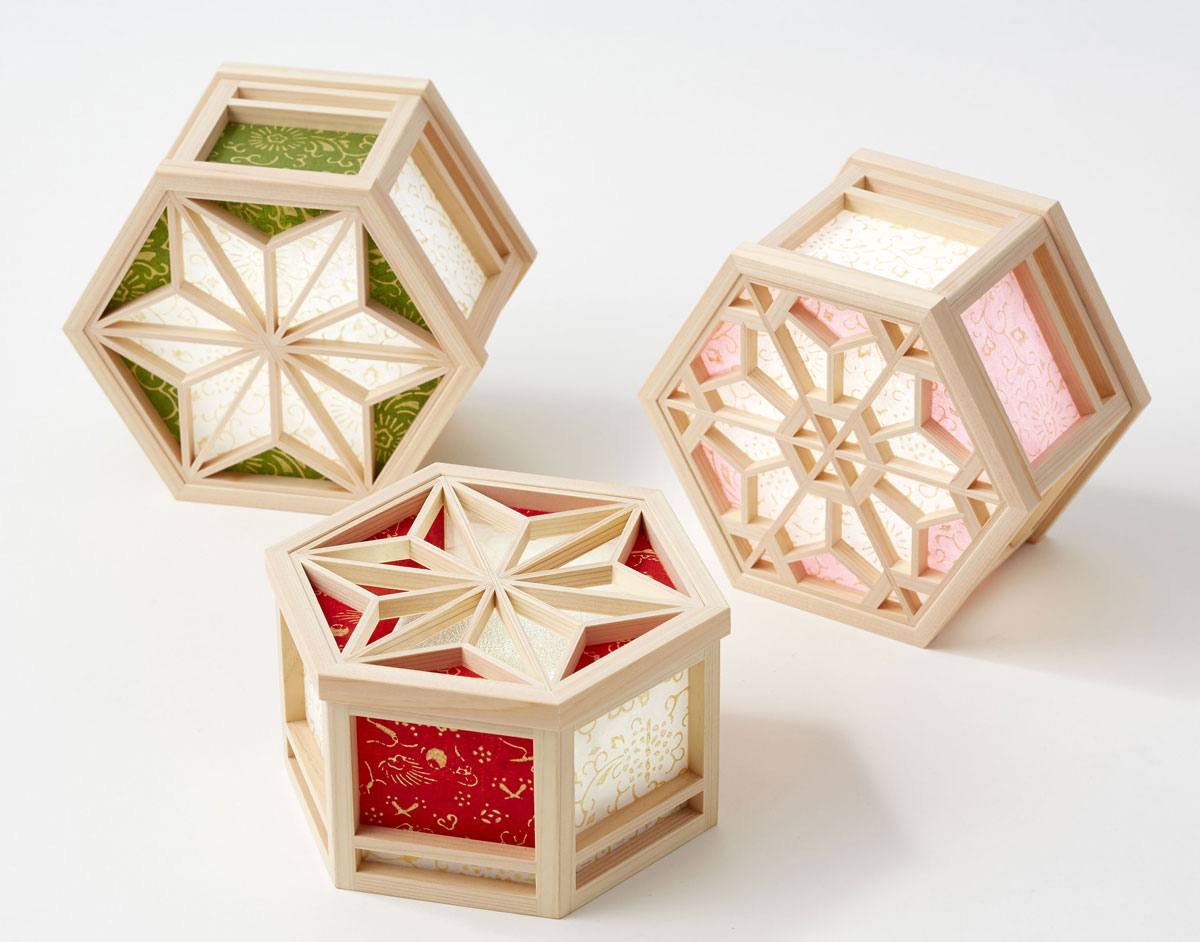
Japanese Wooden Light Boxes
Traditional craftsmanship meets modern technique in Tanemura Woodworks’ kumiko LED lighting boxes.

