
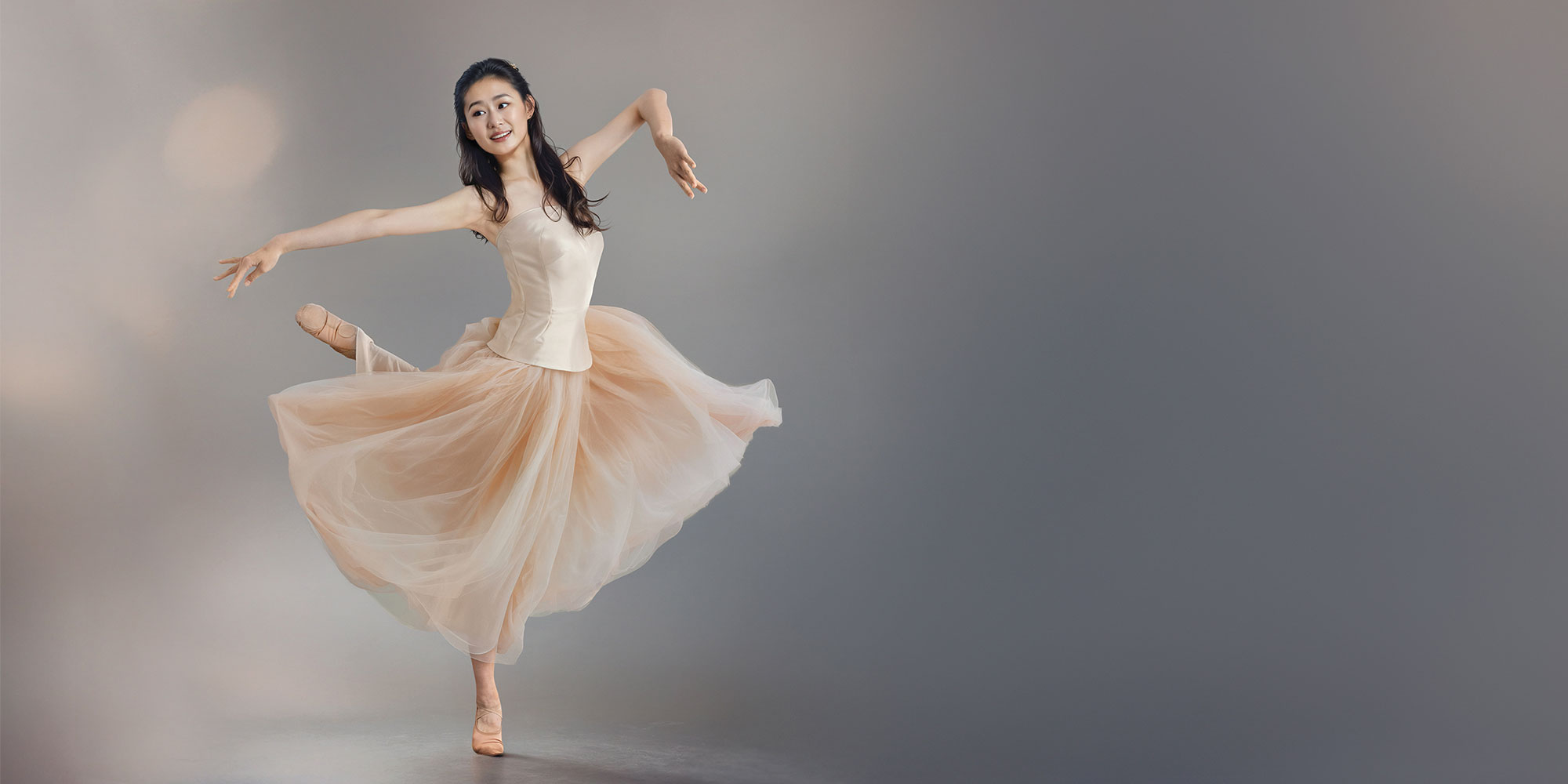
“Dance demands humility and sincerity, yet it gifts a singular kind of confidence. Like an orchid blooming in the solitude of a deep valley, it is an elegant, unnoticed assurance.”
— Karina Fu · Principal Dancer
New York, 2025.
On the stage of the 11th NTD International Classical Chinese Dance Competition, the spotlight, silver as moonlight, settles on a lone wooden chair at centre stage. Beside it stands a woman in a vintage 1940s dress, her gaze cutting through the space, fixed on the far distance. This is the final image of Karina Fu’s dance: 1948.
In the hush that follows, the audience seems to hold its breath, as though they can feel the tension of distant battlefields, hear the roar of planes overhead, and glimpse the ache of a wife waiting for her husband’s return.
As the music fades, she slowly turns her head. A flicker of surprise, subtle yet inescapable, passes across her eyes. Has her beloved returned, or is it simply a trick of the wind? The dance ends abruptly, leaving infinite suspense in its wake.
The curtain falls. Thunderous applause erupts. This is the moment Fu claims the Gold Medal in the Youth Women’s Division.
When asked about her victory, her answer is strikingly humble:
“Dance allows one to express emotion, but more importantly, it teaches restraint. There is no end to art; dance is my cultivation.”
While many of her peers chase unbridled release, Fu has achieved her success through an archaic, nearly forgotten discipline: the rigorous cultivation of self-restraint and spiritual focus.
A Cultural Odyssey
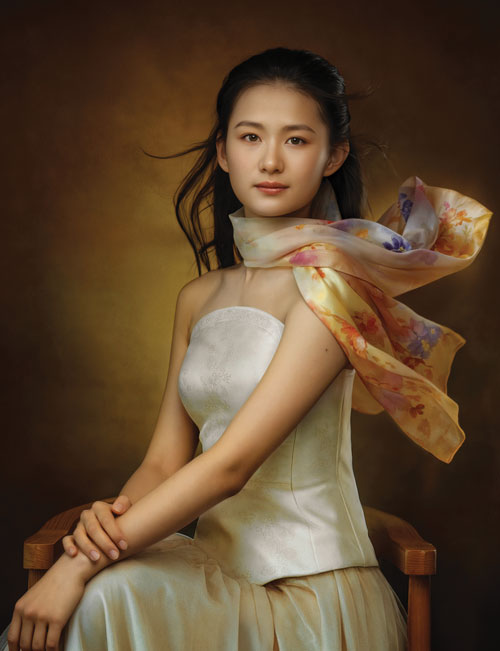
Fu’s journey began 13 years ago with a solitary migration from a small city in China to the Fei Tian Academy of the Arts in New York. There is an irony in her path: only by crossing the Pacific did she have the chance to truly encounter the 5,000-year essence of her own culture.
In a hyper-modern world, how can a young woman embody the values of an ancient civilization? Fu credits a latent alchemy: reading. For her, books are portals, each one offering a life far older and richer than her own.
“Reading is like fermenting wine,” she says, her composure belied by her youthful face. “We rarely remember every meal we’ve eaten, yet they become our bones. Culture is the same. It is not a magic spell for instant transformation, but a slow fermentation. It takes time. Once it reaches a tipping point, the performance simply pours out of you.”
For Fu, traditional Chinese art is precisely such a fermenting agent, a form of spiritual nourishment. At Fei Tian, she had the opportunity to immerse herself in an environment of classical dance and thought, allowing millennia of poetry and wisdom to sink deep into her marrow.
For a professional dancer, fatigue and exhaustion are inevitable. In those moments, Fu turns to Su Shi, the legendary Song Dynasty (960–1279) polymath, who endured exile and narrowly escaped death, yet met fate with unbroken grace:
“Looking back at the bleak path I’ve traveled, I return—through wind, rain, or shine, it matters not.”
It is this borrowed perspective that grants Fu her resilience, allowing her to persevere not through force, but through a soul that has found its centre.
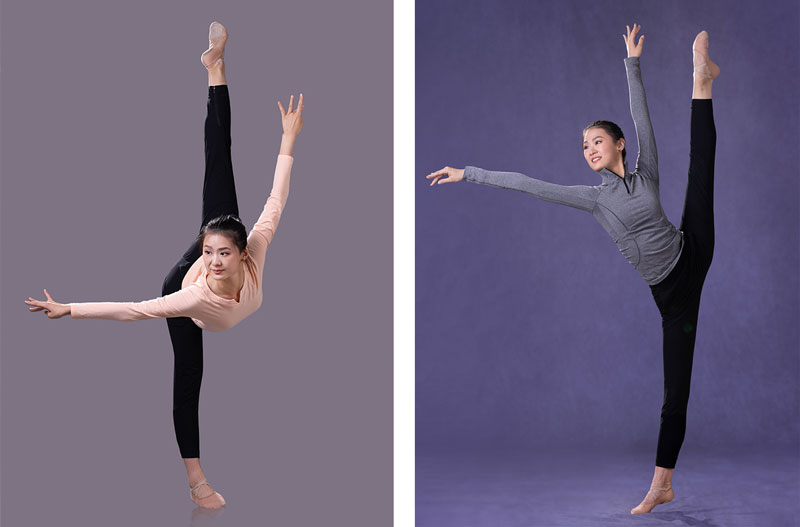
Under the rigors of high-intensity training, these literary reflections become internal resolve. Three hundred leg lifts a day are routine; at peak training, she completes six hundred, even nine hundred. On one such day, with fatigue begging for indulgence, a sentence from the Kangxi Emperor’s Court Instructions returned to her:
“The wise consider diligence a blessing, and idleness a misfortune.”
In that realization, she understood that comfort is rarely benign. Fortune is forged through constant tempering.
“There’s a joy in overcoming oneself,” she says. “It is not fleeting pleasure, but a deep, spiritual happiness.”
To Fu, a dancer’s greatest adversary is rarely the body; it is the internal self. In high-altitude jumps, the true opponent is not gravity but fear.
“If you don’t believe you can do it, even a capable body will falter,” she explains, citing Laozi: “He who conquers others is strong; he who conquers himself is mighty.”
This discipline of her mind evolved into the wisdom of letting go. Reflecting on the recent competition, Fu notes:
“When you’re consumed by the thought ‘I must be perfect,’ you are more likely to fail.”
She stepped onto the stage with a light heart, telling herself it might be her last performance. In that state of disciplined release, she reached her peak.
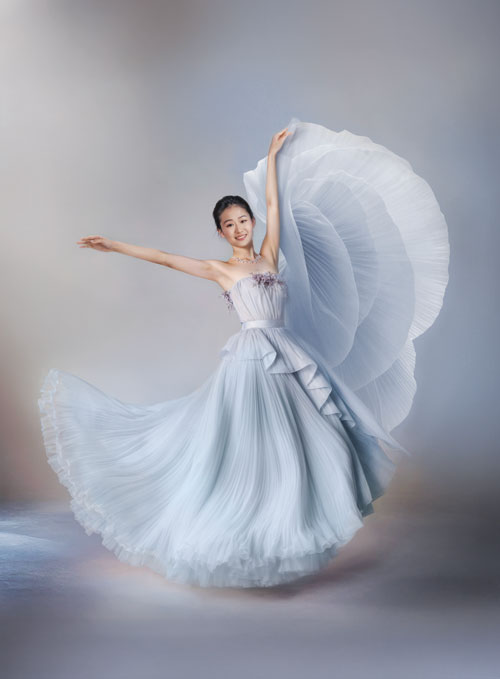
The Wisdom of the Circle
In an era where dancers constantly seek to “break boundaries,” Fu demonstrates a counterintuitive truth: power resides not in the blunt force of momentum, but in the delicate equilibrium between advance and retreat.
“Chinese culture is reserved,” she notes. “Like a gentleman as refined as jade, speaking only enough to hint at the truth.”
This aesthetic of the unsaid finds its visual expression in the circle.
“The circle is the essence of Classical Chinese Dance,” Fu explains. For her, it is not merely a shape; it is the engine of movement itself. While Western ballet prizes linearity, Classical Chinese Dance is governed by circularity, present both in the physical plane and in the flow of qi.
It is a logic of paradox: to move right, one must first incline left; to move forward, one must begin by drawing back.
Every exertion is preceded by a counter-movement; every extension carries within it the promise of return. This law of cause-and-effect generates a flow like drifting clouds or running water: perpetual, self-sustaining, and endlessly recursive.
Fu sees this circular wisdom as a thread connecting all traditional Chinese arts. She traces a direct line to the Battle Formation of the Brush by Lady Wei, the 4th-century mentor of the calligraphy legend Wang Xizhi (303 –361), where brushstrokes are described with startling vitality:
“A horizontal stroke like a thousand miles of cloud formations; a dot like a stone falling from a high mountain; a sweeping downstroke like the severed horn of a rhinoceros; a vertical stroke like a ten-thousand-year-old withered vine; a pressing downstroke like crashing waves and rolling thunder.”
“The dance and the ink share a single soul,” Fu says. “You cannot have ‘ink’, the spirit, without ‘bones’, the structure. Yet bones without ‘meat’, the fullness of form, leave you limp, like an octopus. To truly dance, one must inhabit the trunk, the branches, and the elusive essence all at once.”
It is this accumulation of life, drawn from the bedrock of classical culture, that gives her dance its “bone and muscle,” allowing her portrayals to achieve a luminous depth and masterful command of form.
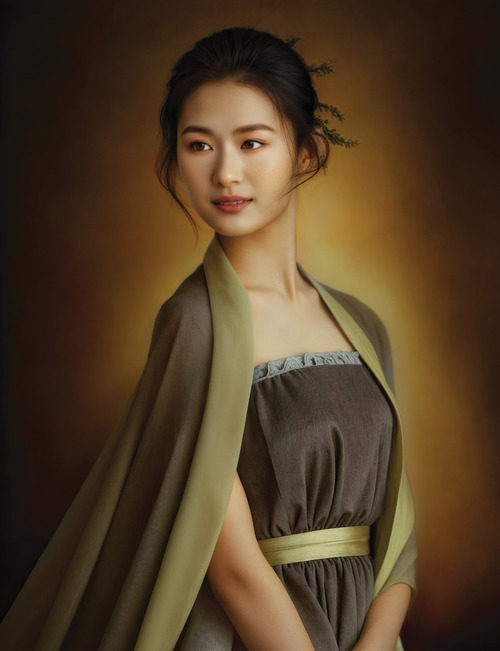
A Hidden Orchid in Bloom
Today, Fu describes her ideal artistic state through the metaphor of the You Lan (The Hidden Orchid).
“Dance demands humility and sincerity, yet it gifts a singular kind of confidence. Like an orchid blooming in the solitude of a deep valley, it is an elegant, unnoticed assurance, an internal cultivation that requires no witness.”
Her evolution has led her toward the Confucian ideal of junzi bu qi (The noble person is not a fixed form or tool).
“A great performer does not simply play themselves,” she reflects. “By inhabiting disparate lives on stage, you harvest different realizations of what it means to be human.”
This sentiment echoes the I Ching:
“That which is above form is called the Tao; that which is below form is called the Tool.”
If a dancer treats their body merely as a tool, their artistry is tethered to the physical. Only by infusing technique with thought, emotion, and self-reflection, the metaphysical Tao, can dance transcend form and resonate deeply with the audience’s soul.
On her annual global tours with Shen Yun, Fu strolls the thousand-year-old cobblestone streets of European cities, savoring the gallantry of “traveling ten thousand miles.” In Kyoto’s ancient architecture, she hears the echoes of the Tang (618–907) and Song dynasties. On stage, she has learned to let go of the attachment to self—whether portraying a valiant Mongolian maiden or a bumbling old woman, she finds joy in it all.
It has all come full circle, just as she first realized:
“There is no end to art; dance is my cultivation.”


A Soprano’s Song to the Moon
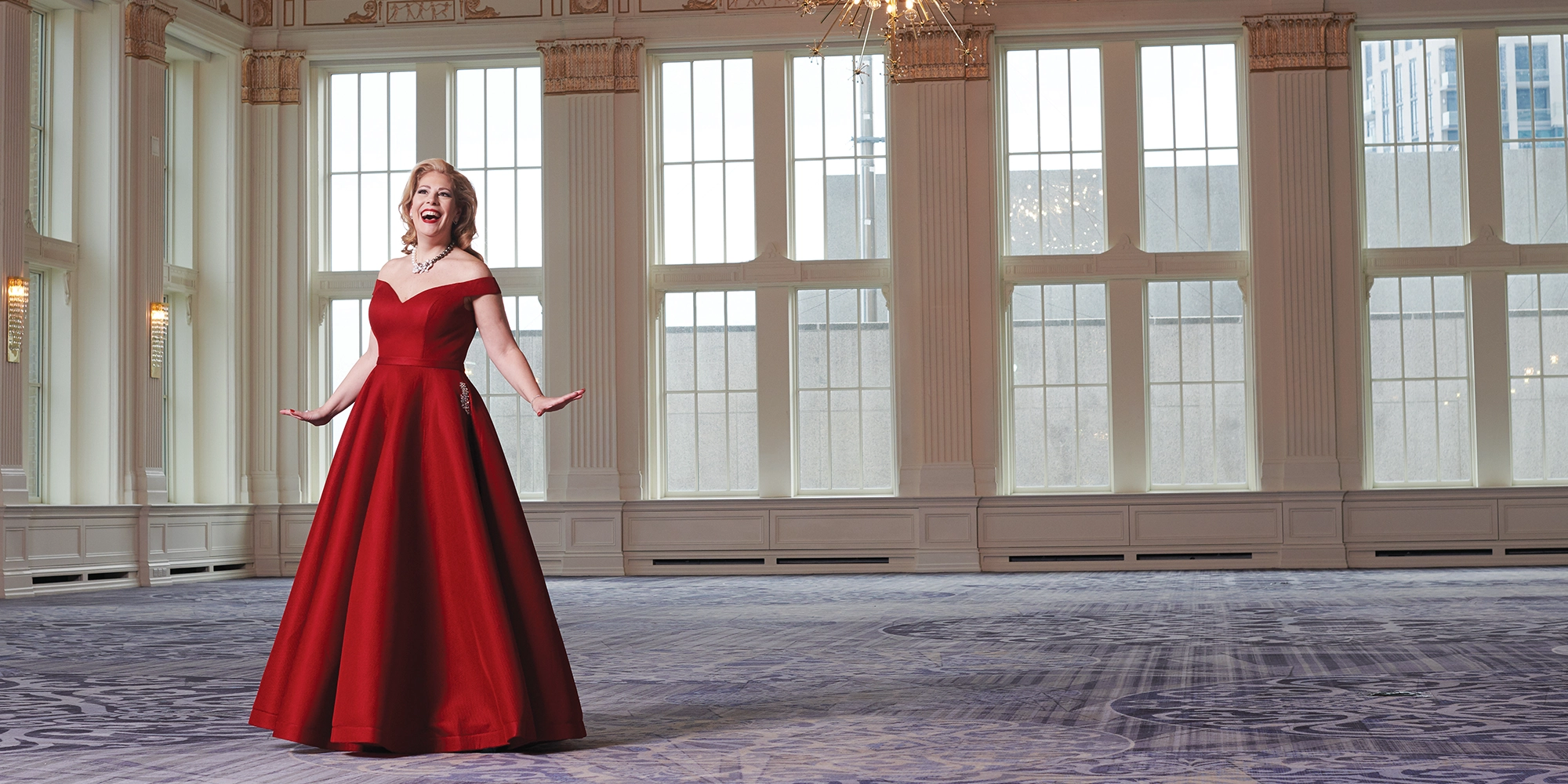
As Sondra Radvanovsky prepares to play Rusalka at the Canadian Opera Company, she reflects on this opera’s deep personal meaning for her.
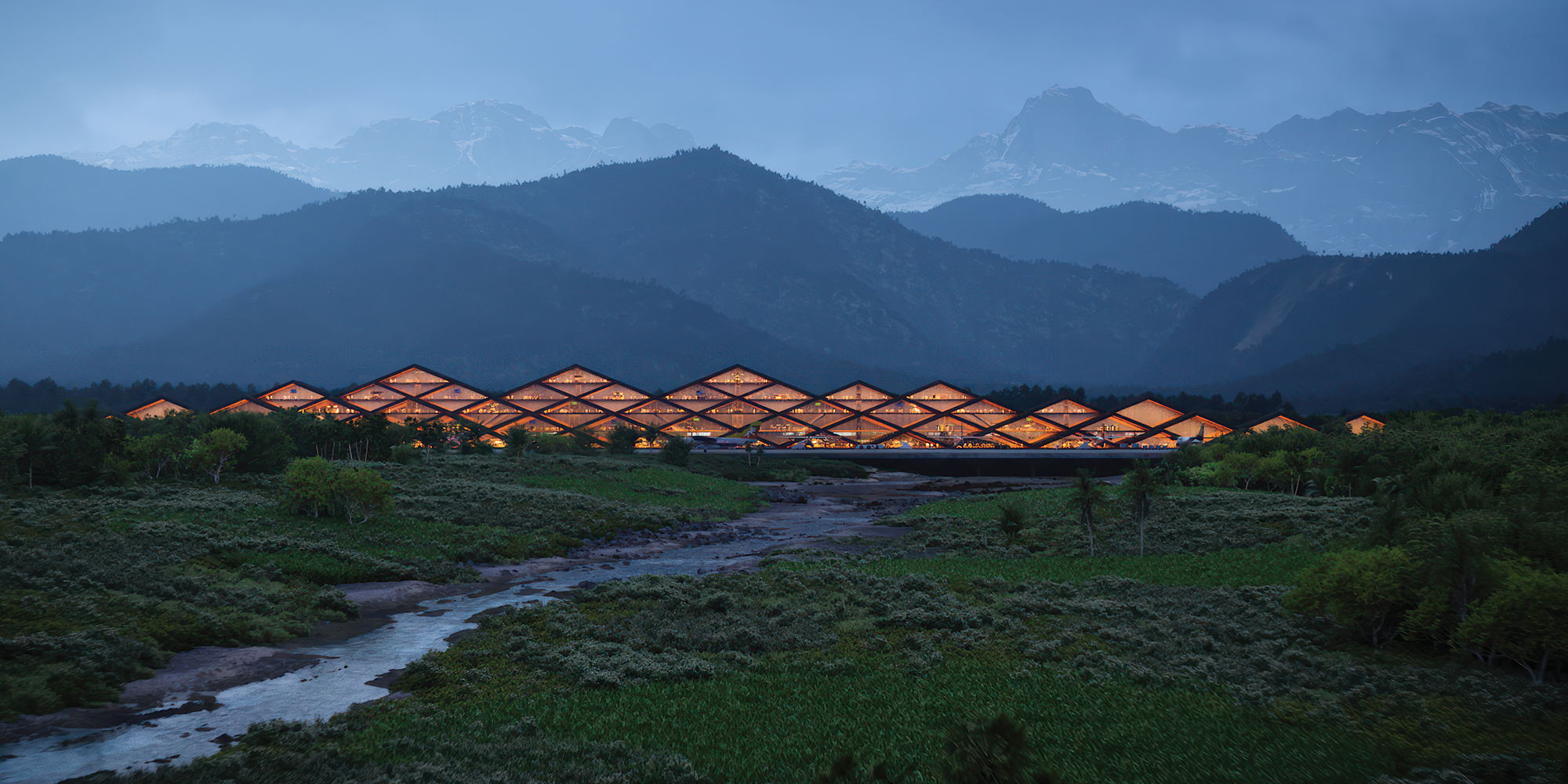

Jade Renaissance: How Austy Lee Reinvents Jade Jewellery
The Hong Kong designer fuses contemporary aesthetics with Eastern concepts


