

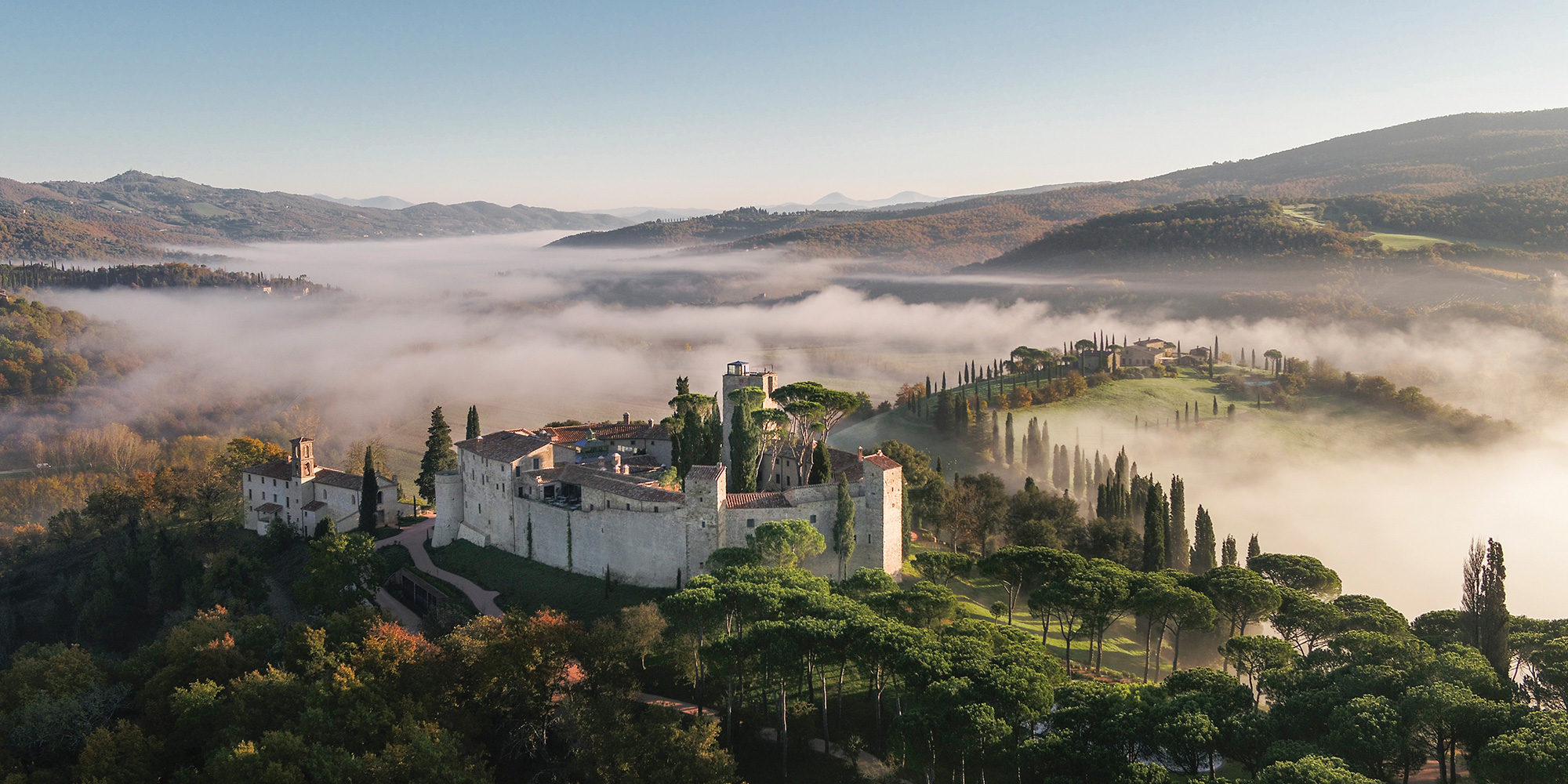
Far beyond the noise of cities, deep within the green hush of Umbria’s countryside, sleeps a castle, where curlicued vineyards thread through the mist that drapes the hills each morning.
The 10th-century castello is the jewel of Reschio, an ancient estate with over 3,700 acres to its name. If walls could talk, Reschio’s tales would be legendary. Its colourful history includes occupation during Etruscan times, a stint as a 14th-century royal fiefdom under Emperor Charles IV, and a sought-after site of numerous dramatic feuds between families of Italian nobles.
Throughout it all, the castle has stood silently, its sun-bleached terracotta roofs and crumbling stone ramparts carrying a thousand years of memory—of love, loss, and longing. In that time, dynasties have risen and fallen, colossal wars have thundered and abated, and countless generations have succeeded the last. Monarchs, soldiers, and pilgrims alike have wended their way over Reschio’s verdant hilltops, as have the poets and artists drawn by the classical romance of a Grand Tour.
Evolving a legacy
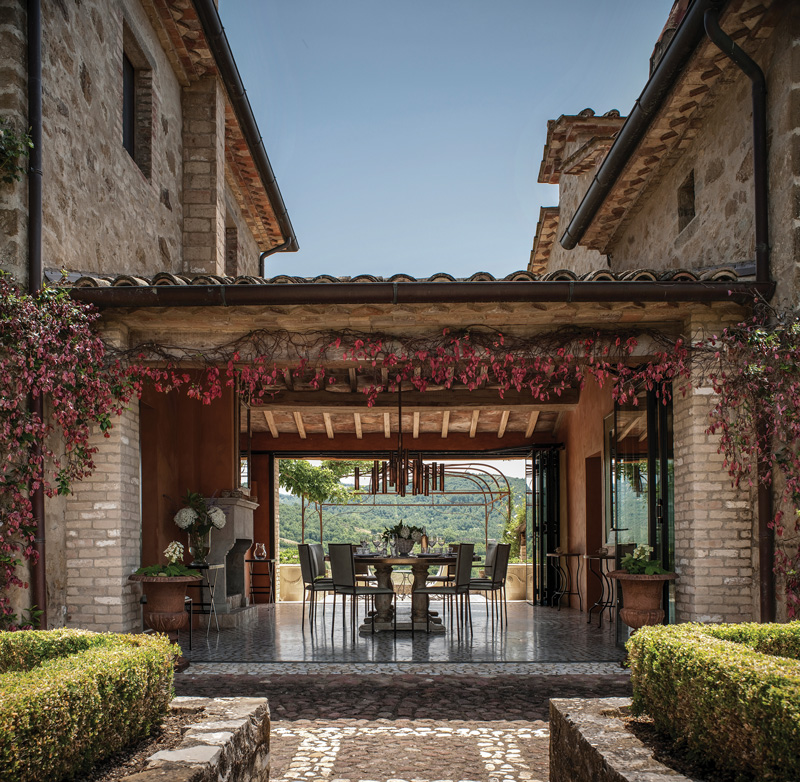
These days, Castello di Reschio opens its grand doors—not as a relic, but as a living escape. Reborn as the Reschio Hotel, this five-star sanctuary, honoured with the Michelin Guide’s rare “Three Key” ranking—one of only eight in Italy—beckons travellers to step into a world where storied history and contemporary luxury come together in 36 thoughtfully designed rooms and suites, all set within the tranquil allure of its secluded setting.
The Reschio’s revival is a story of passion, vision, and deep-rooted love for the land—one written by the Bolza family, the aristocratic stewards of this ancient estate. It all began in 1984 when Count Antonio and Countess Angelika Bolza stumbled upon the property while searching for a quiet vacation escape. What others saw as overgrown and forgotten for decades, the Bolzas saw as a hidden jewel. Over the next decade, they ultimately acquired the entire estate—including the millennia-old castle and a string of 50 abandoned rustic farmhouses.
In 1999, their son, Count Benedikt Bolza, returned to Umbria. A trained architect and inspired by his parents’ ardour, Benedikt, alongside his wife, Countess Donna Nencia, took up the mantle. Together, they embarked on a painstaking journey to restore Reschio—not just its buildings, but its soul.
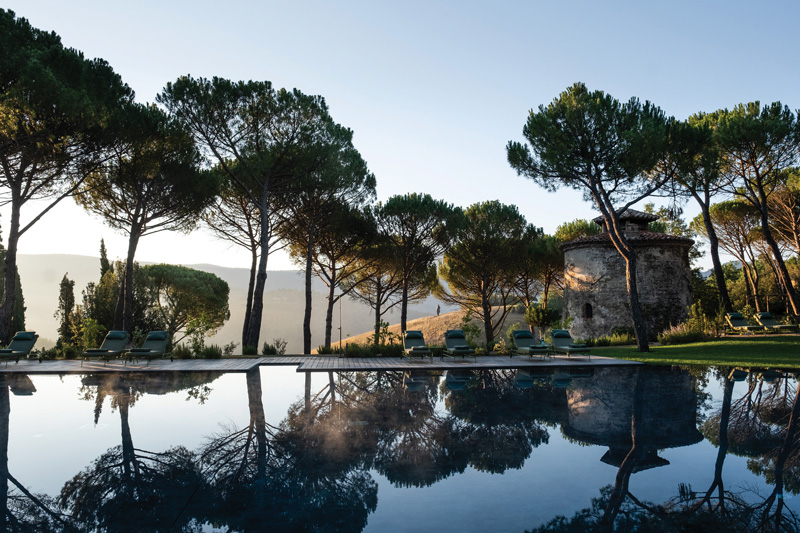
Their commitment went beyond mere restoration. The Bolzas set out to revive their pristine landscape into a thriving ecosystem. Over 6,000 trees and 10,000 shrubs have been introduced to the soil, transforming 70 percent of the estate into flourishing woodland. Ancient oak forests pulse with new life, wildflower meadows hum with bees, and biodynamic farming has brought the first harvest of linseed.
Reschio’s bounty is carefully tended and deliciously shared: homemade vermouth infused with foraged herbs, artisanal pecorino crafted from local sheep’s milk, and olive groves and lavender fields that perfume the air with the scents of a timeless Italy. Each step through the estate invites visitors to experience the harmony and enchantment that first captivated the Bolzas so many years ago.
“Nature comes first at Reschio, and always will,” the Bolzas say with quiet conviction. “This is Italy as it should be—Italy as it once was.”
Making space
Under the discerning eye of Count Benedikt Bolza, the ancient castle has taken on a new look—one that honours its bones while gently bending them toward beauty.
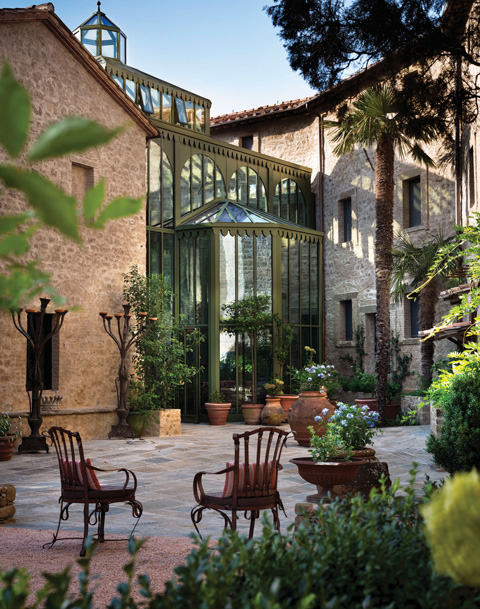
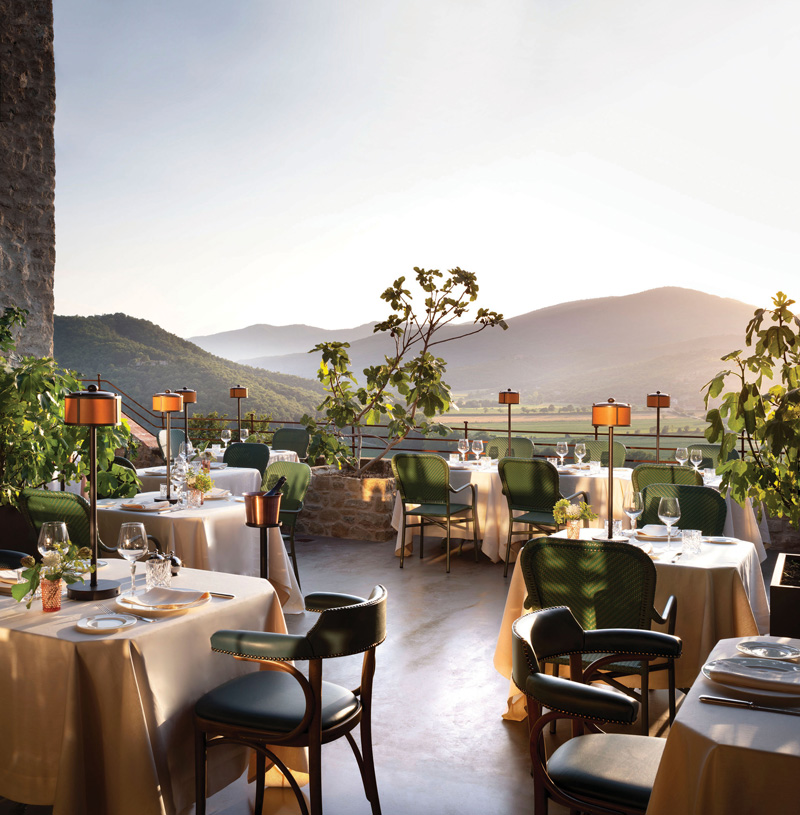
Two interlinked courtyards now lie at its heart: one, a soft expanse of grass framed by slender cypress trees, becomes a natural amphitheatre for live concerts. The other hosts the Palm Court, a luminous pavilion of wrought iron and glass, where guests sip aperitivi as the sun sinks behind the hills.
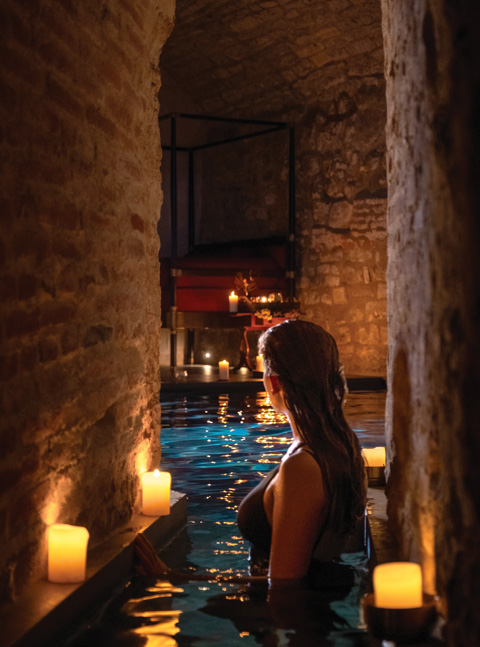
Worn stone steps, once leading to the wine cellar, now descend into The Bathhouse—a serene spa whose star feature is a large saltwater pool, inspired by the coveted well-being traditions of ancient Roman baths. At the top of the tower, two secret, centuries-old dovecotes, each flickering with candlelight, have been transformed into cosy hideaways for nightcaps.
A quiet eccentricity weaves through every space: a library said to be haunted by the ghost of a wild cat, still stalking its shelves; a jeweller’s table, handpicked by Count Benedikt, taking pride of place among a collection of antique treasures.
Art lives here—not just on the walls, but in the place itself. Sculptures by Nic Fiddian-Green punctuate the landscape, while interiors are layered with curated artworks, heirlooms, and curiosities collected over generations.
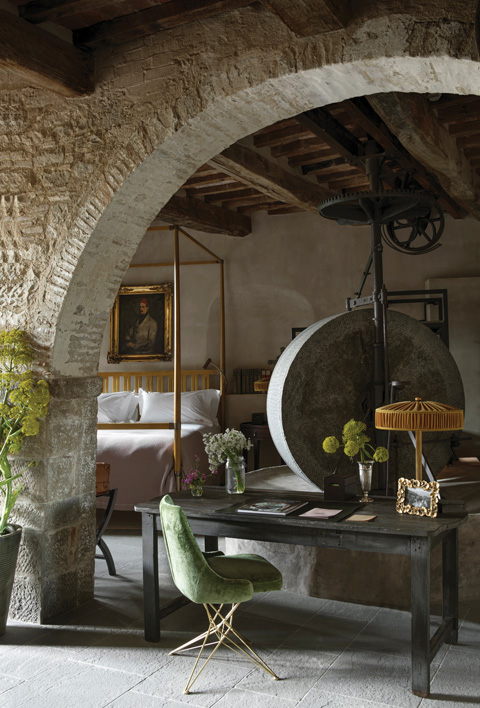
The guest rooms, too, carry this spirit. Each of the 36 spaces is free from modern distraction—no televisions, only birdsong or the whisper of wind through stone. Rustic touches, like exposed beams and wooden floors, are elevated by an eclectic mix of paintings, photographs, and objects, many rooted in the family’s own history.
Beyond the castle walls, architectural alchemy continues. A former mid-century tobacco warehouse has been reborn as the Tabaccaia, Count Benedikt’s studio and creative heart of the estate. Scattered across the rolling hills, 31 former dilapidated farmhouses have been given a fresh lease of life into elegant villas and intimate rental homes. Word on the estate is that the remaining structures will be undergoing their own dramatic transfiguration at some point in the future, though details are being kept secret for now.
“Benedikt has embraced an organic approach to the design, championing local craftsmanship and creating thoughtful, whimsical spaces that are filled with comfort and wit, while artfully nodding to the fascinating characters who once resided within the castle walls,” the family says.
Despite its rich heritage and cinematic beauty, Umbria remains one of Italy’s best-kept secrets—less trodden than its neighbours, Tuscany and Lazio. But that, perhaps, is what makes Reschio so alluring. Its seclusion feels intentional, like a place suspended in time, designed to help you leave the modern world behind.
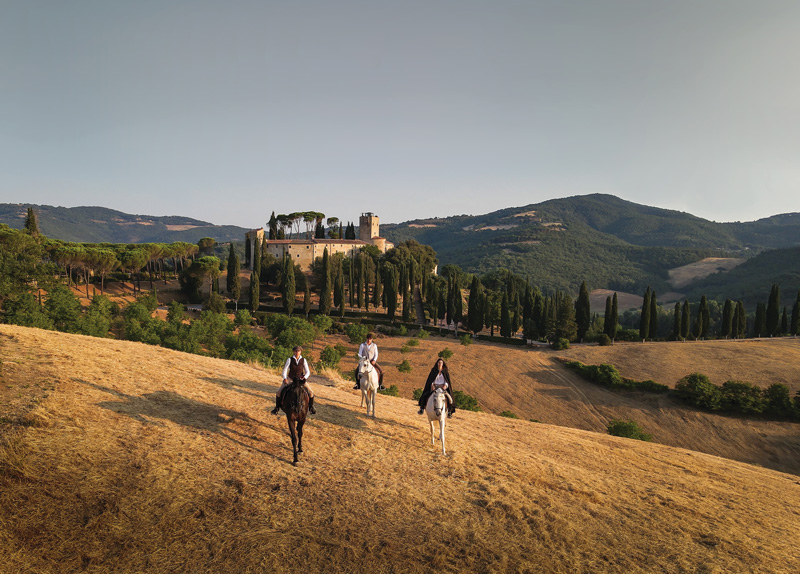
Guests are gently drawn into the idyll of the land—galloping across misty fields on horseback, foraging wild herbs alongside the chef, or watching falcons soar in silence overhead.
The estate’s immersive “Household Habits” programme invites guests to rediscover traditional Umbrian crafts. Loom weaving, marbling, pottery, embroidery, and even ceremonial flag throwing are led by master artisans. New for 2025, multi-day retreats offer a deeper dive into lost arts such as bow-making, egg tempera painting, and other monastic practices—hands-on experiences set in a place as meditative as it is inspiring.
As each season turns, so does Reschio—quietly evolving, always growing. The landscape flourishes, and the legacy continues to unfold.
“We are proud of what has been created over these past 30 years,” the Bolza family reflects. “But more than anything, we are excited for what lies ahead.”




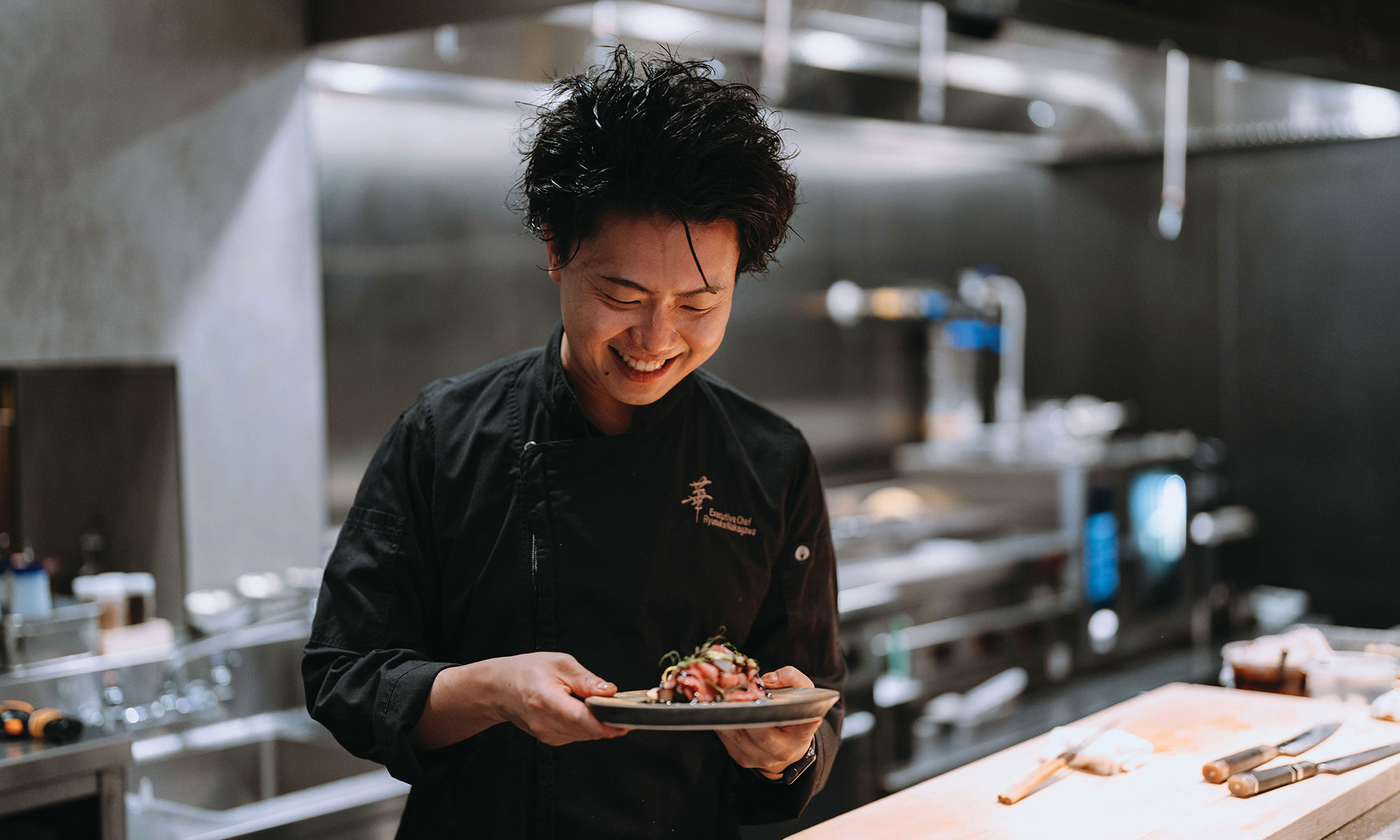
Kaiseki Restaurant Earns Toronto’s First Michelin Star
Japanese cuisine with Canadian flavour earns Toronto’s first Michelin star


The Magic of IBUKU’s Bamboo Buildings
Traditional Balinese craft meets Western engineering in an extraordinary building style
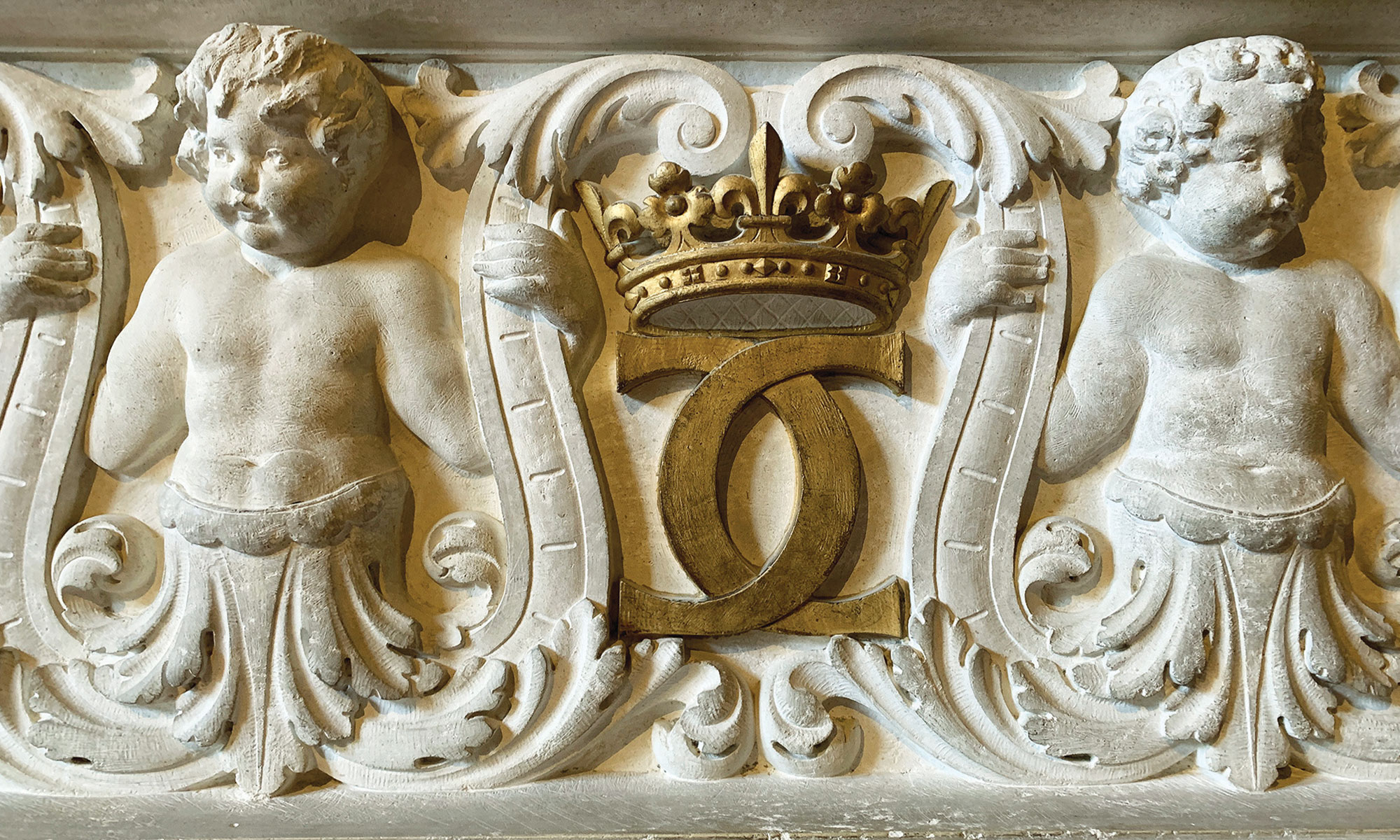
Queens of the Castle: Chanel Metiers d’art 2020/21
A chateau in Loire Valley plays host to CHANEL’s Metiers d’art 2020/21 collection.

