
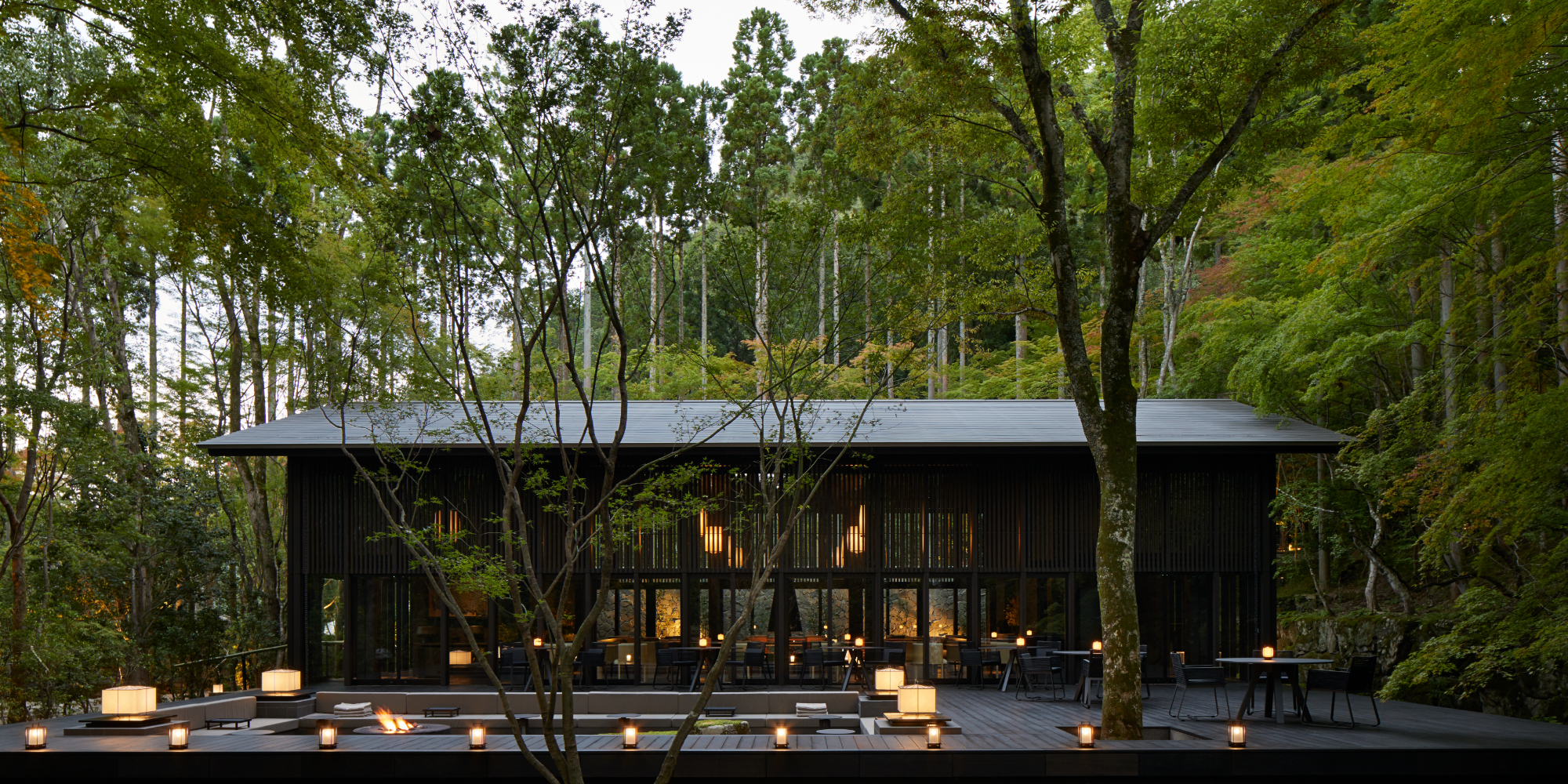
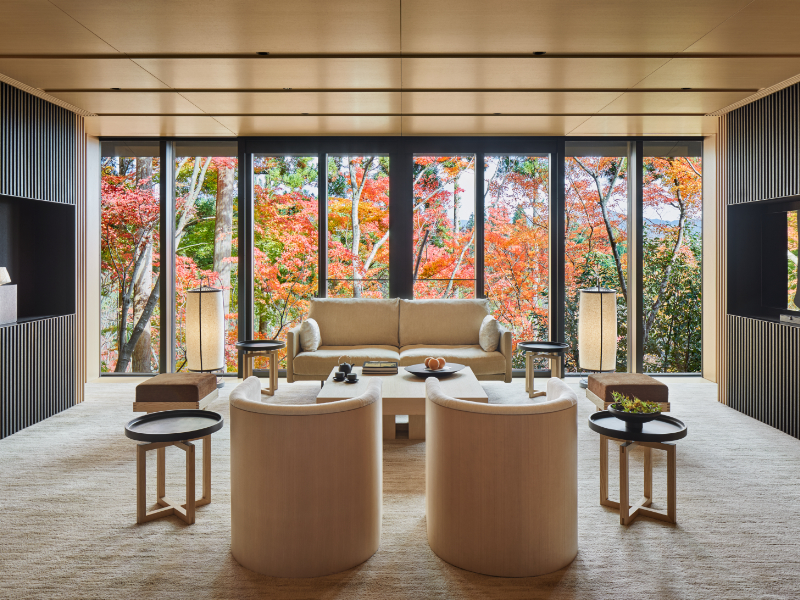
Hidden within the emerald folds of a secret garden on the fringes of Kyoto, where the city’s historic pulse yields to the rhythmic drip of mountain springs, Aman Kyoto has long functioned as a high-design sanctuary for the modern traveler.
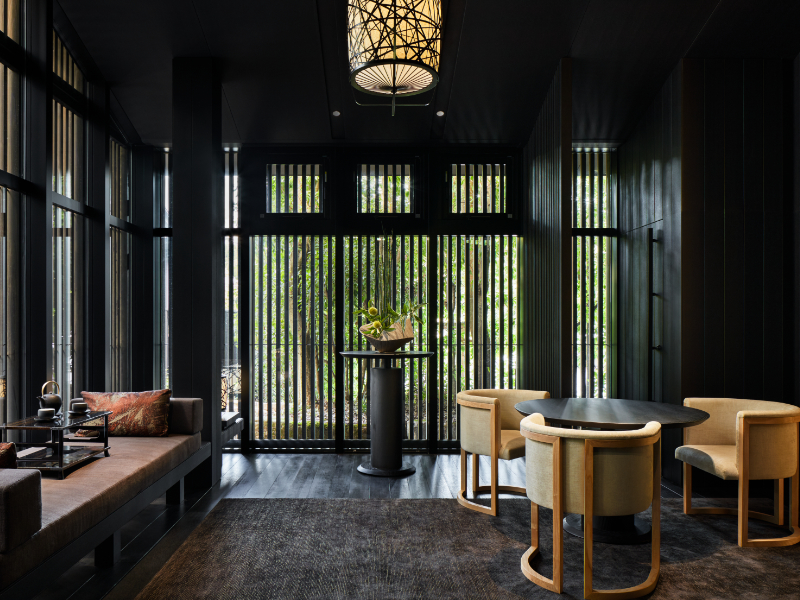
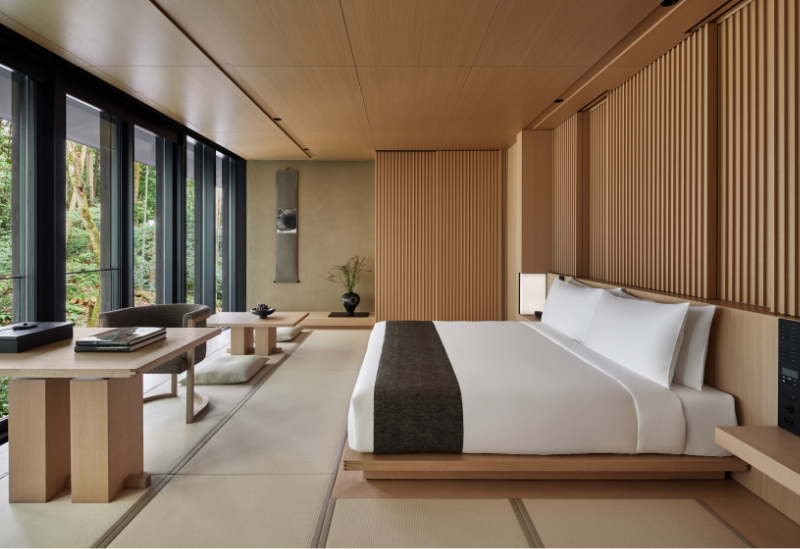
The resort, a masterwork of restraint originally envisioned by the late Australian architect Kerry Hill, sits upon a site of curious provenance: an overgrown forest once intended by a private obi collector to house a textile museum. Hill, arriving in 1995, chose to honor the land’s existing geometry of mossy paths and ancient stone terraces, letting the natural environment dictate the luxury.
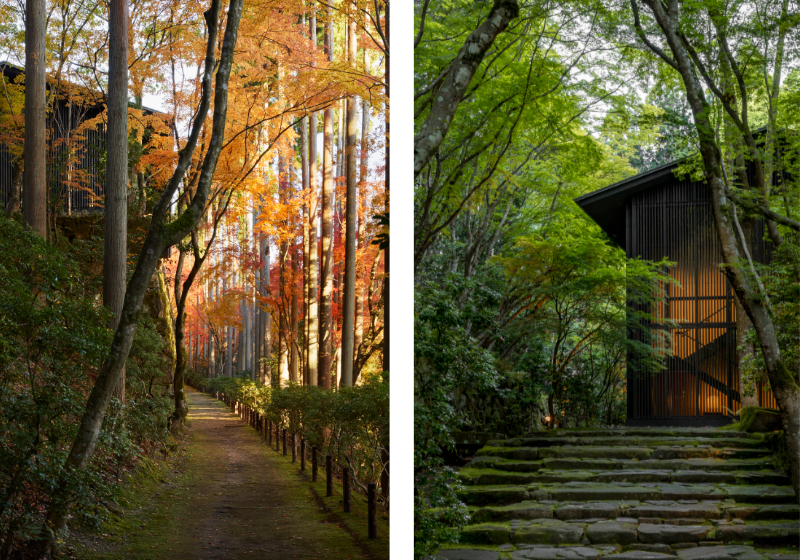
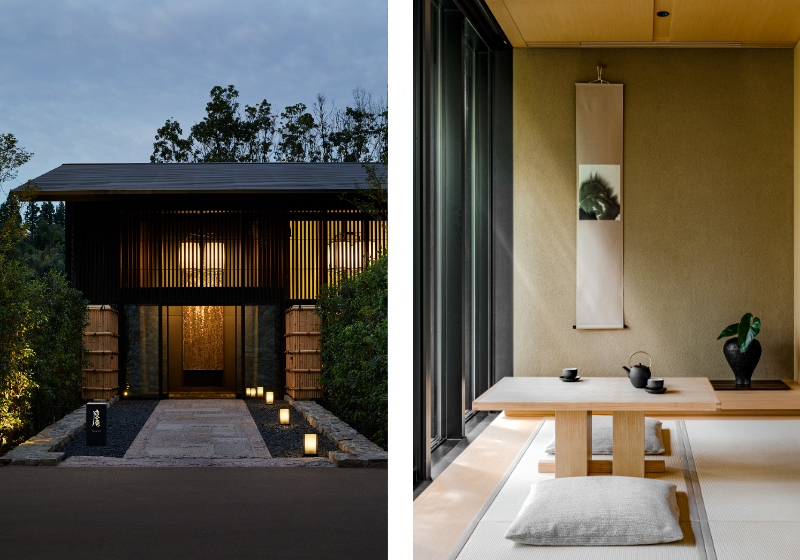
The latest evolution of this curated wilderness is Tea House Senkutsu, a space that feels like a long-buried secret finally unearthed. Tucked at the end of a winding stone path overlooking a silent pond, the tea house is a collaboration between SEN ART STUDIO and the master carpenters of Nakamura Sotoji Komuten. It adheres to the sukiya architectural style, a minimalist vernacular dating to the 16th century that favors the rustic and ephemeral over the grand. Constructed from locally sourced Kitayama cedar and the very soil of the surrounding hills, the walls possess a tactile, earthen quality that seems to absorb the forest’s breath.
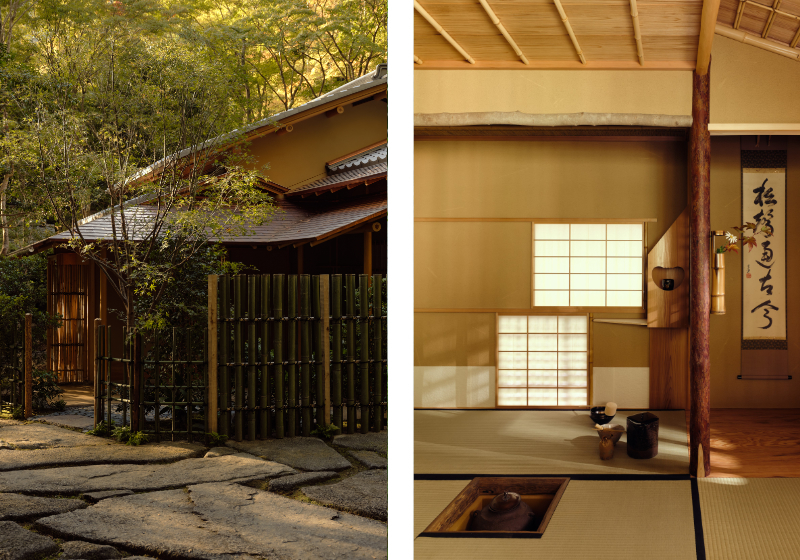
The name “Senkutsu,” meaning “a cave of the master of wisdom,” was bestowed by Zabosai Sen Soshitsu, a 16th-generation master of the Urasenke tea tradition. Inside, the space is divided into two distinct psychological realms. The intimate koma room is a study in traditional ritual, requiring guests to negotiate the nijiriguchi, a low entrance that demands a humble bow, a physical equalizer that strips away rank and ego before the first bowl is whisked. For those who prefer a more contemporary posture, the second room offers the ryurei style, allowing for the comfort of chairs without sacrificing the choreographed grace of the chanoyu ceremony.
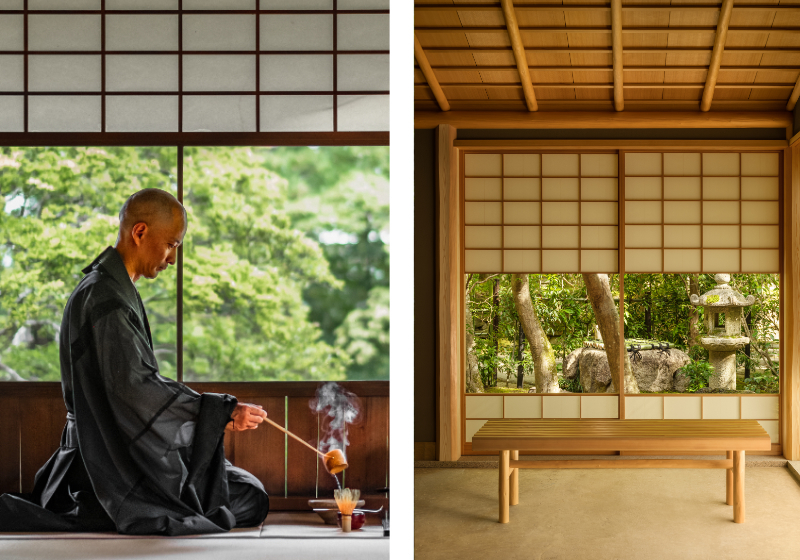
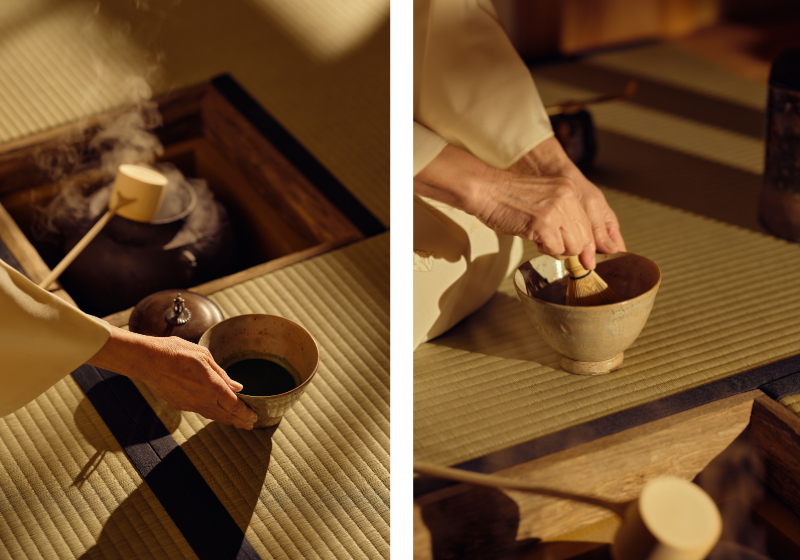
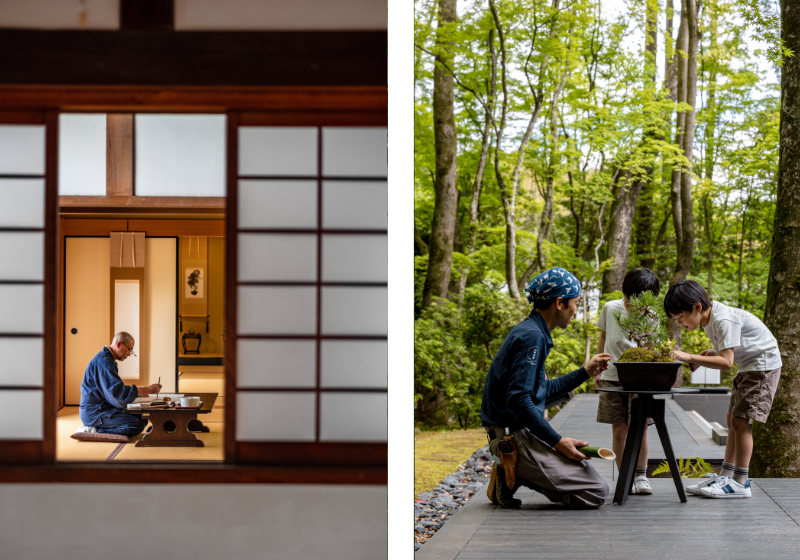
At its heart, Senkutsu is an exercise in omotenashi, the Japanese art of selfless hospitality. It is a space designed for the slow consumption of time, where the steam from an iron kettle becomes a focal point for meditation. Beyond the tea bowl, the sanctuary serves as a communal hub for the traditional arts, hosting seasonal wagashi-making, calligraphy, and ikebana. As General Manager Yasuo Mizobuchi suggests, the goal is to provide a “timeless encounter” with Japanese aesthetics. In an era of hyper-connectivity, this tea sanctuary offers a rare, analog reprieve, a place where the only thing being updated is the seasonal floral arrangement.