

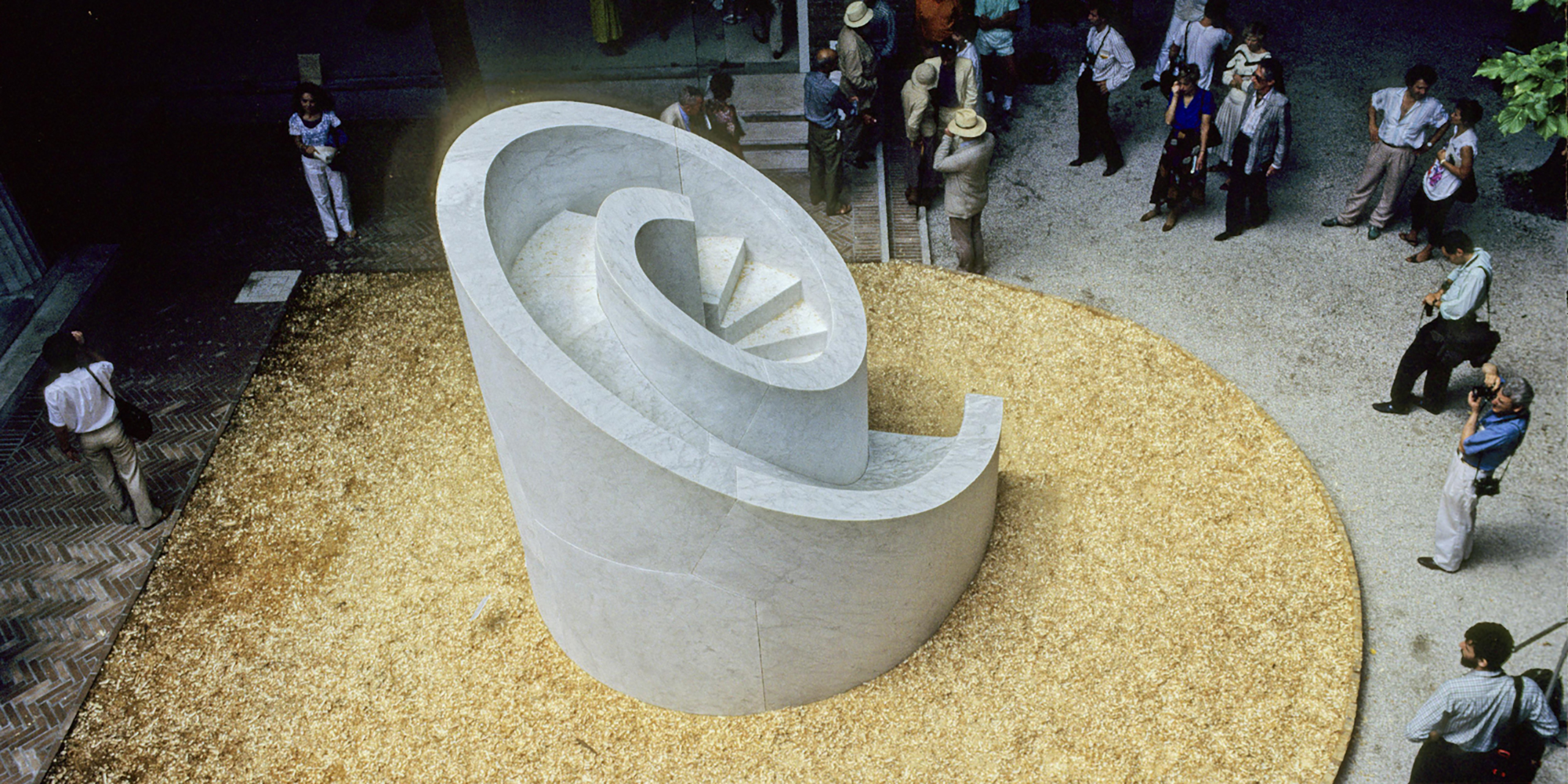
In the summer of 1986, Isamu Noguchi arrived at the Venice Biennale carrying a question as heavy as marble and as elusive as light: What Is Sculpture?
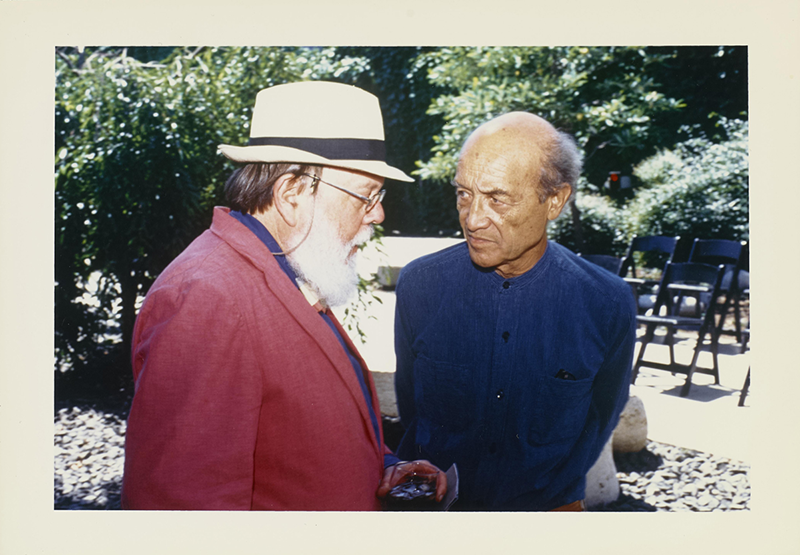
The Japanese American sculptor, then in his early 80’s, had spent a lifetime refusing to let the answer settle. His presentation that year, his first at the storied European forum, did not so much declare a position as dissolve the ground beneath one. It was, by the standards of the moment, confounding: part monument, part playground, part lamp factory, all of it insistently alive.
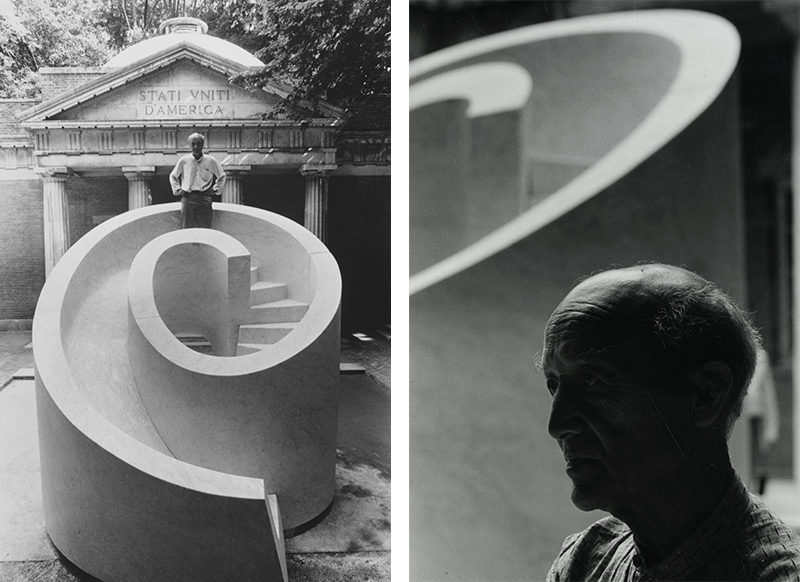
40 years on, that provocation is being reflectively resurrected in Queens. At the Isamu Noguchi Foundation and Garden Museum, “Light and Stone: Revisiting Noguchi’s 1986 Venice Biennale” occupies a single gallery with the austere clarity of a haiku.
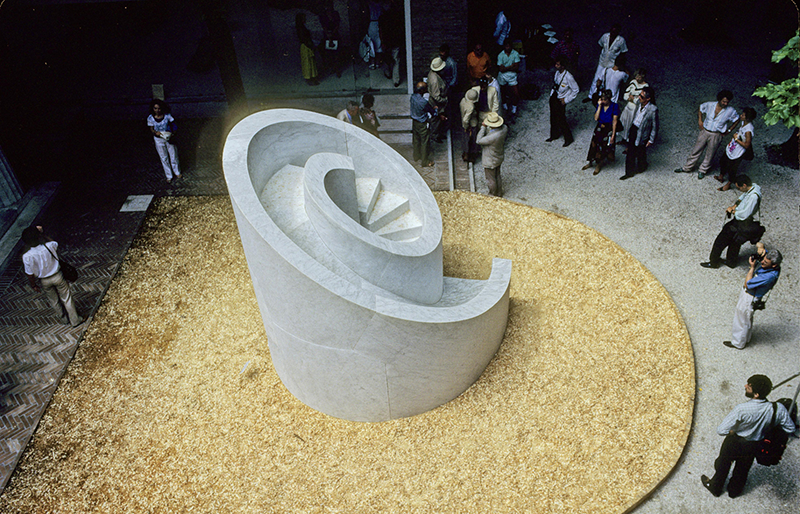
On view from May 6 to September 13, 2026, the exhibition does not pretend to recreate the original pavilion; instead, it returns to the essential tension that animated it. At its center stands a model of Slide Mantra, the ten-foot spiral of polished marble that once coiled through the Biennale courtyard like a question mark made flesh. Around it orbit architectural sketches, archival displays of photographs and ephemera, and a pair of the paper-and-bamboo Akari lamps that have become Noguchi’s most democratic emissaries.
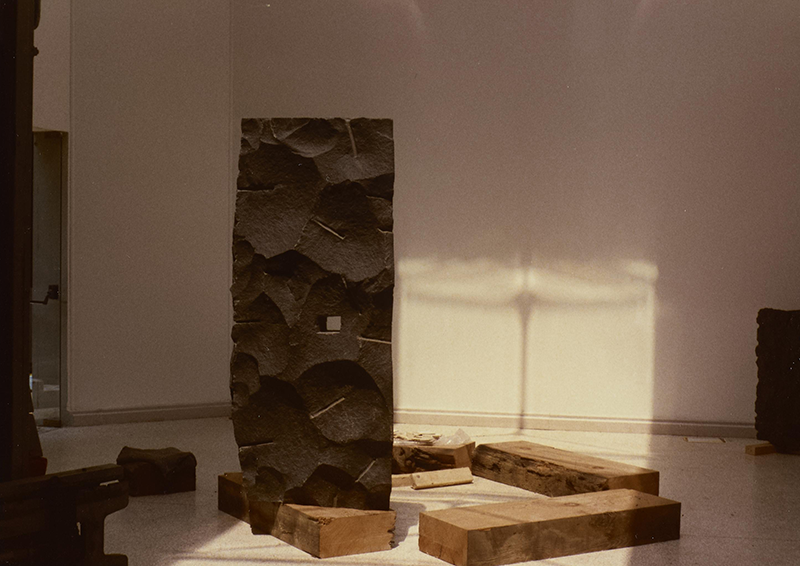
The original installation had been criticized, sometimes sharply, for its apparent commercialism: the lamps in particular were seen as too useful, too pleasing, too close to design. Yet Noguchi had never drawn such clean distinctions. For him, sculpture was not an object to be contemplated from a respectful distance but something that might slide down, sit upon, or cast a gentle glow over ordinary life.
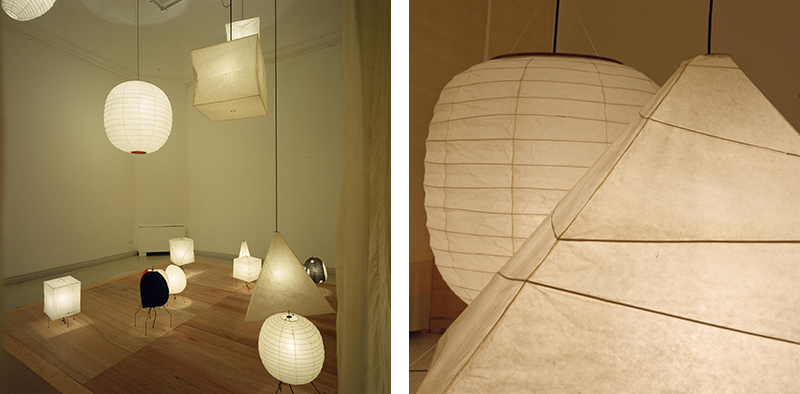
The Slide Mantra distilled decades of unrealized playground proposals into a single, inviting form: play as philosophy, childhood as a mode of serious thought. The Akari, first developed in 1951 in Gifu, Japan, using traditional washi and bamboo, extended that idea into the domestic sphere. Nearly 200 designs later, they still feel less like lighting fixtures than captured clouds.
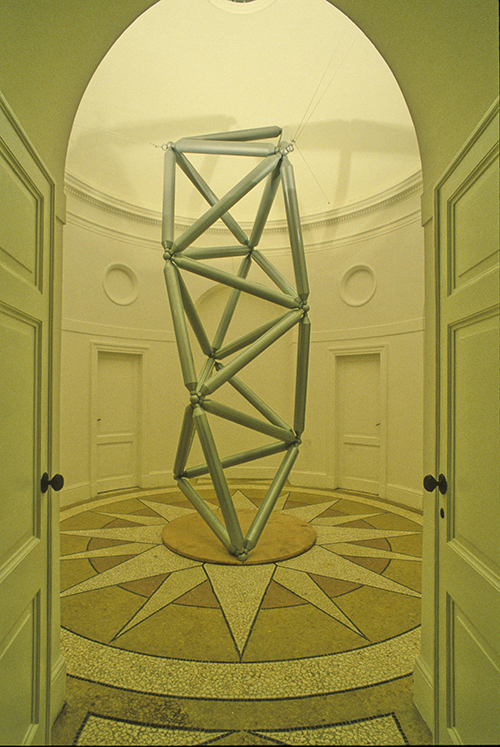
The new exhibition, modest in scale, is rich in implication. It arrives in tandem with the 2026 Venice Biennale, where the Noguchi Museum is collaborating with the Japan Foundation on a participatory work by the artist Ei Arakawa-Nash. It also marks the 75th anniversary of the Akari series. These convergences feel characteristically Noguchian, elegant coincidences that suggest an underlying order, like the grain in stone.
What lingers in the gallery is the same productive ambiguity that unsettled critics in 1986: the sense that monumentality and lightness, tradition and invention, abstraction and use are not opposites but collaborators. Noguchi moved among them with the fluency of a man who had spent years navigating multiple cultures and materials, never quite belonging to any single category. In that refusal of categories lay his freedom. 40 years later, the question he posed in Venice still refuses to be answered neatly. It simply keeps sliding, glowing, and turning in the light.




A Deep Dive into East Asian Beauty and Philosophy
Discovering East Asian wisdom with Professor Chang Ko-chin


Aquaflor: A Perfume Legacy
A contemporary Florentine perfumery carries on the spirit of the Renaissance.
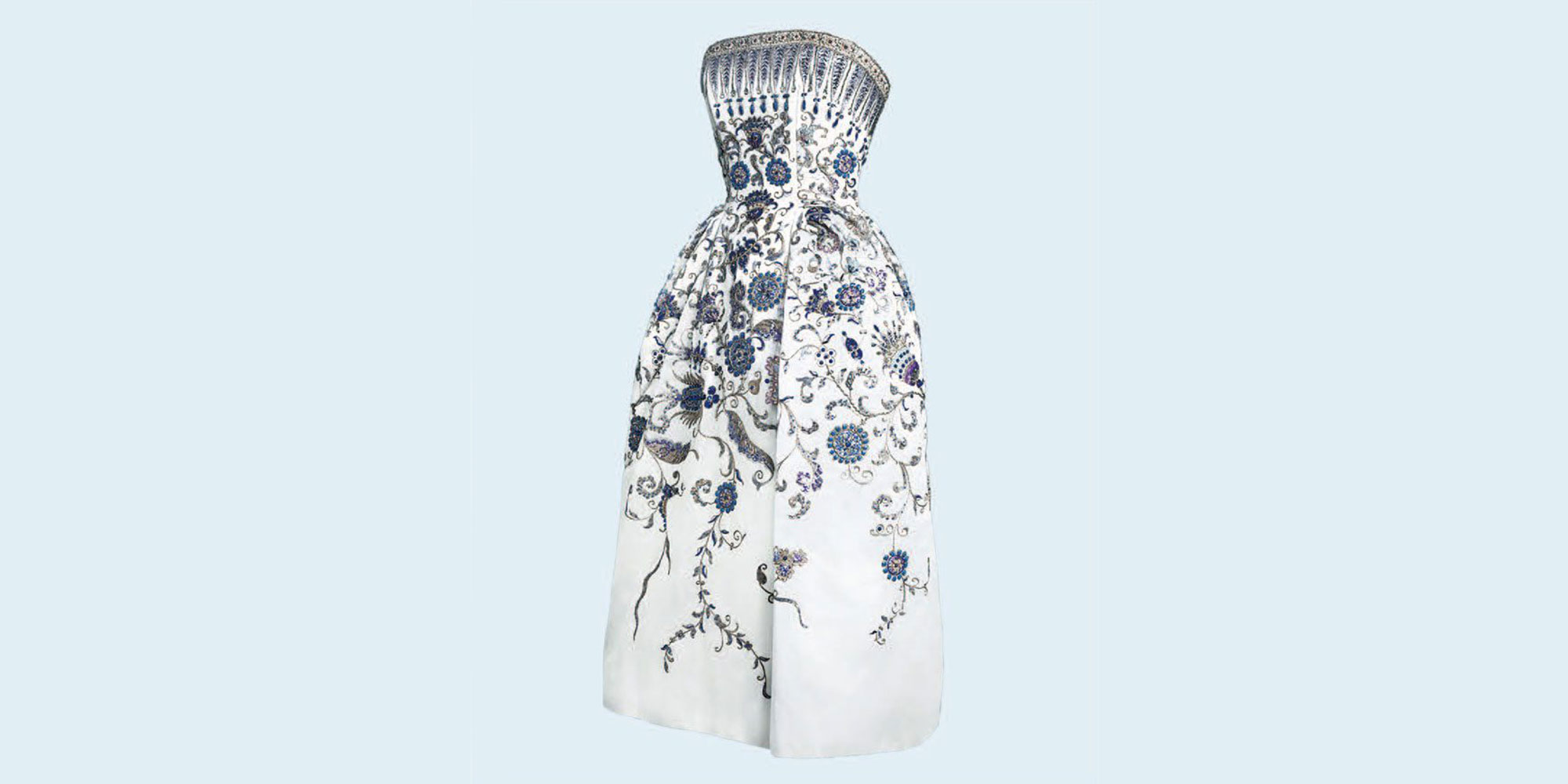
Must-See Haute Couture Collections at Palais Galliera Museum
Don’t miss collections that feature pieces from The Duchess of Windsor, Princess Grace of Monaco and Baroness Rothschild.

